Jacob Morrow
Updated: 2026-06-04
A customer fills out your contact form at 9:42 PM. Their meeting with you was supposed to lock in next quarter's contract. You'd already left for the day; their inbox stays empty until 9:00 the next morning. By the time you reply, the competitor's auto-reply quote has already landed in their inbox. According to Harvard Business Review (2011) , firms that contact a lead within one hour are seven times more likely to qualify the lead than those that wait even one hour longer. A solid auto response email template keeps you in the running while your team sleeps.
Below are five ready-to-use B2B templates (inquiry, order, event, out-of-office, support ticket), the four elements every auto-response needs, and how to send them automatically at scale.
Last updated: May 2026
What Is an Auto-Response Email Template?
Quick answer
An auto-response email template is a pre-written reply that an email tool sends automatically when a customer takes a specific action (submits a form, places an order, registers for an event, opens a support ticket) or reaches you outside business hours. A good template acknowledges receipt, sets a clear response time, and gives the recipient one useful next step, all without sounding like a robot.
5 Auto-Response Email Templates: Quick Pick by Scenario
Use this table to jump to the template that matches your trigger event:
| Template | Trigger | Response window | Use case |
|---|---|---|---|
| 1. Inquiry acknowledgment | Contact form submitted | Within 5 min | B2B sales inquiries, demo requests |
| 2. Order confirmation | Purchase placed | Instant | E-commerce, B2B procurement |
| 3. Event registration | Form / RSVP submitted | Instant | Webinars, conferences, demos |
| 4. Out-of-office | Calendar event active | Instant | Vacation, parental leave, conferences |
| 5. Support ticket received | Ticket opened | Within 1 min | Helpdesk, technical support |
4 Elements Every Auto-Response Email Needs
Whatever scenario you pick, a B2B auto-response only works if it covers these four elements. Skip any one and the reply feels generic or unhelpful.
1. Acknowledgment of Receipt
One sentence confirming you received the message. Removes uncertainty and sets the conversation in motion.
 Example
"Thank you for reaching out to [Your Company] . Your inquiry is in our queue."
2. Expected Response Time

Give a concrete window, not "as soon as possible." For global audiences, mention the timezone so a customer in Singapore doesn't expect a 3 AM reply from your New York team.
Example
"Our team will review your request and reply within 24 business hours (Mon-Fri, 9 AM-6 PM EST)."
3. Contact Information or Next Steps

Give the recipient something to do while they wait: an FAQ link, a phone number for urgent matters, or a relevant resource. Reduces follow-up emails by 30-40% in practice.
4. Personalization Elements
Use the recipient's name, company, or order number via merge tags. Personalized auto-replies see 2-3x higher engagement than "Dear customer" defaults. See our guide on email personalization for the merge-tag patterns that work in B2B.
5 B2B Auto-Response Email Templates (Copy-Paste Ready)
- Merge tags:
Each template below uses standard placeholders such as {{first_name}} and {{company}}
. Replace bracketed text with your own copy, then paste into your ESP, Outlook, or Gmail filters.
Template 1: Inquiry Acknowledgment Email

Subject: We've received your inquiry — [Your Company]
Hi {{first_name}} ,
Thanks for reaching out to [Your Company]. Your inquiry landed in the right place, and our sales team is already reviewing it.
You can expect a detailed response within 24 business hours .
For urgent matters, reach us at [Phone Number] or reply directly to this email.
In the meantime, our Resource Center has answers to the most common questions: [Resource Center URL].
Best regards,
[Your Company] Team
Template 2: Order Confirmation Auto-Reply

- Subject: Order #{{order_number}} confirmed — [Your Company]
Hi {{first_name}} ,
Your order #{{order_number}} placed on {{order_date}} is confirmed and now in processing.
You'll receive a shipping notification with tracking details within 2 business days .
Need to update the order or have a question? Reply to this email or contact your account manager at [Account Manager Email] .
Thanks for choosing [Your Company].
[Logistics Team]
Template 3: Event Registration Acknowledgment

- Subject: You're in — [Event Name] on {{event_date}}
Hi {{first_name}} ,
Thanks for registering for [Event Name] on {{event_date}} . Your spot is secured.
What to expect next:
- A calendar invite arriving within the next hour.
- A reminder email 24 hours before the event.
- The join link will be sent 30 minutes before start time.
For schedule questions, reply to this email or visit the event page at [Event Page URL].
See you there.
[Event Team]
Template 4: Out-of-Office Auto-Reply
- Subject: Out of office — back {{return_date}}
Hi {{first_name}} ,
I'm out of office from {{leave_date}} through {{return_date}} and won't be checking email regularly.
For urgent matters: contact [Colleague Name] at [Colleague Email] .
For other inquiries: I'll reply when I'm back, in the order received.
Thanks for understanding,{{my_name}}
Template 5: Support Ticket Received
- Subject: Ticket #{{ticket_number}} received — we're on it
Hi {{first_name}} ,
Your support ticket #{{ticket_number}} has been created and assigned to our support team.
Expected first response:
- Critical / production down: within 1 hour
- High priority: within 4 hours
- Standard: within 1 business day
While you wait, search our help center; most issues have a self-serve fix.
[Support Team]
Want to send these templates automatically?
Map a trigger (form submit, order placed, ticket created) to the matching template, then send across email + SMS + WhatsApp from one workflow.
How to Send These Auto-Responses at Scale
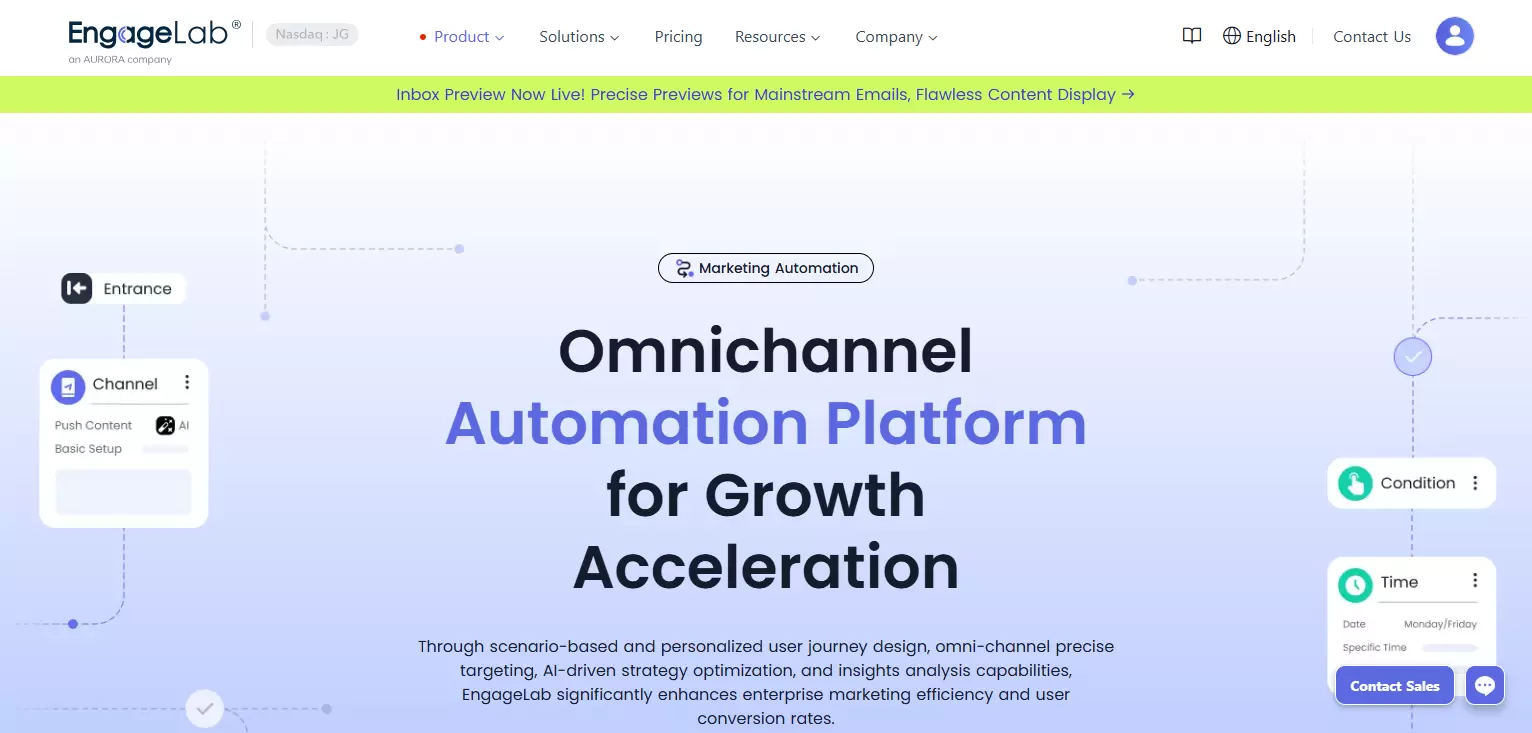
Pasting templates one-by-one into Outlook works for a freelancer; at B2B volume, you need a marketing-automation tool that listens for trigger events and fires the right template. Platforms like EngageLab , HubSpot, and ActiveCampaign let you wire up email auto-responses with merge tags, branching logic, and multi-channel fallback (email → SMS if no open within 24h).
Automation Setup in 6 Steps
- Log in to your EngageLab console and open the Marketing Automation module.
- Go to AI Engagement → User Journey and click Create your first journey (or pick an existing template).
- Choose a pre-built journey template, or build one from scratch for niche scenarios (e.g., Template 4 out-of-office for a regional team).
- Set the trigger event (form submission, order placed, ticket created, etc.) and define entry/re-entry rules.
- Add a time window if you want the auto-response delayed (e.g., wait 30 seconds so it doesn't look bot-like).
- Select Email as the action, pick the matching template, then publish.


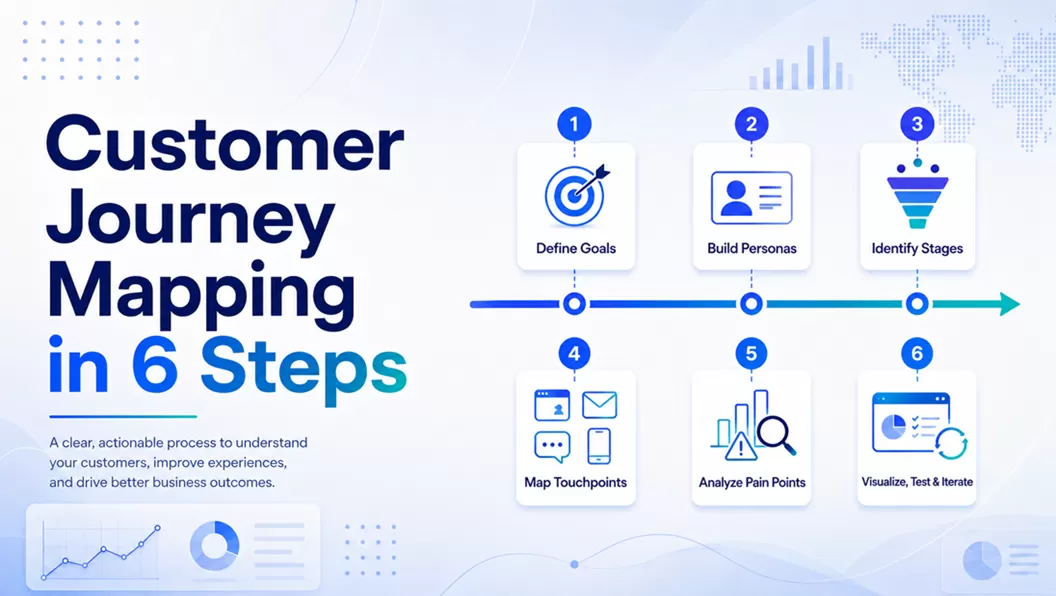
Once published, the journey runs on its own. For more advanced multi-step flows, see how to map full customer journey maps so each trigger fires the right template at the right lifecycle stage.
Auto-Response Email Template FAQ
Is sending an auto-response email professional?
Yes, when it is specific and helpful. A vague "We received your email" feels lazy; a reply that confirms receipt, sets an expected response time, and offers one useful link feels professional. The line between professional and robotic is the level of specificity, not the fact that the message is automated.
How long should an auto-response email be?
Keep it between 50 and 120 words. Long enough to cover the four elements (acknowledgment, response time, next step, personalization); short enough to read on a phone in under 10 seconds. Skip the corporate filler.
What is the difference between an auto-response and an out-of-office reply?
An out-of-office reply (Template 4) is a subset of auto-response: it fires when you are on leave or unavailable. A general auto-response (Templates 1, 2, 3, 5) fires year-round on specific triggers like form submission or order placement. Same mechanism, different trigger.
Do auto-response emails need to comply with GDPR?
Transactional auto-responses (order confirmation, support ticket, inquiry acknowledgment) are exempt under GDPR Article 6(1)(b). Marketing-style auto-responses (newsletter signup confirmation with promotional content) still need explicit consent under Article 7. When in doubt, keep transactional and marketing logic on separate workflows.
Can auto-response emails include attachments?
Yes, but use sparingly. Attachments below 2 MB (PDF brochures, calendar .ics files) work fine. Larger files should be linked, not attached, to avoid spam filter flags. Most ESPs let you attach static assets per journey step.
What tool should I use to send these auto-responses?
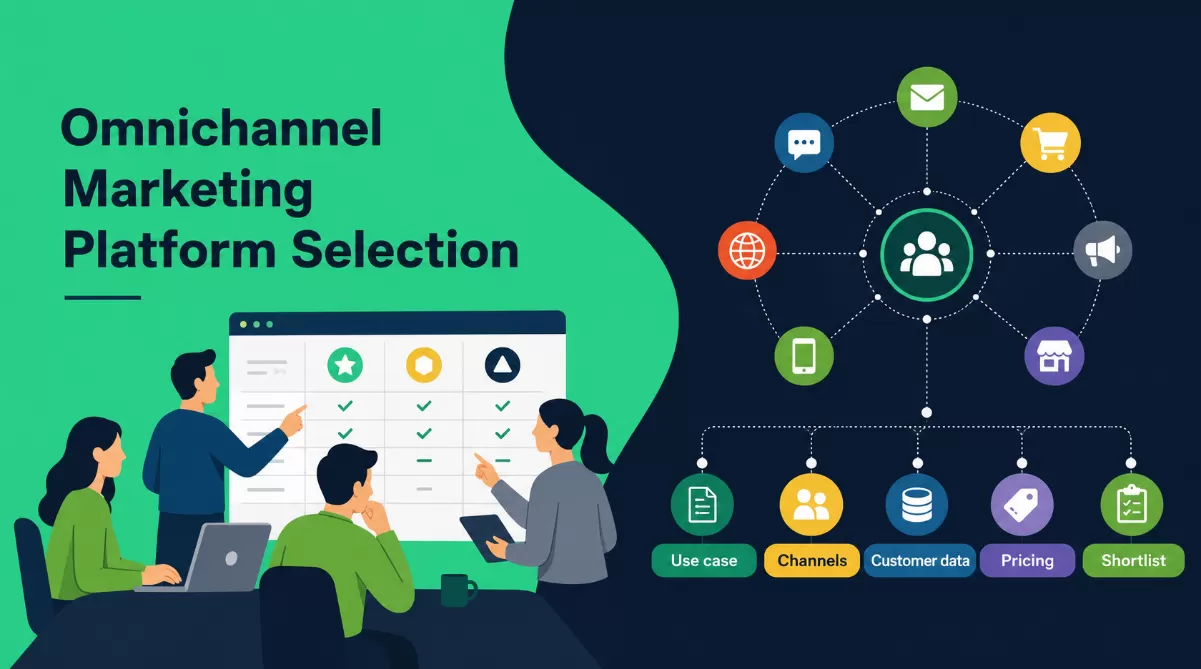
For solo users, Gmail filters or Outlook rules work for Template 4 (out-of-office) and basic Template 1 (inquiry ack). For B2B teams sending 1,000+ auto-responses per month with merge tags and trigger logic, a marketing-automation platform is the right fit. See our marketing automation workflow guide for how to evaluate tools by volume tier. Match cost to volume; do not pay enterprise pricing to send 200 emails a month.
Bottom Line
A solid auto-response email template buys you the credibility of "we got your message" while your team works on a real reply. Pick the template that matches your trigger event, fill in merge tags, and wire it to your ESP or marketing-automation tool. The four elements (acknowledgment, response time, next step, personalization) work for inquiry, order, event, out-of-office, and support scenarios alike.
Manual templates are fine until volume crosses a few hundred per month. Past that point, an automation tool that listens for triggers and fires templates without human input is the path to consistency. A platform handling email plus SMS and WhatsApp fallback from one journey keeps the reply experience uniform across the channels your customers actually use.
Ready to send these templates automatically?
Coordinate email, SMS, and WhatsApp auto-responses from one lifecycle workflow.