


Jacob Morrow
Updated: 2026-07-02
The best omnichannel marketing platform is not simply the tool with the longest feature list. The right choice depends on your business model, customer journey, key channels, data setup, and how your marketing or engagement team works.
Most teams do not struggle because they lack channels. They struggle because customer data, messaging channels, and campaign workflows are managed separately. This matters because McKinsey's 2026 Global B2B Pulse Survey found that B2B buyers use an average of ten channels across the purchasing journey.
Use this guide to compare omnichannel marketing platforms by team fit and main use case. Then shortlist two or three tools and review pricing, implementation effort, and channel depth.
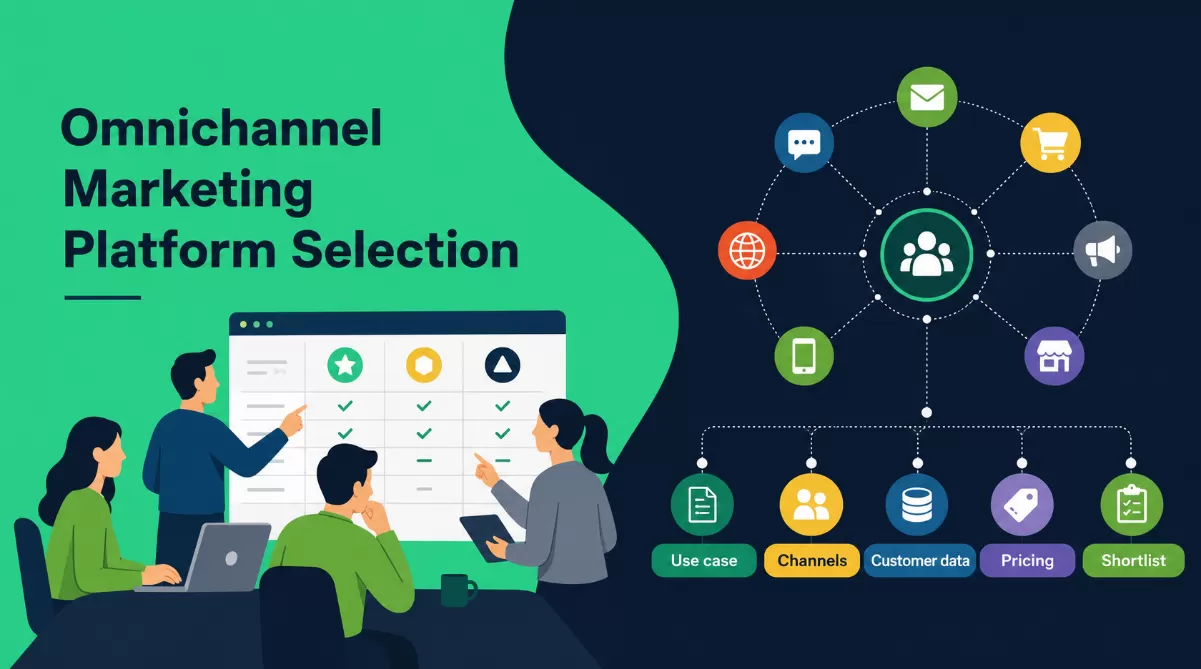
Best Omnichannel Marketing Platforms: Quick Comparison
There is no single best omnichannel marketing platform for every business. Use this table to match the platform type to your business model, primary channels, team size, and existing CRM or marketing stack. For example, e-commerce teams can start with Klaviyo and Omnisend. CRM-led teams can compare HubSpot and Salesforce. Mobile-first or product-led teams can look at Braze and Customer.io. Enterprise journey teams can compare Salesforce and Adobe, while messaging-focused teams can evaluate EngageLab.
| Platform | Best For | Main Channels | Pricing Model |
|---|---|---|---|
| EngageLab | Teams that need shared segmentation and messaging delivery across push, email, SMS, and WhatsApp. | AppPush, WebPush, Email, SMS, WhatsApp | Usage-based by product, channel, and volume. |
| Braze | Mobile-first brands that use app events and first-party data for real-time engagement. | Push, in-app messages, email, SMS/MMS, Content Cards, and WhatsApp. | Custom; based on monthly active users, channels, message volume, and plan tier. |
| Klaviyo | E-commerce and retail brands using store data, customer profiles, orders, and product behavior. | Email, SMS, WhatsApp, and mobile push. | Free and paid plans; scales by profiles, email volume, and messaging usage. |
| HubSpot Marketing Hub | B2B and inbound teams that want marketing automation connected with native CRM data. | Email, forms, landing pages, ads, social, CRM workflows, and reporting. | Free and paid tiers; scales by seats, contacts, and plan. |
| Salesforce Marketing Cloud | Enterprise teams using Salesforce CRM, Data Cloud, and Journey Builder for large-scale journeys. | Email, mobile messaging, web, ads, and CRM-connected journeys. | Enterprise pricing; varies by products, Data Cloud, add-ons, and support. |
| Adobe Journey Optimizer | Enterprise teams using Adobe Experience Platform, real-time profiles, and audience data. | Email, push, in-app, web, SMS/MMS, content cards, and journey channels. | Custom package pricing; depends on package, channels, and Adobe Experience Platform needs. |
| Omnisend | E-commerce stores that want quick automation from Shopify, WooCommerce, or BigCommerce data. | Email, SMS, and web push notifications. | Free and paid tiers; scales by contacts, email allowance, and SMS usage. |
| Customer.io | Product-led teams that use event data, APIs, SDKs, or webhooks for lifecycle messaging. | Email, SMS/MMS, mobile push, and in-app messages. | Profile-based; scales by profiles, message volume, channels, and overages. |
ActiveCampaign, Brevo, and Iterable may also be worth comparing in some cases. They are not included in the main list because this guide focuses on representative platform types, not every adjacent email, SMS, CRM, or lifecycle marketing tool.
What Is an Omnichannel Marketing Platform?
An omnichannel marketing platform helps businesses connect customer data, messaging channels, campaign automation, and analytics so teams can deliver consistent communication across multiple touchpoints.
The main difference from multichannel marketing is integration. Multichannel marketing uses several channels, but each channel may operate separately. Omnichannel marketing connects those channels around the same customer profile, journey stage, and business goal.
| Concept | What It Means | Typical Example |
|---|---|---|
| Multichannel marketing | A business uses multiple channels, but campaigns and data may remain separate. | Email, SMS, and social media campaigns are planned independently. |
| Omnichannel marketing | Channels are connected around customer context, behavior, and journey stage. | A user abandons a cart, receives an email, then gets a push or SMS reminder based on engagement. |
| CRM | A system for storing customer records, sales activity, and relationship data. | Sales and account teams track leads, deals, contacts, and customer history. |
| Customer service platform | A platform for handling support conversations, tickets, and agent workflows. | Support teams manage email, chat, voice, and help center requests from one workspace. |
A CRM or customer service platform can be part of an omnichannel stack, but it is not always the same as an omnichannel marketing platform. A simple way to separate them is this: a CRM stores customer records and sales activity, a customer service platform helps teams resolve tickets and support requests, and an omnichannel marketing platform helps marketing or growth teams use customer data to trigger coordinated campaigns across channels.
8 Best Omnichannel Marketing Platforms in 2026
The following platforms are grouped by their strongest use cases. Use this section as a category filter, not a universal ranking: identify your main use case, then compare two or three platforms in that category.
Before reviewing the platforms, answer these questions:
- Which channels do your customers actually use? Do you only need email and SMS, or do push notifications, WhatsApp, in-app messages, and web push also matter?
- Do you need channel breadth or channel depth? A platform with more channels is not always better if your main journey depends on one or two channels working well.
- What customer data do you already have? Check whether the platform can connect with your CRM, e-commerce store, app events, or customer database.
- What happens as volume grows? Estimate how pricing changes when contacts, active users, seats, channels, or message volume increase.
Use those answers to choose a category first: CRM-led marketing, e-commerce lifecycle marketing, mobile-first engagement, enterprise journey orchestration, product-led lifecycle messaging, or multi-channel customer messaging.
1. EngageLab: Best for Multi-Channel Customer Messaging
EngageLab is worth considering for teams that need to reach users through multiple messaging channels, including AppPush, WebPush, Email, SMS, and WhatsApp.
It is especially relevant when a team wants to combine marketing messages, lifecycle notifications, transaction alerts, and re-engagement campaigns without managing every channel in a separate system.
For teams that also need verification messages, OTP can sit alongside these engagement channels for login, transaction, or security-related flows. It should be treated as an authentication use case rather than a general marketing channel.
- Best for: multi-channel customer engagement, lifecycle messaging, and global user communication.
- Main channels: AppPush, WebPush, Email, SMS, WhatsApp.
- Key strengths: common segmentation rules, API-based delivery, and performance tracking across AppPush, WebPush, Email, SMS, and WhatsApp.
- Consider another option if: your priority is CRM pipeline management, Shopify-first revenue attribution, support ticketing, or an enterprise content and experience suite.
- Pricing: usage-based. Use the official pricing page to estimate costs by selected products, channels, and usage volume.
2. Braze: Best for Mobile-First Customer Engagement
Braze is commonly used by mobile-first and app-heavy brands that use app events, first-party data, and real-time engagement signals to trigger cross-channel journeys.
- Best for: mobile-first customer engagement and advanced journey orchestration.
- Main channels: mobile and web push, in-app and in-browser messages, email, SMS/MMS, Content Cards, and WhatsApp.
- Key strengths: real-time event data, first-party data, cross-channel journey orchestration, experimentation, and mobile app engagement.
- Consider another option if: your team only needs simple email or SMS workflows, or does not have the technical resources to manage SDKs, event data, and channel setup.
- Pricing: custom pricing. Costs depend on monthly active users, selected channels, message volume, and platform tier.
3. Klaviyo: Best for E-Commerce Lifecycle Marketing
Klaviyo is a strong option for e-commerce and retail teams that want to use store data, customer profiles, order history, and product browsing behavior in targeted email, SMS, and mobile campaigns.
- Best for: e-commerce brands, retail teams, and revenue-focused lifecycle marketing.
- Main channels: email, SMS, WhatsApp, and mobile push.
- Key strengths: e-commerce customer profiles, order and product data, Shopify and BigCommerce integrations, revenue attribution, and lifecycle automation.
- Consider another option if: your workflows are not commerce-driven, or you need broader messaging infrastructure across many non-commerce use cases.
- Pricing: starts with a free plan for up to 250 active profiles and 500 monthly email sends. Paid plans scale with active profiles, email volume, SMS, and WhatsApp usage.
4. HubSpot Marketing Hub: Best for CRM-Led Inbound Marketing
HubSpot Marketing Hub is a CRM-led marketing platform for teams that want marketing campaigns, lead nurturing, forms, landing pages, and sales handoff in one ecosystem.
- Best for: B2B teams, inbound marketing, and CRM-connected lead management.
- Main channels: email, forms, landing pages, ads, social, CRM workflows, and reporting tools.
- Key strengths: native CRM data, form and landing page data, lead scoring, workflows, reporting, and sales handoff.
- Consider another option if: your priority is mobile-first engagement, e-commerce revenue workflows, or messaging delivery rather than CRM setup, contact management, and sales handoff.
- Pricing: starts with a free plan; paid Marketing Hub plans start from $20/mo/seat. Costs scale with marketing contacts, seats, onboarding, and add-ons.
5. Salesforce Marketing Cloud: Best for Enterprise CRM-Connected Journeys
Salesforce Marketing Cloud is an enterprise marketing platform for teams that use Salesforce CRM, Data Cloud, and Journey Builder to connect customer data with large-scale journeys.
- Best for: enterprise teams using Salesforce CRM, Data Cloud, or complex customer journeys.
- Main channels: email, mobile messaging, web, digital advertising, and CRM-connected customer journeys.
- Key strengths: Salesforce CRM and Data Cloud data, Journey Builder orchestration, audience segmentation, and enterprise ecosystem depth.
- Consider another option if: your team does not have Salesforce admin or partner support, or does not need enterprise-level CRM-connected journeys.
- Pricing: published Salesforce plans start around $1,500/org/month. Costs scale with selected products, Journey Builder, Data Cloud, add-ons, and support needs.
6. Adobe Journey Optimizer: Best for Enterprise Experience Orchestration
Adobe Journey Optimizer is part of Adobe's broader experience and marketing ecosystem. It is suitable for enterprise teams that use Adobe Experience Platform, real-time customer profiles, and audience data to manage complex digital journeys.
- Best for: enterprises with complex digital experience, content, data, and journey requirements.
- Main channels: email, push, in-app, web, SMS/MMS, content cards, and other enterprise journey channels.
- Key strengths: Adobe Experience Platform data, real-time customer profiles, audience segmentation, journey orchestration, and content workflows.
- Consider another option if: your team only needs lightweight email, SMS, or push campaigns and does not plan to use Adobe Experience Platform as part of the stack.
- Pricing: custom package pricing. Compare Select, Prime, and Ultimate packages, native channels, Adobe Experience Platform requirements, and journey decisioning features.
7. Omnisend: Best for E-Commerce Email and SMS Automation
Omnisend is an e-commerce marketing automation platform built around store data from Shopify, WooCommerce, BigCommerce, and similar e-commerce platforms.
- Best for: e-commerce stores that need quick email and SMS automation setup.
- Main channels: email, SMS, and web push notifications.
- Key strengths: store data syncing, customer and product data, cart recovery, templates, segmentation, and e-commerce automation.
- Consider another option if: your business is not commerce-focused, or you need product-led event data and messaging workflows beyond store automation.
- Pricing: starts with a free plan for up to 250 contacts and 500 emails/month. Paid plans start from $16/mo and scale with contacts, email allowance, SMS, and web push usage.
8. Customer.io: Best for Product-Led Lifecycle Messaging
Customer.io is a lifecycle messaging platform for product-led and growth teams that can connect event data through APIs, SDKs, webhooks, or data pipelines.
- Best for: SaaS, product-led growth, onboarding, activation, and lifecycle messaging.
- Main channels: email, SMS/MMS, mobile push, and in-app messages.
- Key strengths: event-based journeys, API and webhook data flows, behavioral segmentation, workflow automation, and developer-friendly integration.
- Consider another option if: your team wants a simpler email tool or does not have the technical resources to manage event tracking, APIs, or SDKs.
- Pricing: starts from $100/mo for Essentials, including 5,000 profiles and 1 million emails/month. Costs scale with profiles, message volume, channels, and overages.
For Customer.io, Slack and webhooks are useful for internal alerts or custom workflows, but most marketing teams should first compare the customer-facing channels: email, SMS/MMS, mobile push, and in-app messages.
If your team mainly needs simpler email and SMS automation, also compare tools such as ActiveCampaign or Brevo. If your team has a larger lifecycle marketing program and more complex customer data needs, Iterable may also be worth reviewing.
How to Choose the Right Omnichannel Marketing Platform
To choose the right platform, start with your customer journey instead of the vendor list. A retail brand, a SaaS product, a financial service, and a mobile app may all need omnichannel engagement, but their channel mix and automation needs can be very different.
After you have identified your main platform category, use the checklist below to compare vendors in that category. Focus on the channels, data connections, journey logic, pricing model, and day-to-day work that matter for your team.
Channel coverage
Check whether the platform supports the channels your users actually use, such as email, SMS, WhatsApp, AppPush, WebPush, in-app messages, chat, or social messaging. Also check whether those channels can work together in one journey, not just exist as separate tools.
Missing a key channel, or managing channels separately, can force your team to build disconnected workflows.
Channel depth vs. breadth
Decide whether you need broad coverage across many channels or deeper capabilities in a few key channels, such as mobile push, in-app messages, email, SMS, or WhatsApp.
A platform with many channels is not always better if your main customer journey depends on one or two channels working well.
Customer data integration
Review whether the platform can connect with the systems that matter for your campaigns, such as CRM, CDP, e-commerce, product analytics, or internal databases.
You do not need every possible integration, but you do need enough shared customer context to avoid isolated channel lists.
Journey orchestration
Look for journey builders, branching logic, fallback channels, and event-based triggers, such as sending SMS only when an email is ignored or using push for active app users.
Good orchestration helps you avoid blasting the same message across every channel and keeps the journey more relevant to the user.
Segmentation and personalization
Check whether campaigns can use behavior, lifecycle stage, preferences, and consent status.
Personalization is only useful when it is based on accurate and current customer data.
Analytics
Compare delivery, open, click, conversion, channel performance, and journey-level reporting.
Your team needs to know which channel and message sequence actually leads to action.
Pricing model
Check whether pricing is based on contacts, profiles, seats, message volume, channels, or custom packages.
A platform that looks affordable at the start may become expensive as contacts, seats, or message volume grows.
Implementation effort
Ask who will set up journeys, connect data sources, manage templates, and maintain campaigns after launch.
Enterprise platforms may need dedicated admins or implementation partners, while lighter tools may be easier for smaller teams to operate.
Scalability and compliance
Review global delivery, data region options, consent management, opt-in requirements, and security requirements.
These factors become important when campaigns expand across countries, channels, and user segments.
After checking these factors, compare two or three platforms in the category that best matches your main use case.
When comparing pricing, avoid looking only at the starting plan. Omnichannel platform costs can change quickly once you add more contacts, active profiles, monthly active users, message volume, extra channels, seats, onboarding, or enterprise support. A more practical comparison is to estimate your current usage and your expected usage in the next 6 to 12 months.
| Pricing Model | Common Platforms | What to Watch |
|---|---|---|
| Usage-based messaging | EngageLab and other messaging-focused platforms | Estimate cost by channel, country or region, message volume, and products used. |
| Profile or contact-based | Klaviyo, Customer.io, Omnisend | Costs can rise as your active profiles, contacts, SMS usage, or email volume grows. |
| Seat and contact-based | HubSpot Marketing Hub | Check both marketing contacts and paid seats, especially when sales and marketing teams share the system. |
| Custom / enterprise pricing | Braze, Salesforce Marketing Cloud, Adobe Journey Optimizer | Ask about implementation, onboarding, data volume, selected modules, and contract terms before comparing quotes. |
Common Omnichannel Marketing Use Cases
Omnichannel marketing platforms are most valuable when the user journey crosses more than one channel and the business needs to keep communication consistent.
Use these examples to check whether a platform can connect the user action, trigger, channel sequence, and required capability, rather than only supporting each channel separately.

Cart and browse recovery
A shopper views a product or abandons a cart, which triggers a recovery journey based on product interest, cart value, and recent engagement.
Email for the first reminder; SMS, push, or web push when the offer is time-sensitive or the user is more active on that channel.
Behavior triggers, product data, and channel fallback.
Cross-sell and upsell
A customer views or buys a related product, which triggers a recommendation, bundle, upgrade, or renewal message based on purchase history and lifecycle stage.
Email for detailed recommendations; app push or SMS for short, timely offers; web or in-app messages when the user returns.
Unified profiles, segmentation, and recommendation logic.
SaaS onboarding and adoption
A new user signs up but has not completed key activation steps, such as inviting a teammate, setting up a project, or using a core feature.
Email for onboarding guidance; in-app messages during product use; push or email reminders when the user stalls.
Lifecycle automation and product event data.
Mobile app re-engagement
An app user becomes inactive, skips a repeated action, or stops using a feature that matters for retention.
App push first for active app users; email or SMS if the user does not open the app or has disabled push notifications.
User segmentation and cross-channel journey logic.
Transactional alerts
A payment, delivery, security, account, or booking event triggers a message the user needs to see quickly.
SMS, AppPush, WhatsApp, or email depending on urgency, user preference, and delivery reliability.
Reliable delivery, routing, and real-time triggers.
Loyalty and win-back
A high-value, loyal, or inactive customer enters a segment that triggers a reward, reminder, or win-back offer.
Email for richer offers; SMS, push, or WhatsApp for timely reminders and follow-up when engagement is low.
Customer profiles, personalization, and campaign automation.
Retail loyalty and online-offline journeys
A customer checks rewards, receives a store-related offer, buys online, or picks up in-store while the journey continues across digital and offline touchpoints.
App or email for loyalty updates; SMS or push for pickup, store, or time-sensitive reminders; in-store data to update the next message.
Loyalty data, store context, and customer profiles.
Support continuity can also be omnichannel, but it usually belongs to customer service or contact center platforms rather than marketing-first platforms.
When EngageLab Is a Good Fit for Omnichannel Customer Engagement
EngageLab is a good fit if your team needs one messaging-focused stack for AppPush, WebPush, Email, SMS, and WhatsApp, instead of managing each channel in a separate system.
For example, a mobile app may use AppPush for active users, Email for lifecycle campaigns, SMS for urgent alerts, and WhatsApp for conversational follow-up. In this workflow, the challenge is not only campaign design, but also deciding which channel should be used for each user action, then managing delivery, routing, segmentation, automation, and performance tracking across channels.

It may not be the first choice if your main priority is CRM pipeline management, support ticketing, or enterprise content personalization rather than messaging delivery and engagement.
FAQs About Omnichannel Marketing Platforms
What is an omnichannel marketing platform?
An omnichannel marketing platform connects customer data, messaging channels, automation, and analytics so teams can deliver consistent customer communication across multiple touchpoints.
What is the difference between omnichannel and multichannel marketing?
Multichannel marketing uses multiple channels, but those channels may operate separately. Omnichannel marketing connects the channels around the same customer profile, behavior, and journey stage.
Is an omnichannel marketing platform the same as a CRM?
No. A CRM mainly stores and manages customer relationships, contacts, sales activity, and account data. An omnichannel marketing platform uses customer data to trigger campaigns, automation, and cross-channel messaging. If your main need is sales pipeline management, choose a CRM-led tool. If your main need is lifecycle marketing, user re-engagement, or coordinated messaging, compare omnichannel marketing or customer engagement platforms first.
Which omnichannel marketing platform is best for e-commerce?
E-commerce teams often prioritize customer profiles, purchase history, abandoned cart flows, email, SMS, and revenue attribution. Platforms such as Klaviyo and Omnisend are commonly considered for e-commerce workflows, while businesses with broader messaging needs may also compare multi-channel engagement platforms.
How do I quickly shortlist omnichannel marketing platforms?
Start with your primary use case, then compare platforms in that category. CRM-led teams can compare HubSpot or Salesforce, e-commerce teams can start with Klaviyo or Omnisend, mobile-first teams can review Braze, and messaging-focused teams can consider EngageLab for push, email, SMS, WhatsApp, and web channels.
What should I prepare before choosing an omnichannel marketing platform?
Prepare your main use case, must-have channels, current CRM or data tools, approximate audience size, expected message volume, and who will manage campaigns after launch. These details make it easier to compare platforms by fit instead of choosing only by brand name or starting price.
Are Zendesk, Intercom, and Kustomer omnichannel marketing platforms?
They can support omnichannel customer interactions, but they are usually more support-led than marketing-led. They are better suited for ticketing, chat, agent workflows, customer service continuity, and issue resolution. If your main goal is to manage support requests, they may be a good fit. If your main goal is marketing automation, lifecycle engagement, re-engagement, or proactive messaging campaigns, compare marketing-first or customer engagement platforms first.
How much does an omnichannel marketing platform cost?
Pricing depends on the platform type. Messaging-focused platforms may charge by product, channel, region, or message volume. E-commerce and lifecycle platforms often charge by contacts or active profiles. CRM-led platforms may combine seats, marketing contacts, and plan tiers. Enterprise platforms usually require custom quotes. Before choosing a tool, estimate your channels, audience size, message volume, team seats, and expected growth.
Conclusion
Choosing an omnichannel marketing platform starts with your customer journey. A mobile-first app, an e-commerce brand, a B2B sales team, and an enterprise marketing team may all need omnichannel capabilities, but they should not choose the same platform for the same reason.
Pricing should be part of that decision, but it should not be judged only by the lowest starting plan. A lower entry price may still become expensive if your contacts, active users, seats, channels, or message volume grow quickly.
If your priority is CRM-led lead management, compare HubSpot and Salesforce. For e-commerce revenue workflows, start with Klaviyo and Omnisend. For mobile-first or product-led lifecycle engagement, compare Braze and Customer.io. For enterprise journey orchestration, compare Salesforce and Adobe. For multi-channel customer messaging across AppPush, WebPush, Email, SMS, and WhatsApp, consider EngageLab.
![How to Make SMS Segmentation Worth the Effort [With 6 Examples]](https://img.engagelab.net/en/article/sms-segmentation-cover.webp)

![Transactional Email API: Compare, Integrate, and Scale with Multi-Channel Messaging [2026]](https://img.engagelab.net/en/article/cover-transactional-email-api-hero.webp)

