Jacob Morrow
Updated: 2026-06-25
Sending the same message to every customer is no longer enough. Marketers who consistently drive higher conversions, lower churn, and stronger retention share one common practice: they segment their audience based on what customers actually do, not just who they are. That's the foundation of behavioral segmentation in marketing.
This guide breaks down the types of behavioral market segmentation, walks through real industry examples — including ecommerce, B2B SaaS, media, eLearning, fintech, and retail — and shows you how to apply behavioral segments to email marketing campaigns for measurable results.
What Is Behavioral Segmentation in Marketing
Behavioral segmentation definition
Behavioral segmentation is a marketing strategy that divides customers into groups based on their observable actions and interactions with a brand — including frequency, loyalty level, timing of purchases, buying intent, and other behavioral signals. Unlike demographic or geographic segmentation, which describes who customers are or where they live, behavioral segmentation focuses on what they do and when they do it.
Behavioral segmentation helps marketers move from broad assumptions to specific, answerable questions:
Answering these questions accurately depends on the quality of the underlying data. The signals that make behavioral segmentation work — how often someone buys, which features they use, how they respond to campaigns, when they tend to convert, and how their engagement level shifts over time — are collectively referred to as behavioral characteristics. Because they reflect real actions rather than inferred traits, behavioral characteristics make segmentation more precise and far more actionable than demographic or psychographic data alone.
Behavioral vs other market segmentation types

There are four primary types of market segmentation. Behavioral segmentation is often the most directly useful for triggering personalized campaigns because it is grounded in what customers actually do, not in inferred characteristics.
| Segmentation type | Based on | Example |
|---|---|---|
| Behavioral | What customers do | Repeat purchases, feature usage, email clicks, pricing page visits |
| Demographic | Who customers are | Age, income, job title, company size |
| Geographic | Where customers are | Country, city, region, time zone |
| Psychographic | Why customers act | Values, interests, lifestyle, personality traits |
Among these, behavioral segmentation is the most directly actionable. Demographic data tells you a customer is a 35-year-old manager; behavioral data tells you that person visited your pricing page three times this week and downloaded a case study. The behavioral signal is far more useful for triggering the right message at the right moment.
Why Behavioral Segmentation Matters in Marketing
Behavioral segmentation turns raw customer data into clear, actionable groups that your marketing, sales, and product teams can act on immediately. Here is why it matters:
- Higher message relevance: Campaigns built around what a customer has actually done — not assumed preferences — consistently outperform generic broadcasts. McKinsey research shows companies excelling at personalization generate 40% more revenue than average players, and that personalization can reduce customer acquisition costs by up to 50% while lifting revenues by 5–15%.
- Identify high-intent users earlier: Behavioral signals such as repeated pricing page visits, demo requests, or cart additions identify customers who are ready to convert before they self-identify.
- Reduce wasted marketing spend: Rather than sending every message to your entire list, you can focus your budget on the segments most likely to respond, improving ROI across email, push, SMS, and paid channels.
- Improve conversions across every channel: Whether you are running email, push notifications, SMS, or WhatsApp campaigns, behavioral segments let you trigger the right message on the right channel based on what the customer just did.
- Support full lifecycle marketing: Behavioral segmentation helps you engage users at every stage of the customer lifecycle, including new leads, trial users, active customers, at-risk customers, and lapsed buyers.
- Align marketing and sales around real signals: Shared behavioral data (feature usage, pricing page visits, integration lookups) gives both teams a common language for prioritizing outreach, particularly in B2B environments.
- Reduce churn and increase retention: By tracking drops in engagement, usage, or purchasing frequency, you can identify at-risk segments early and intervene with win-back campaigns before customers leave.
Types of Behavioral Market Segmentation [With Examples]

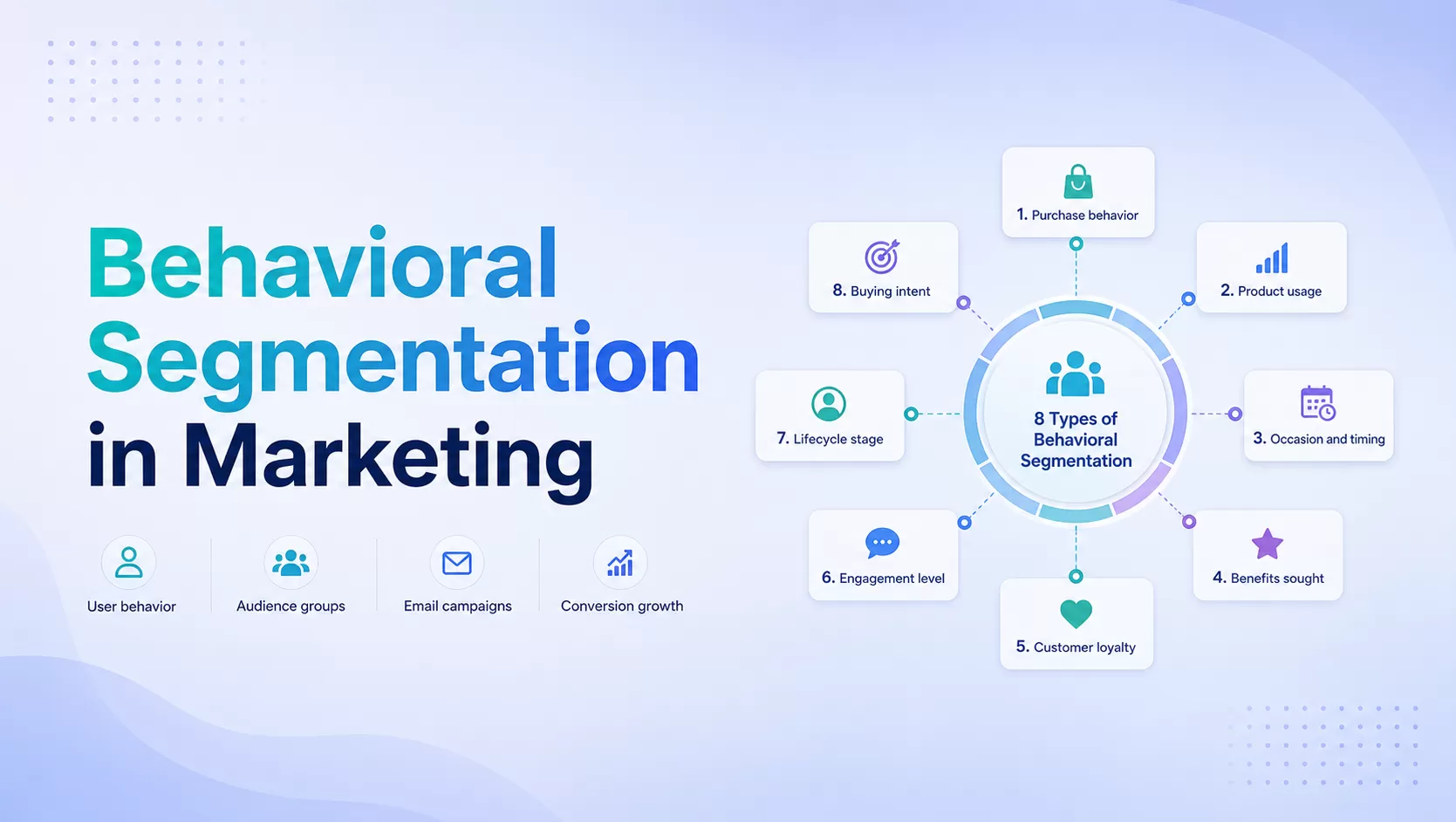
Behavioral market segmentation covers a wide range of observable customer actions. The eight types below are the most widely used in practice, each suited to different marketing goals and industries.
Purchase behavior
Purchase behavior segmentation groups customers by how, when, and how often they buy — including purchase frequency, average order value, recency, cart actions, and repurchase cycles. It is one of the most data-rich segmentation types because transaction records are typically easy to collect and analyze.
🎯 Applicable scenarios: Ecommerce, retail, subscription services, any brand with a recurring or repeat-purchase model.
Real-world example
Amazon segments customers into first-time buyers, repeat buyers, and cart abandoners — and uses these segments to power different email triggers. Cart abandonment emails, for instance, have an average open rate of 39.07% and a click rate of 23.33% according to Klaviyo's 2024 abandoned cart benchmark report, significantly outperforming standard promotional emails. First-time buyers receive welcome discounts to build loyalty; repeat buyers are shown loyalty rewards and cross-sell recommendations based on prior purchase categories.
Product usage
Product usage segmentation divides users by how frequently and deeply they use your product or service — distinguishing power users from light users, trial activators from dormant accounts, and advanced feature users from those who only use basics.
🎯 Applicable scenarios: B2B SaaS, mobile apps, streaming platforms, any product with measurable usage data.
Real-world example
Slack segments its users into power users (teams actively using channels, integrations, and Workflow Builder), regular users, and inactive workspace admins. According to Slack's own data, workspaces with active integrations have significantly higher retention rates. Inactive workspace admins receive targeted re-engagement emails highlighting new features and ROI reports for their team, while trial users who have activated key features but haven't invited teammates receive onboarding nudges encouraging collaboration setup.
Occasion and timing
Occasion and timing segmentation groups customers by when they are most likely to buy or engage — including seasonal patterns, renewal cycles, paydays, course schedules, event-based triggers, and life events.
🎯 Applicable scenarios: Retail (holiday campaigns), eLearning (class schedules), SaaS (renewal reminders), fintech (payday offers).
Real-world example
Sephora uses occasion-based behavioral segmentation to identify customers who historically purchase during major sale events such as the Beauty Insider Sale and Black Friday. This segment receives preview emails 7–10 days before the sale opens — and according to Sephora's reported campaign metrics, early-access email campaigns to high-purchase-intent segments consistently achieve 2–3× higher conversion rates compared to general list sends. Course platforms like Coursera similarly trigger reminder emails to learners 48 hours before live sessions or assignment deadlines.
Benefits sought
Benefits sought segmentation groups customers by the primary value they seek from your product — such as saving money, improving security, increasing efficiency, gaining status, or getting personalized recommendations.
🎯 Applicable scenarios: Fintech, insurance, SaaS, consumer brands with multiple value propositions.
Real-world example
Revolut segments users by the benefits they most engage with. Security-focused users (who frequently check account activity, enable freezing features, or use disposable virtual cards) receive security tips, fraud alerts, and product updates about protection features. Reward-focused users (who actively use cashback, currency exchange, and Revolut Stays) receive promotional emails about new rewards. This benefits-based split allows Revolut to maintain a single product while personalizing the communication for each segment, improving email engagement rates across the board.
Customer loyalty
Customer loyalty segmentation divides users by their loyalty level — based on purchase history, membership tier, referral behavior, Net Promoter Score, or time since last purchase. This type of segmentation is especially powerful for identifying both your best customers and those at risk of churning.
🎯 Applicable scenarios: Retail loyalty programs, subscription businesses, airline and hotel brands, DTC ecommerce.
Real-world example
Starbucks Rewards is one of the most widely cited loyalty segmentation examples. The program segments members into active Gold members, at-risk members (those whose star count is declining), new members, and lapsed members. Each receives different email and app push campaigns: Gold members get bonus star challenges; at-risk members receive personalized win-back offers with expiring bonuses. Starbucks has reported that its loyalty program members drive 57% of U.S. company-operated revenue, illustrating the compounding business value of loyalty segmentation.
Engagement level
Engagement level segmentation groups users by how actively they interact with your brand across digital touchpoints — including email open rates, link clicks, website visit frequency, ad interactions, app logins, and content consumption.
🎯 Applicable scenarios: Media publishers, newsletters, content platforms, SaaS, any brand with a subscription or content engagement model.
Real-world example
The New York Times uses engagement segmentation to distinguish frequent digital readers (who visit multiple times per week and engage with multiple sections), topic followers (who consistently read specific sections like Technology or Climate), and inactive subscribers (who haven't opened the app or visited in 30+ days). Inactive subscribers receive win-back campaigns highlighting personalized article recommendations and new section launches. The Times has credited engagement-based segmentation as a core driver of its subscriber retention strategy, with digital subscribers surpassing 10 million as of 2024.
Lifecycle stage
Lifecycle stage segmentation places customers into groups based on where they are in their relationship with your brand — from new leads and trial users to active customers, renewal-ready accounts, and lapsed buyers. Each stage requires different messaging and channel strategies.
🎯 Applicable scenarios: SaaS, eLearning, subscription services, any product with a defined user lifecycle.
Real-world example
Duolingo segments its learners by lifecycle stage and uses behavioral triggers to intervene at precisely the right moment. New users who haven't completed their first lesson within 24 hours receive a push notification reminder. Users who have completed 5+ lessons but haven't returned in 3 days get a streak-preservation email. Users with 50+ day streaks at risk of breaking receive a high-urgency app push. According to Duolingo's 2023 annual report, daily active users grew 65% year-over-year in Q4 2023 — driven in part by this lifecycle-stage notification strategy that now reaches over 500 million registered users.
Buying intent
Buying intent segmentation identifies customers who are showing strong signals of readiness to purchase — based on behaviors such as visiting pricing pages, reading comparison articles, requesting demos, downloading case studies, or repeatedly returning to a product detail page.
🎯 Applicable scenarios: B2B SaaS, high-consideration consumer purchases (real estate, automotive, finance), enterprise software.
Real-world example
HubSpot uses intent-based behavioral segmentation to identify accounts where multiple users are simultaneously reading pricing pages, integration documentation, and migration guides — a cluster of signals that typically precedes a purchase decision. These accounts are flagged as sales-ready in HubSpot's CRM, triggering an automated email sequence with a case study relevant to the account's industry, followed by a personal outreach from a sales rep. HubSpot's internal data has shown that accounts receiving intent-triggered outreach within 5 minutes of a high-intent action convert at significantly higher rates than those contacted later.
Behavioral Market Segmentation Examples by Industry
Behavioral segmentation applies across virtually every industry, but the relevant signals, segments, and campaign triggers differ by context. Below are six detailed examples of behavioral market segmentation in practice.
Ecommerce
In ecommerce, purchase and browsing behavior generates a constant stream of segmentation signals. A customer who browses a category three times, adds an item to cart, and exits without purchasing is displaying one of the most commercially valuable behavioral patterns: cart abandonment.
ASOS acts on this signal within 60 minutes, sending a cart recovery email followed by a push notification if the item risks going out of stock. According to Baymard Institute's analysis of 50 studies, fashion ecommerce cart abandonment reaches as high as 84.43%. Separately, ASOS segments frequent buyers (4+ purchases in 90 days) into an early-access tier, reinforcing habitual purchasing before the general list is notified.

B2B SaaS
B2B behavioral segmentation works at the account level. The most valuable signals are those that indicate a purchase decision is approaching — multiple team members visiting pricing pages, reading integration documentation, or activating trial features above average.
Salesforce uses Einstein Lead Scoring to flag accounts showing clustered buying-intent behaviors (pricing access, ROI calculator downloads, demo requests), triggering an automated case study email, a sales rep alert, and a follow-up sequence. For product-led SaaS companies, accounts activating 3+ core features within the first 7 days of trial are segmented separately and receive upgrade-focused outreach rather than standard onboarding emails.

Media
Media companies sit on some of the richest behavioral data available — every article read, topic engaged with, and paywall hit is a measurable signal. The challenge is converting passive readership into paid subscriptions.
The Atlantic segments readers by engagement depth, sending curated newsletters to topic affinity groups and targeted subscription offers to readers who have hit the paywall 3 times within 30 days. The strategy contributed to The Atlantic reaching 1 million paying subscribers by 2024.
eLearning
In eLearning, behavioral signals tell you exactly when to encourage, remind, or incentivize. Progress stalls and deadline proximity are among the most actionable triggers.
Coursera segments learners who have passed 70% course completion but haven't logged in for 7 days into a near-completer group. These learners receive an email and push notification showing their exact progress percentage, a certificate preview, and an estimated time to finish. Learners who complete a course enter a recommendation segment, where their topic history informs which certificate program to suggest next.

Fintech
Fintech behavioral segmentation must balance personalization with regulatory compliance — making intent-based signals more useful than transaction details in campaign triggers.
Robinhood identifies users who repeatedly visit ETF or options education pages without completing a first deposit and places them in an investment intent segment. These users receive a targeted educational email series with prompts to complete identity verification, reducing friction in the conversion funnel before any transaction is expected.
Retail
Retail behavioral segmentation is most powerful when combined with loyalty data, allowing brands to identify churn risk before customers disengage entirely.
Nike flags NikePlus members who haven't purchased in 90 days and whose app engagement has declined, placing them in an at-risk segment. These members receive a personalized win-back email tied to their most recently browsed category — not a generic discount. Nike's program, which reached 160 million active members, applies the same behavioral logic across email, push notifications, and personalized homepage experiences.

How to Build Behavioral Segments for Email Marketing Campaigns
Behavioral segmentation is one of the most powerful foundations for email marketing because it lets you send the right message at exactly the moment a subscriber has demonstrated buying intent, disengagement, or progress toward a goal. Here is a practical seven-step process for building behavioral segments and applying them to your email campaigns.
Step 1: Define the email campaign goal
Before building a segment, clarify what the email is designed to achieve. Common goals include trial activation, cart recovery, subscription renewal, feature adoption, re-engagement, course completion, or sales meeting booking. The goal determines which behavioral signals matter most.

Step 2: Choose behavior signals
Select the specific customer actions that qualify someone for this segment. Examples include: visited pricing page (3+ times in 7 days), opened 0 emails in the last 60 days, completed 70%+ of a course but hasn't logged in for 7 days, added to cart without purchasing, downloaded a case study, or used 3+ product features in the first week of a trial.
Step 3: Create behavior-based email segments
Build your segments in your email platform based on the signals defined above. Common high-value behavioral email segments include:
- Cart abandoners (added to cart, no purchase within 1–2 hours)
- Inactive subscribers (no email opens in 60+ days)
- High-intent B2B accounts (pricing + integration page visits from multiple users)
- Trial users who activated key features (engaged, but haven't upgraded)
- Topic followers (consistently read content on a specific subject)
- Near-completers (70%+ course progress, 7+ days since last login)
EngageLab Email helps you create behavior-based audience segments from user attributes, events, and engagement data, then automatically sync them with campaign workflows. As customer behavior changes, segments update in real time so each campaign reaches the right audience at the right moment.

Step 4: Match email content to behavior
The content of the email should reflect exactly what the subscriber did. Cart abandoners respond to urgency and social proof ("Others are looking at this item"). Pricing page visitors respond to comparison content and ROI data. Trial users who used advanced features respond to "how to unlock the next level" content. Avoid sending the same newsletter to all segments — it undermines the behavioral insight you have worked to collect.
Step 5: Use timing and triggers
The best behavioral email campaigns are triggered automatically when a customer enters a segment — not sent on a fixed broadcast schedule. Common trigger types include:
- Immediate trigger: cart abandonment email sent within 60 minutes
- Delayed trigger: follow-up email sent 3 days after pricing page visit with no conversion
- Lifecycle trigger: win-back email sent when a customer's purchase gap exceeds their historical average
- Milestone trigger: course completion reminder when progress hits 70%
EngageLab Marketing Automation support behavior-triggered email sequences, allowing you to map each behavioral segment to a specific trigger and message chain without manual intervention. Learn more in the Email Marketing Automation Guide.

Step 6: Test subject lines, offers, and timing
Once your behavioral segment is live, run structured A/B tests. Test one variable at a time: subject line, CTA copy, offer amount, or send time. For a cart abandonment segment, for example, test "You left something behind" vs. "Your cart is about to expire" — and measure which drives more recoveries, not just more opens.

Step 7: Measure beyond open rate
Open rate alone doesn't tell you whether behavioral email marketing is working. Track metrics that connect to your campaign goal: click rate, conversion rate, revenue per email, trial-to-paid activation rate, repeat purchase rate, churn reduction, and — for B2B — sales meetings booked or pipeline generated.
How EngageLab Helps with Real-Time Behavioral Segmentation
Behavioral segmentation is only as effective as the infrastructure behind it. Collecting signals, building segments, triggering campaigns, and analyzing results all need to work together without manual handoffs slowing you down. Here is how EngageLab supports each stage of the behavioral segmentation workflow.

What is EngageLab?
Here's how EngageLab facilitates real-time behavioral segmentation:
-
Collect behavior signals:
EngageLab captures user behavior events, interaction data, and channel
engagement across your product and marketing touchpoints — including email
opens and clicks, push notification interactions, SMS responses, page
visits, and custom events sent via API. This data forms the foundation for
building accurate, real-time customer profiles.

-
Create real-time customer segments:
Based on behavioral events and user attributes, you can build dynamic
audience lists in EngageLab that update automatically as customers move
through different stages — for example, moving from "trial activated" to
"pricing page visited" to "sales-ready account." Segments can be based on
purchase behavior, lifecycle stage, engagement level, feature usage, or
any custom event you define.
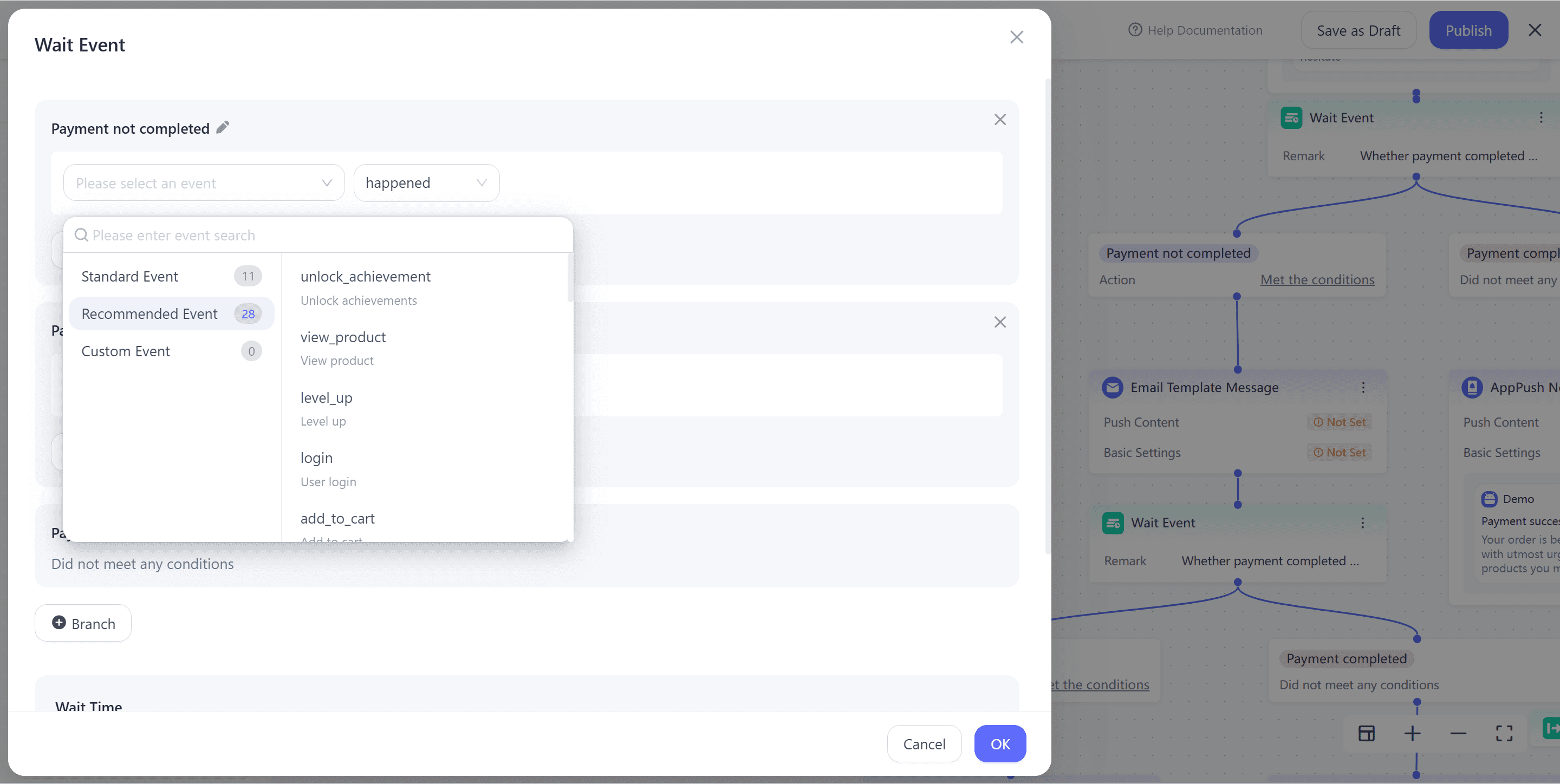
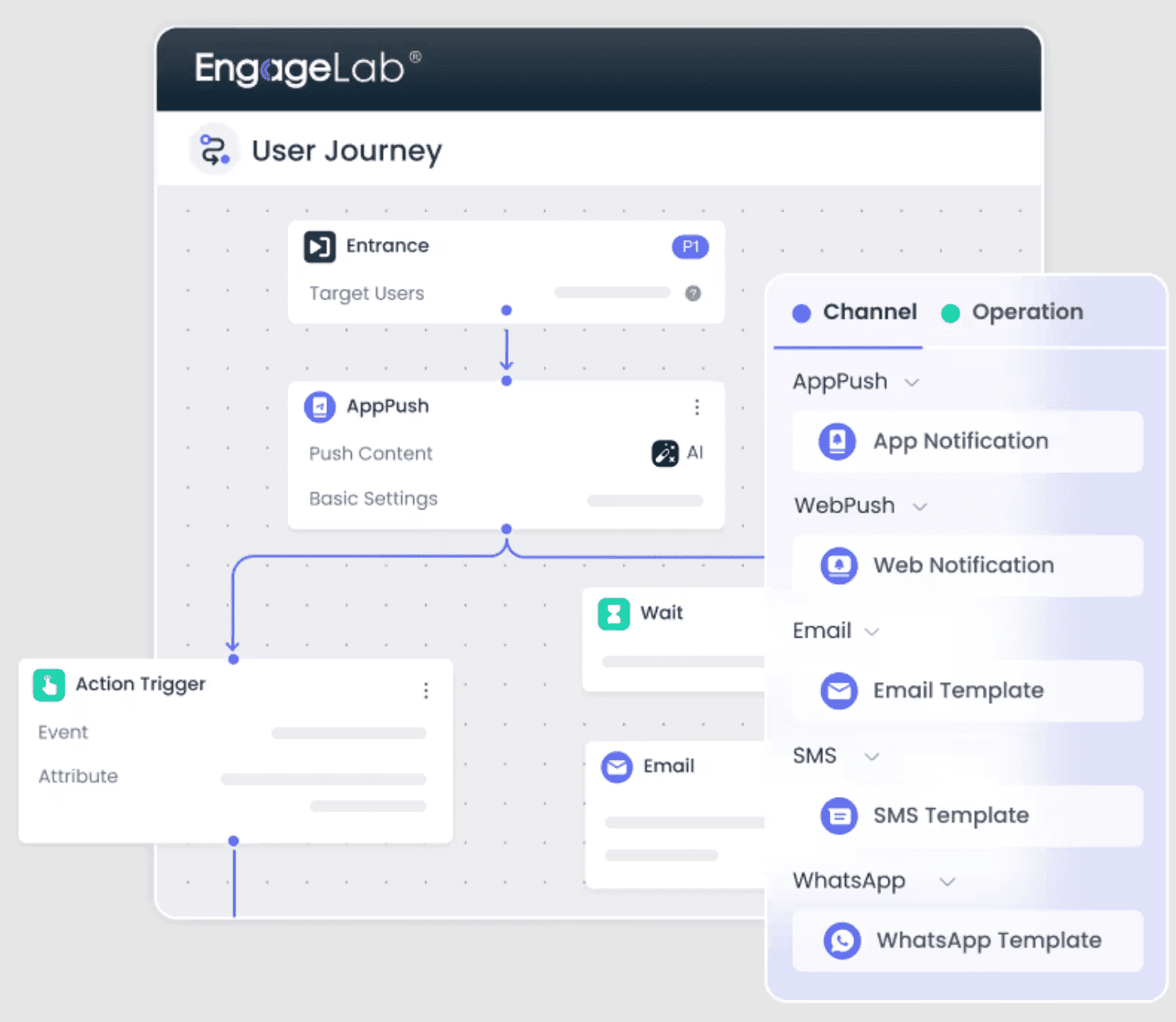
- Trigger cross-channel campaigns: When a customer enters a behavioral segment, EngageLab can automatically trigger a campaign across the appropriate channel — email, push notification, SMS, or WhatsApp — without requiring manual campaign launches. This means a cart abandoner receives an email within minutes, a pricing page visitor gets a follow-up message 24 hours later, and a lapsed customer enters a win-back sequence — all automatically.
-
Personalize push, email, SMS, and WhatsApp journeys:
EngageLab supports omnichannel personalization within a single platform.
The same behavioral segment can trigger different content on different
channels: an email with detailed product information, a push notification
with urgency messaging, an SMS with a direct link, and a WhatsApp message
for conversational follow-up. This channel-level personalization improves
engagement across the full customer journey.
- Analyze campaign results by segment: EngageLab's reporting surfaces campaign performance broken down by behavioral segment, allowing you to compare open rates, click rates, conversions, and revenue across audience groups. You can use this data to refine segment definitions, adjust trigger timing, and improve message content for each behavioral group.
- Support distributed teams and enterprise workflows: For organizations operating across multiple markets, product lines, or team structures, EngageLab's enterprise capabilities allow different teams to work from shared behavioral segment libraries while maintaining independent campaign controls. Marketing, product, and sales teams can align around the same real-time behavioral signals without duplicating data infrastructure.


FAQs
Q1. What are four types of behavioral segmentation?
The four most fundamental types are purchase behavior (how and when customers buy), product usage (how deeply they use your product), occasion and timing (when they are most likely to engage), and benefits sought (what value they primarily seek). Customer loyalty, engagement level, lifecycle stage, and buying intent round out the full taxonomy to eight categories.
Q2. What are behavioral characteristics?
Behavioral characteristics are the observable, measurable actions customers take in their relationship with a brand — purchase frequency, feature usage, email click behavior, website visit patterns, and intent signals such as pricing page visits or demo requests. Unlike psychographic traits, they reflect what customers actually do rather than what they think or feel.
Q3. What is the difference between behavioral and psychographic segmentation?
Behavioral segmentation groups customers by what they do — purchases, usage patterns, and intent signals. Psychographic segmentation groups them by why they act — values, attitudes, and lifestyle. The two approaches complement each other, but behavioral segmentation is more directly actionable because it is grounded in recorded events rather than inferred traits.
Q4. How does behavioral segmentation identify target markets?
By analyzing real customer actions — purchase frequency, content engagement, intent signals, churn indicators — behavioral segmentation surfaces precise, actionable audience groups. Each segment has its own conversion potential and channel preferences, allowing marketers to allocate budget toward the groups most likely to respond.
Q5. How to segment B2B customers?
B2B segmentation works best when firmographic data (company size, industry, revenue) is combined with account-level behavioral signals: pricing page visits from multiple team members, feature adoption during trial, integration lookups, demo requests, and buying committee engagement. When these signals are surfaced in the CRM, they allow marketing and sales to coordinate outreach around the accounts most likely to close.
Conclusion
Behavioral segmentation works because it replaces assumptions with evidence. Instead of targeting who customers are, you target what they do — and that shift, applied consistently across email, push, SMS, and other channels, is what separates campaigns that convert from campaigns that get ignored.
The framework covered in this guide scales from a single cart abandonment trigger to a full lifecycle segmentation strategy. Start with one high-value behavioral segment, measure the results, and expand from there. EngageLab gives you the infrastructure to do that — from signal collection and audience building to cross-channel campaign automation — in one place.
Put behavioral segmentation into practice with EngageLab
Collect behavioral signals, build real-time audience segments, and trigger personalized campaigns across email, push notifications, SMS, and WhatsApp — all from a single platform.