Jacob Morrow
Updated: 2026-07-02

According to the 2025 Imperva Bad Bot Report, automated traffic has, for the first time in a decade, surpassed human activity, now accounting for 51% of all web traffic worldwide. Malicious bots alone make up 37% of that figure, and the number has grown for six consecutive years. That is not background noise. That is the majority of what hits your servers every day.
The business cost is concrete: credential stuffing attacks drain customer accounts, scraping bots strip your pricing data for competitors, fake registrations inflate your user numbers while burning your SMS budget, and scalper bots gut your inventory before real buyers get a chance. None of these are hypothetical threats.
Bot detection tools exist to draw a clear line between automated traffic and real human users, and to act on that distinction before any damage is done. Understanding how they work is the starting point for protecting anything you run online.
Part 1. How Do Bot Detection Tools Work?
1Good Bots vs. Bad Bots

Not every automated visitor to your site is a threat. A blanket block-all-bots approach will break things you depend on.
Good bots serve legitimate purposes. Googlebot and Bingbot crawl your pages for search indexing, social media preview bots fetch metadata when links are shared, uptime monitoring tools check site availability, and payment processors run automated transaction checks.
Bad bots are designed to act against your interests, often at your expense.
| Bot Type | Examples | Purpose | Behavior Pattern |
|---|---|---|---|
| Good Bots | Googlebot, Bingbot, Slurp | Indexing, monitoring, data aggregation for legitimate services | Respects robots.txt, operates at predictable intervals, uses transparent user agents |
| Bad Bots | Credential stuffers, scrapers, scalper bots, DDoS bots | Account takeover, data theft, inventory hoarding, service disruption | Mimics human behavior, rotates IPs, ignores robots.txt, operates in bursts |
Sophisticated bad bots increasingly spoof user agents, use residential IPs, and mimic normal browsing behavior. This is why modern bot detection software cannot rely on simple blocklists.
2How Bot Detection Tools Identify Bots
Bot detection tools do not rely on a single signal. Instead, they combine multiple layers of analysis and generate a risk score.
✅Traffic pattern analysis identifies abnormal request behavior, such as highly consistent request intervals, repetitive navigation paths, or statistically unusual session patterns.
✅Behavioral analysis examines how users interact with a page, including mouse movement, clicking behavior, typing cadence, and form completion patterns. These signals are difficult for automated systems to reproduce consistently.
✅Device and environment checks evaluate whether browser, operating system, language, timezone, and other attributes form a coherent device profile. This process is commonly known as device fingerprinting.
✅Risk scoring combines all available signals into a confidence score. Based on that score, systems may allow traffic, present a challenge, require additional verification, throttle requests, or block access.
No bot detection system is perfectly accurate. Advanced bots using residential proxies and human-like behavior can still evade some detection layers, which is why most organizations rely on multiple detection techniques rather than a single control.
Part 2. Types of Bot Detection Tools
The bot detection tools list is not one-size-fits-all. Different threat surfaces call for different approaches, and most mature security stacks layer more than one type. Here is a breakdown of the main categories.

CAPTCHA-Based Bot Detection Tools
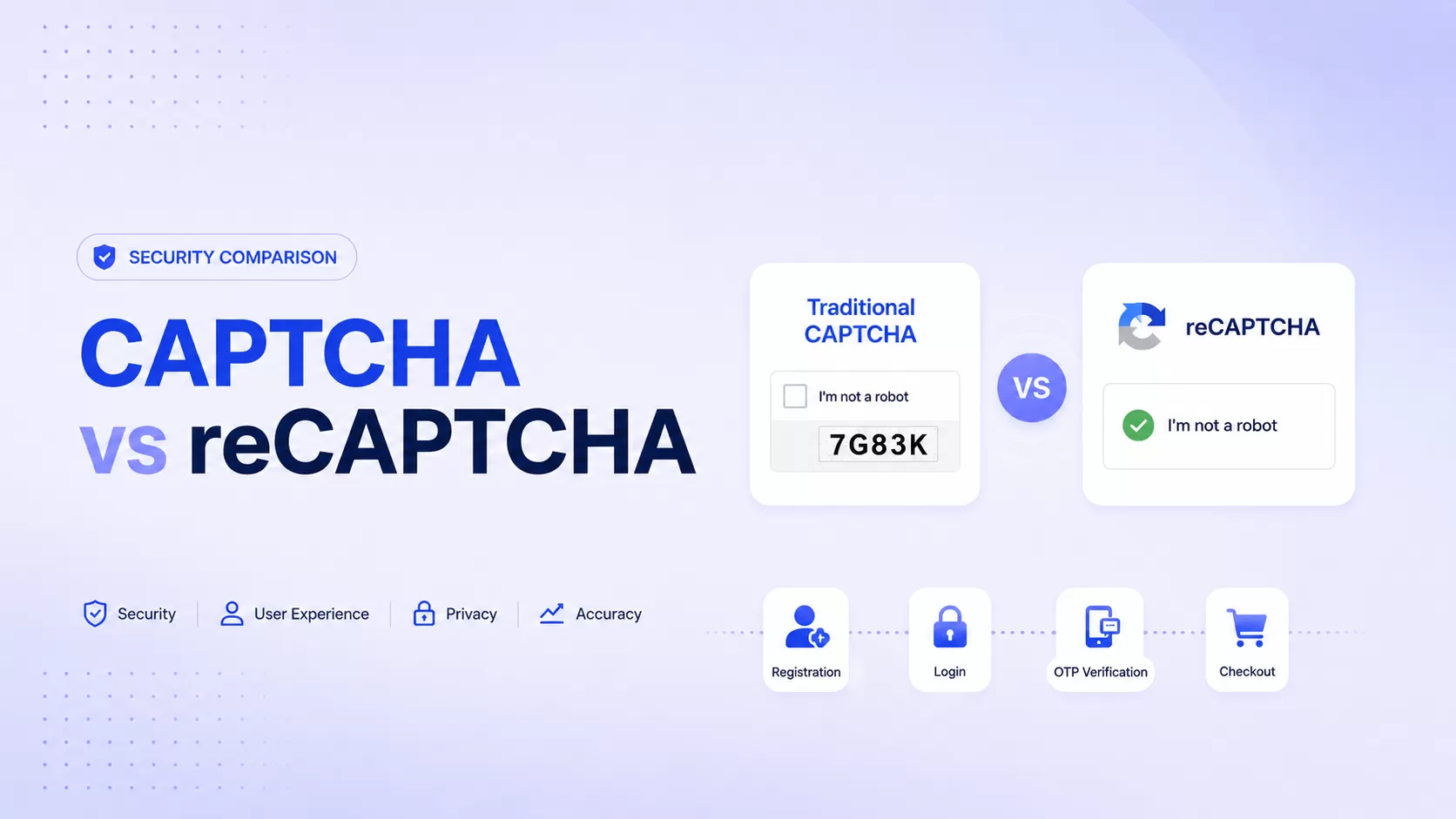
CAPTCHA is one of the most widely used human verification mechanisms. Modern CAPTCHA solutions go beyond traditional text puzzles and focus on behavioral signals such as mouse movement, click timing, and interaction patterns.
Visible challenges include sliders, image selection tasks, and click-based tests. Invisible CAPTCHA solutions work in the background and only surface challenges when suspicious behavior is detected.
CAPTCHAs work well for registration forms, login pages, and high-volume submission endpoints. Their limitation is that they introduce some degree of friction and can be bypassed by sufficiently advanced bots. As a result, CAPTCHA is typically used as a first layer rather than a complete solution.
Learn more about CAPTCHA → CAPTCHA vs reCAPTCHA: What's the Difference and Which Should You Choose?
Behavioral Analysis Tools
Behavioral analysis tools observe user interactions instead of challenging users directly. They evaluate signals such as scrolling, clicking, typing cadence, and navigation behavior to determine whether activity resembles a real user.
These tools are particularly effective against bots that have already bypassed CAPTCHA challenges. However, they require enough user interaction to build a meaningful behavioral profile and are less effective for very short sessions or single API requests.
Device Fingerprinting Solutions
Device fingerprinting creates a unique identifier based on browser and device attributes, including screen resolution, installed fonts, language settings, timezone, and hardware characteristics.
Its primary advantage is persistence. Even if a user clears cookies or changes IP addresses, the underlying device profile often remains recognizable. Fingerprinting is especially useful for identifying repeated abuse across multiple sessions.
Like behavioral analysis, it is most effective when combined with additional detection layers.
Bot Management Platforms
Bot management platforms combine multiple techniques, including behavioral analysis, device fingerprinting, traffic analysis, risk scoring, and automated mitigation.
These platforms can respond differently based on confidence levels, serving challenges to suspicious traffic, throttling scrapers, blocking malicious requests, and allowing verified good bots to pass.
Their main advantages are broad coverage, centralized visibility, and flexible response options. Their main drawbacks are higher cost and implementation complexity, making them better suited to larger organizations with more advanced threat exposure.
Part 3. Key Features to Look for in Bot Detection Tools
Not all bot detection software is built to the same standard. Some tools excel at catching simple scrapers but miss sophisticated credential stuffing attacks. Others handle web traffic well but leave your API endpoints completely unmonitored. Before you commit to any solution, evaluate against this consistent checklist.

The Feature Evaluation Checklist
- Multi-Layer Detection (Not Just One Signal) - A tool that relies solely on IP reputation or user-agent analysis will be bypassed by any moderately sophisticated attacker within hours. Look for solutions that combine behavioral analysis, device fingerprinting, traffic pattern analysis, and risk scoring in a unified engine.
- API and Mobile Coverage - According to the 2025 Imperva Bad Bot Report, 44% of advanced bot traffic targets API endpoints directly. A tool that only covers your front-end is protecting your lobby while the loading dock is wide open. Confirm detection extends across web, mobile app, and API traffic uniformly.
- Graduated Mitigation Options - Blocking all suspicious traffic outright is a blunt instrument. Effective bot detection services let you respond proportionally, serving a challenge to medium-confidence sessions, throttling suspected scraping bots, hard-blocking confirmed malicious traffic, and allowing known-good bots through cleanly.
- Allowlisting for Good Bots - Any tool that cannot distinguish between Googlebot and a credential stuffer will eventually break your SEO or monitoring integrations. Proper allowlisting with verification against published bot IP ranges is a non-negotiable operational requirement.
- Transparent Reporting and Traffic Visibility - Good platforms give you granular dashboards: traffic breakdown by bot type, attack vector, endpoint, time period, and risk score distribution.
Feature Evaluation Matrix
| Feature | Essential For | What to Ask Vendors |
|---|---|---|
| Multi-layer detection | All use cases | Which signal types does your engine combine? |
| Real-time processing | High-traffic sites, APIs | What is your average detection latency per request? |
| API & mobile coverage | SaaS, fintech, e-commerce | Does the same model cover web, mobile, and API traffic? |
| Graduated mitigation | Conversion-sensitive flows | What response options exist beyond block/allow? |
| Good bot allowlisting | SEO-critical sites | How do you handle Googlebot and partner crawlers? |
| Bot Detection API | Security teams, dev teams | Do you offer per-request risk scores via API? |
| Reporting dashboard | Security ops, analysts | Can I break down bot traffic by endpoint and attack type? |
| Automated model updates | Any live platform | How often are detection models retrained? |
| Cross-platform consistency | Multi-channel products | Is the detection logic unified across web and mobile? |
No tool scores a perfect ten across all of these dimensions. Enterprise platforms cover more surface area but cost more and require more implementation work. CAPTCHA-based tools are fast to deploy but limited in scope. The right choice depends on what specific threats you are facing, not which vendor has the most impressive feature list.
Part 4. Best Bot Detection Tools - Reviewed and Compared
This section reviews six leading tools across different segments of the market. The goal is not to declare one winner for every scenario, it is to give you enough operational clarity to match the right tool to your situation.
Quick Comparison Table
| Tool | Best For | Detection Method | API Support | Pricing From |
|---|---|---|---|---|
| EngageLab CAPTCHA | Registration, login, payment, API - cross-platform | AI behavioral + challenge-based | Yes | Based on the peak request volume. |
| Cloudflare Bot Management | Large-scale web/CDN deployments | ML + behavioral + fingerprinting | Yes | Enterprise (custom) |
| DataDome | E-commerce, classifieds - managed 24/7 | AI, 5T signals/day, SOC-backed | Yes | From ~$1,590/month |
| Imperva Advanced Bot Protection | Enterprise WAF + bot integration | ML + behavioral + device analysis | Yes | Custom (enterprise) |
| Arkose Labs | Account security, SMS abuse, fraud prevention | Challenge-response + behavioral | Yes | Custom (enterprise) |
| hCaptcha | Privacy-first CAPTCHA, GDPR-sensitive forms | Challenge + passive scoring | Yes | Free / Pro $99/month |
1EngageLab CAPTCHA

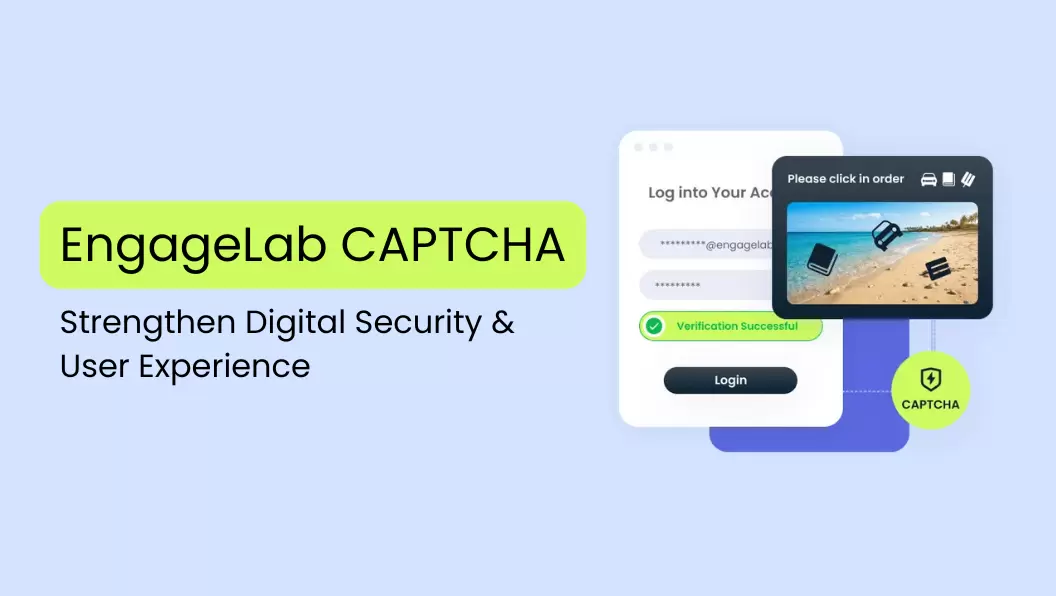
EngageLab CAPTCHA is a behavioral AI-powered bot detection and human verification solution built for teams that need protection across multiple touchpoints, not just a form widget. It sits inside EngageLab's broader platform, which means detection signals can work alongside your existing OTP verification, SMS, and notification flows rather than operating in isolation.
What makes it operationally relevant is its architectural approach. Rather than presenting a fixed visual puzzle and calling the task done, EngageLab CAPTCHA runs behavioral analysis on how a user interacts with the verification element, the motion path, timing, input pattern, and uses that to make the human/bot determination. The visible challenge only surfaces when the behavioral score triggers it. For most genuine users, nothing interrupts the flow at all.
Protect Users Without Adding Friction
Improve verification accuracy while reducing drop-off across high-value customer journeys.
BEST FOR
Teams that need unified bot filtering across registration flows, login screens, payment pages, and API-facing endpoints — particularly in e-commerce, fintech, gaming, and SaaS where bot abuse hits multiple user touchpoints simultaneously. Also a strong fit for platforms that need to protect SMS verification APIs from automated abuse, where bot-driven OTP requests directly inflate messaging costs.
KEY FEATURES
- AI-powered behavioral verification with continuously updated detection models, helping stop automated attacks without relying on static CAPTCHA challenges
- Invisible verification mode that lets most legitimate users pass without interruption, reducing friction across registration, login, and checkout flows
- Works alongside OTP verification, Silent Authentication, and other authentication methods to provide layered protection across registration, login, and account verification flows
- Server-side detection of emulators, headless browsers, and automated scripts, identifying suspicious traffic before a challenge is triggered
- Cross-platform deployment across websites, mobile apps, APIs, and WeChat Mini Programs, with flexible integration into authentication and identity verification workflows
PRICING
Based on the peak request volume. Click to calculate the detailed cost
2Cloudflare Bot Management

Cloudflare Bot Management is part of Cloudflare's broader edge network infrastructure, which processes traffic from a reported 20% of the internet. That scale gives it something no pure-play bot detection vendor can match: a continuously updated detection model trained on billions of daily requests across millions of properties.
The system uses a combination of machine learning, heuristic analysis, and device fingerprinting to score every request passing through the Cloudflare network. Each request gets a bot score from 1 to 99, which you can use to build graduated response rules. A notable recent addition is the AI Labyrinth feature, which creates honeypot-style synthetic content to detect and trap AI-powered scrapers, increasingly relevant as LLM-driven crawlers become a distinct threat category.
BEST FOR
Organizations already running on Cloudflare's infrastructure where bot management can be activated as an extension of existing CDN and WAF configuration. Also strong for properties facing large-scale volumetric bot attacks.
KEY FEATURES
- ML-based bot scoring on every request, powered by data from millions of internet properties
- Behavioral signal analysis integrated with CDN-level traffic inspection
- Challenge mechanisms including JavaScript challenges, CAPTCHA, and managed rules
- AI Labyrinth for detecting and trapping AI-powered scraper bots (Enterprise tier)
- Super Bot Fight Mode available on Pro and Business plans for lighter protection needs
- Tight integration with Cloudflare WAF, rate limiting, and API Shield
PRICING
Bot Fight Mode: Free. Super Bot Fight Mode: Pro ($20/month) and Business ($200/month) plans. Full Enterprise Bot Management: custom pricing, typically starting from $3,000+/month for bundled Enterprise contracts. The full-featured bot detection engine is an Enterprise-only capability.
3DataDome

DataDome is a dedicated bot protection and bot detection service platform, not a feature bundled inside a larger security suite. Named a Leader in the Forrester Wave for Bot Management, its AI engine analyzes over 5 trillion signals daily across 30+ regional points of presence, with an average detection and response time of under 2 milliseconds per request. It also ships with a 24/7 Security Operations Center (SOC) team that monitors threats continuously.
BEST FOR
E-commerce platforms dealing with scalper bots, scraping attacks, and credential stuffing at scale, where the combination of automated protection and a managed threat team takes the operational burden off internal security teams. Also strong for organizations with complex, multi-cloud or multi-CDN infrastructure.
KEY FEATURES
- AI engine processing 5+ trillion signals daily with sub-2ms response per request
- Unified protection across websites, mobile apps, ads, and APIs from a single integration
- 50+ integrations with major platforms and CDN providers
- Real-time traffic pattern analysis dashboard with bot type classification
- 24/7 SOC team for managed threat monitoring and response
- Compliance support including PCI DSS 4.0.1
PRICING
Starts from approximately $1,590/month based on published user reports (SourceForge, 2025), with Business, Corporate, and Enterprise tiers scaling upward. A trial is available on request.
4Imperva Advanced Bot Protection

Imperva Advanced Bot Protection (formerly Distil Networks) is an enterprise-grade solution that sits within Imperva's broader application security platform, covering WAF, DDoS protection, and API security alongside bot management. For security teams that want consolidated control over their entire application security posture, not a separate point solution for bots, this integration is its primary operational advantage.
One practical limitation worth noting: Gartner Peer Insights reviewers from 2025–2026 flag that the 17-policy management structure requires meaningful security team investment to configure and maintain, and the learning curve for new users is real.
BEST FOR
Large enterprises running Imperva's WAF who want bot management as an integrated layer within an existing security platform, rather than deploying a separate standalone solution.
KEY FEATURES
- ML-driven bot detection with real-time behavioral profiling
- Good bot allowlisting with verified source validation
- API protection against automated abuse including credential stuffing and scraping
- Custom bot policy rules for specific business logic requirements
- Comprehensive traffic visibility and audit reporting
- Flexible deployment - cloud-based platform or connector-based integration
PRICING
Custom enterprise pricing - contact Imperva directly. No public published tiers.
5Arkose Labs Bot Manager

Arkose Labs takes a distinctly different philosophy to bot defense: rather than trying to block bots silently, it aims to make attacks economically unviable. Its challenge-response system, Arkose MatchKey, serves interactive challenges that are genuinely difficult for automation to solve at scale, deliberately wasting attacker time and resources. Twenty percent of its customers are in the Fortune 500, and it has backing from Microsoft, PayPal, and SoftBank.
On G2 (2025), Arkose Labs scores 9.8 out of 10 for quality of support and 9.7 for ease of setup, unusually high marks for an enterprise security platform.
BEST FOR
Enterprises facing high-value account fraud and SMS abuse where the goal is not just detection but active attacker deterrence. Strong fit for fintech, gaming, and platforms where fake registration and account takeover represent significant revenue or compliance risk.
KEY FEATURES
- Challenge-response mechanism (Arkose MatchKey) designed to be prohibitively expensive for automation at scale
- Real-time risk assessment with behavioral telemetry feeding challenge decisions
- Protection across registration, login, SMS verification, and content submission flows
- Proactive attacker deterrence model - shifts attack surface away from the target
- Machine learning that adapts to new attack patterns continuously
- Dedicated managed services team alongside the self-serve platform
PRICING
Custom enterprise pricing, demo required. Capterra (2025) lists a starting reference point of $3,000/month, though actual contracts vary significantly by traffic volume and use case.
6hCaptcha

hCaptcha is a privacy-first CAPTCHA and bot detection service positioned as the most widely deployed reCAPTCHA alternative, with a notable client in Cloudflare (which migrated from reCAPTCHA to hCaptcha in 2020 specifically for privacy and cost reasons). Its key differentiator is a clean data policy — it does not use collected signals for advertising or cross-site tracking, making GDPR compliance more straightforward than some competitors.
Its Pro tier offers a passive detection mode that challenges fewer than 0.1% of legitimate users, putting it in invisible-verification territory for most traffic. Where hCaptcha has a documented limitation: a 2024 ETH Zurich study found that AI systems using modern object-detection models can crack traditional image-based CAPTCHA challenges with near-perfect accuracy, a finding that reflects the fundamental ceiling of visual challenge-based detection when adversaries specifically train against it.
BEST FOR
Privacy-conscious deployments, particularly European organizations with GDPR obligations, that need a cost-effective, quick-to-integrate bot detection tool for forms, sign-ups, and API endpoints. Strong for mid-market platforms where the budget reality makes enterprise-grade platforms impractical.
KEY FEATURES
- Passive (invisible) detection mode with under 0.1% visible challenge rate for legitimate users
- GDPR-friendly data policy - no advertising use of collected signals
- Free tier for up to 100,000 monthly requests
- Challenge customization including image selection, slider, and passive behavioral scoring
- Risk scoring API for integration with custom fraud logic
- Global availability without geographic restrictions
PRICING
Free tier: 100,000 monthly requests. Pro: from $99/month. Enterprise: custom pricing with additional features and SLA commitments.
Part 5. How to Choose a Bot Detection Tool
The right bot detection tool for a 10-person SaaS startup is not the same one a global e-commerce platform should be running. The variables that actually drive the decision — traffic volume, threat type, technical capacity, and budget — look very different depending on where you sit.
Small Business vs. Enterprise Needs
Small and mid-size operations typically face a narrower threat surface: form spam, fake account registrations, and basic scraping. A well-configured CAPTCHA layer with invisible behavioral verification covers most attack vectors without requiring a dedicated security team or a six-figure contract.
Enterprise-scale platforms face coordinated, persistent attacks targeting high-value endpoints — account login APIs, payment processors, inventory systems. At that scale, the question shifts from "how do we detect bots" to "how do we manage bot traffic across every surface our platform exposes," which is where full bot management platforms earn their cost.
Website Protection vs. API Protection
Client-side bot filtering works well for web traffic but is effectively useless against automated API calls, which bypass the browser entirely. If your product exposes any APIs — registration endpoints, OTP triggers, data queries, partner integrations — confirm before you commit to any tool that its detection actually covers your API traffic, not just your web pages.
Fraud Prevention vs. Spam Prevention
Spam prevention is primarily about volume: a CAPTCHA or basic behavioral layer handles form flooding well. Fraud prevention — credential stuffing, account takeover, payment fraud — requires behavioral analysis, device fingerprinting, and risk scoring in combination. If fraud is your primary concern, a CAPTCHA-first strategy is insufficient.
Budget and Scalability
Free to low-cost ($0–$100/month): CAPTCHA-based tools with invisible verification. EngageLab CAPTCHA starts free and covers web, mobile, and API traffic from a single integration.
Mid-market ($100–$1,500/month): CAPTCHA Pro tiers and entry-level behavioral detection tools with per-request risk scoring. Suitable for growing platforms with specific fraud exposure.
Enterprise ($1,500+/month): Full bot management platforms with managed detection, 24/7 SOC support, and API-level coverage. Justified when the cost of a successful bot attack — chargebacks, account fraud losses, regulatory exposure — meaningfully exceeds the platform cost.
Recommendation Table by Use Case
| Scenario | Recommended Approach | Tools to Evaluate |
|---|---|---|
| WordPress / small CMS - form spam | Behavioral CAPTCHA, lightweight, fast deploy | EngageLab CAPTCHA, hCaptcha |
| SaaS registration - fake account prevention | Invisible behavioral verification + risk scoring API | EngageLab CAPTCHA, Cloudflare Super Bot Fight Mode |
| E-commerce - scalper bots & inventory abuse | Full bot management with real-time mitigation | DataDome, Imperva |
| Fintech / banking - credential stuffing & ATO | Behavioral analysis + device fingerprinting + step-up auth | Arkose Labs, Imperva, DataDome |
| API platform - automated abuse & scraping | Server-side detection with per-request risk scoring | EngageLab CAPTCHA, Cloudflare Bot Management |
| Multi-channel enterprise - web + mobile + API | Unified bot management platform | DataDome, Cloudflare Enterprise, Imperva |
| Budget-constrained growing business | Behavioral CAPTCHA with API support + free tier | EngageLab CAPTCHA, hCaptcha Pro |
Part 6. FAQs about Bot Detection
What is a bot detection tool and how does it work?
A bot detection tool is software that identifies automated traffic — bots — accessing a website, application, or API, and distinguishes it from real human users. It works by analyzing a combination of signals including behavioral patterns, device characteristics, traffic anomalies, and IP reputation, then producing a risk score per session or request. Based on that score, the system can allow, challenge, throttle, or block the traffic without affecting legitimate users.
What is the difference between bot detection and bot management?
"Bot detection" refers specifically to identifying whether a given request or session is automated. "Bot management" is the broader operational category that includes detection, classification of bot type (good vs. bad), and the mitigation response — blocking, challenging, throttling, or passing traffic cleanly. All bot management platforms include detection, but not all bot detection software includes full management and mitigation capabilities. For teams that need both, a unified platform is more practical than combining separate tools.
Can bots bypass CAPTCHA and bot detection tools?
Yes, and this is an important limitation to understand. Traditional image-based CAPTCHAs can now be solved by machine learning models and outsourced to human CAPTCHA farms at low cost. Sophisticated automation tools also simulate mouse movements, typing cadence, and interaction patterns specifically designed to defeat behavioral detection. This does not make bot detection useless — it means that no single detection layer is sufficient on its own. Layered bot detection services that combine CAPTCHA, behavioral signals, and device intelligence are substantially harder to bypass consistently at scale.
What types of bots are most harmful to websites and APIs?
The most damaging categories in 2025 are credential stuffing bots that automate login attempts using stolen username-password pairs, scraping bots that harvest pricing data and proprietary content, scalper bots that drain inventory before real buyers can purchase, account creation bots that inflate registrations with fake identities, and API abuse bots that flood endpoints to exhaust rate limits or extract data.
Do bot detection tools affect website performance or user experience?
Properly implemented bot detection tools add negligible latency — leading platforms process detection in under 2 milliseconds per request. Invisible behavioral verification passes most genuine users without any visible challenge, so the user experience impact is minimal when detection is working as designed. The practical risk is false positives: legitimate users flagged as bots and blocked or served unnecessary challenges. This is why well-tuned detection thresholds and good bot allowlisting matter — they protect against both attacks and the friction that poorly configured detection introduces to real users.
Conclusion
Bot detection tools are not optional infrastructure anymore — they are a baseline requirement for any platform that handles real user traffic, processes transactions, or exposes APIs to the internet. The threat landscape has moved well past simple scripts and IP blocklists. Modern bot attacks are behaviorally sophisticated, distributed across residential proxies, and increasingly powered by AI.
The practical response is layered protection matched to your actual threat surface. For most teams, that starts with invisible behavioral verification at the points of highest risk — registration, login, payment — and scales into full bot management as traffic volume and attack complexity grow.
If you are evaluating where to start, EngageLab CAPTCHA gives you cross-platform behavioral detection across web, mobile, and API endpoints, at no cost to begin.