Elena Rodriguez
Updated: 2026-05-15
$4.4 million is a number that can make every business owner lose sleep. According to IBM's annual report, it is the average cost of a data breach in 2025. Another statistic shows that compromised credentials are one of the most common attack vectors, responsible for nearly 22% of all data breaches.
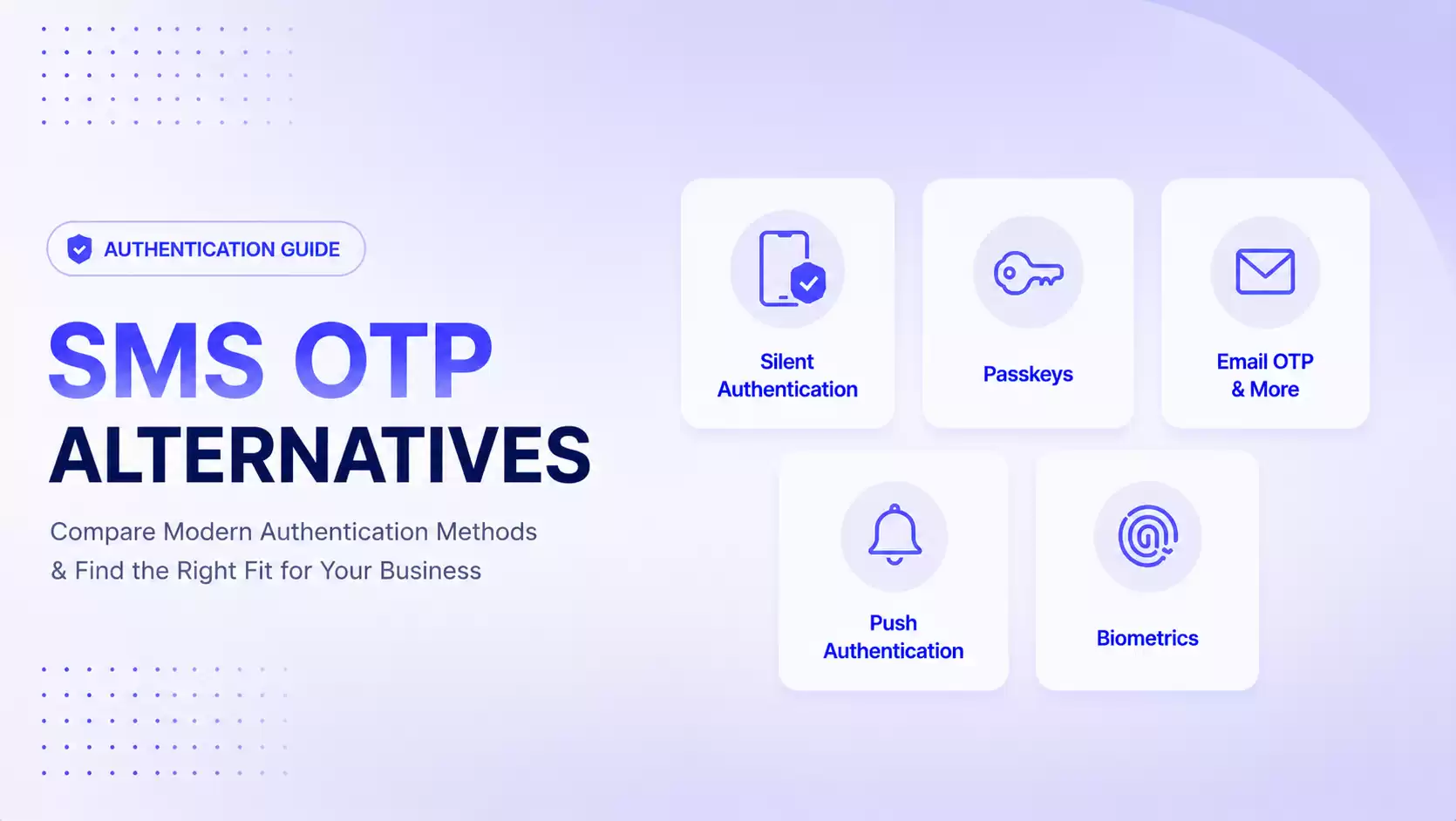
These numbers highlight a growing issue for modern businesses: the traditional passwords that companies have relied on for decades can become expensive liabilities when they are reused, stolen, or phished. Even one-time passwords (OTPs), while more secure than static passwords, can still create friction through delivery delays, manual entry, and user drop-off.
This is why Silent Network Authentication (SNA) has emerged as one of the most promising solutions in the identity verification space. By verifying users through their mobile network connection, SNA helps businesses reduce login friction while improving security.
In this guide, we’ll explain how silent network authentication works, how it compares with traditional verification methods, where it fits best, and which providers to evaluate in 2026.
# What is Silent Network Authentication?

Silent network authentication (SNA) is a verification method that confirms a user’s identity by using the secure connection between their mobile device and the carrier network. This verification does not require any passwords, OTPs, or SMS codes.
The “silent” part is not simply a marketing term. The authentication happens invisibly in the background with the help of cryptographic signals and carrier data already associated with the user’s device and SIM card.
When a mobile device connects to a carrier network, it establishes a trusted relationship with the operator. SNA uses that existing trust chain instead of creating a separate authentication layer based on passwords or manually entered codes.
As a result, users can log in or verify themselves with minimal effort, while businesses benefit from a smoother and more secure authentication process.
# How Does Silent Network Authentication Work?
Here is a simple overview of how SNA works:
-
User login: A user enters their phone number, or the app detects it automatically, to start the login process.
-
Request sent to carrier: A secure API sends an authentication request to the mobile network operator.
-
Network verification: The carrier verifies that the device making the request is associated with the SIM card or mobile subscription.
-
Response: The carrier sends back a confirmation, trust signal, or denial.
-
Access grant: The user is authenticated without typing a password or OTP.

Generally, this entire process takes less than 2–5 seconds, while verification with methods like OTPs can take 30–60 seconds depending on delivery speed, network congestion, and user input time.
Because the experience is faster and requires fewer steps, many businesses see stronger completion rates and lower abandonment when passwordless authentication is introduced.
# Silent Authentication vs Other Verification Methods
The real advantages of silent authentication become clearer when compared with traditional authentication methods.
| Factor | Silent Network Authentication | Passwords | SMS OTP | Email OTP |
|---|---|---|---|---|
| User Friction | Minimal | High (memorization required) | Medium (wait time + manual entry) | Medium (app switching, delays) |
| Security Level | High | Low | Medium | Medium |
| Phishing Resistance | High | Very Low | Low | Low |
| Implementation Complexity | Medium-High | Low | Medium | Medium |
| Cost per Authentication | Variable | Minimal | Variable | Minimal |
| Delivery Reliability | Strong on mobile data | N/A | Varies by region | Inbox dependent |
| Average Completion Time | 2–5 sec | 10–30 sec | 30–60 sec | 45–90 sec |
Passwords remain common, but they are vulnerable to reuse, credential stuffing, and phishing. SMS OTPs improve security but often introduce delivery delays and SIM swap risks. Email OTPs can work well in some flows, but they still require inbox switching and additional user actions.
SNA removes many of these friction points by verifying users silently in the background.
# Key Benefits of SNA for Businesses
Reliable User Experience
User-friendliness is one of the primary benefits of SNA. Additional authentication steps can interrupt user flows, especially during signup, login, or checkout. SNA reduces those steps and creates a smoother experience.
Faster Login and Higher Conversion
Longer authentication flows often increase abandonment. By reducing wait times and manual code entry, SNA can help improve login completion rates, registration conversion, and checkout continuity.
Strong Protection Against Phishing
You cannot easily phish credentials that users never type. Since SNA removes passwords and OTP entry in many flows, attackers have fewer opportunities to intercept codes or steal login credentials through fake pages.
Lower Support Costs
Many businesses spend time handling password resets, login lockouts, and complaints about delayed OTP delivery. Passwordless authentication can reduce that support burden.
Real-Time Verification
Traditional OTP systems can be delayed by congestion, roaming issues, or message filtering. SNA verification happens through direct carrier integrations, often producing faster responses.
Better Mobile-First Authentication Strategy
For apps whose users primarily operate on smartphones, SNA aligns naturally with user behavior and device context.
# Limitations of SNA
No technology is perfect, and the same is true for silent network authentication.
Mobile Data Dependency
SNA often requires an active mobile data connection. If a user is on Wi-Fi only, the carrier may not be able to verify the device-network relationship, making fallback methods necessary.
Carrier Coverage Gaps
SNA depends on partnerships with mobile network operators. Availability can vary significantly by country, region, and carrier.
Limited Desktop Use Cases
Desktop-first software products cannot rely on SNA as a standalone authentication method because users are not operating through a mobile network session.
Implementation Complexity
Integrating with carrier APIs may require vendor coordination, engineering resources, testing, and compliance review.
Cost at Scale
The cost per authentication may be low, but for high-volume platforms with millions of monthly verifications, total spend can become meaningful.
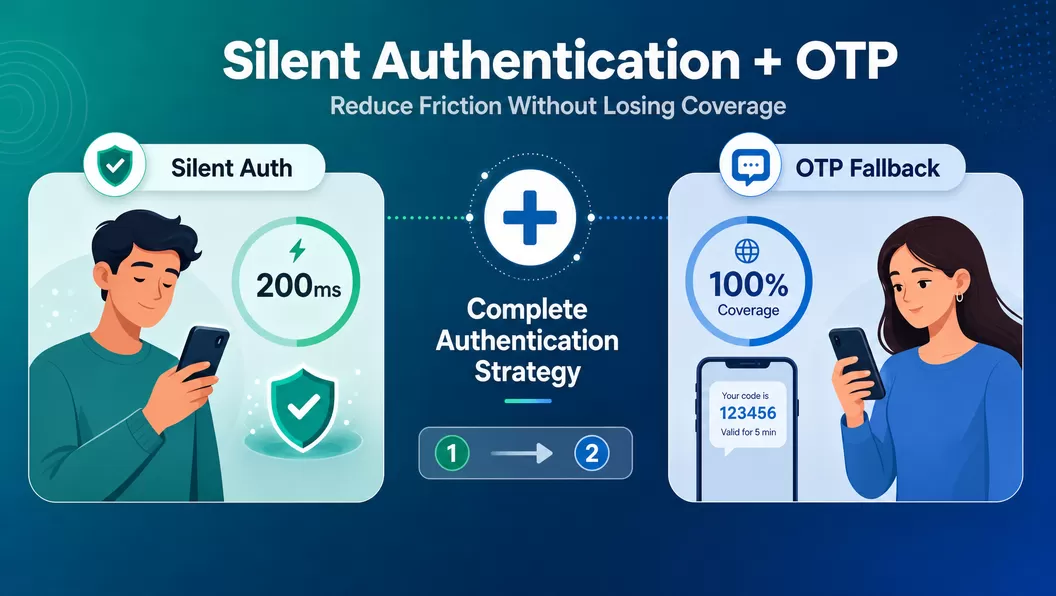
For many businesses, the best approach is combining SNA with fallback options such as SMS OTP, email OTP, or passkeys.
# Best Use Cases by Industry
- Financial Services and Fintech
Fintech products need strong fraud prevention while maintaining fast user access. SNA can reduce OTP friction during login, onboarding, and transaction approval flows.
- E-Commerce and Marketplaces
Conversion optimization is critical for retailers. Reducing login friction during checkout or returning-user sign-in can directly impact revenue.
- Ride-Sharing and Delivery Apps
These platforms depend on rapid onboarding and frequent mobile logins. SNA supports faster authentication for mobile-first users.
- Healthcare Apps
Patient portals and healthcare applications require both convenience and account protection. SNA can help balance these priorities.
- SaaS Platforms (Hybrid Fit)
SaaS platforms with both mobile and desktop users may benefit from a hybrid approach where SNA is used on mobile and other methods support desktop users.

❓ Where Alternatives May Be Better
Internal corporate tools, B2B desktop software, and some IoT platforms may need other authentication methods as the primary option.
# Real-World Examples
👉 GCash (Financial Services)
GCash, one of the Philippines’ leading fintech platforms, partnered with Globe TelecomGlobe Telecom to implement silent network authentication. By reducing reliance on OTP flows, it improved transaction speed while strengthening account security.
👉 Lydia Solutions (Fintech)
French fintech Lydia Solutions implemented silent authentication to support more than 8 million users. Reported results included a 50% reduction in authentication latency compared with previous OTP-based flows.
👉 Lifestyle Retailer (E-Commerce)
A leading apparel retailer partnered with OwnID to implement passwordless authentication on its Magento platform. Login events increased by 380.8%, while registration conversions rose 137.8%.
👉 GrandVision (Retail)
Optical retailer GrandVision improved its checkout experience through passwordless authentication, helping raise conversion rates.
These examples show that silent authentication and passwordless login models can create value across industries where speed, trust, and mobile convenience matter.
# Top Silent Network Authentication Providers in 2026
1 Twilio SNA
Twilio’s Verify API includes SNA capabilities alongside SMS and voice verification options.
Strengths: Extensive global carrier coverage, strong APIs, fallback methods, analytics.
✅Best for: Mid-sized and enterprise businesses already using Twilio.
2 IPification
IPification is a dedicated provider focused on mobile identity verification through carrier networks.
Strengths: Specialized expertise, lightweight SDK, strong presence in parts of Europe and Asia.
✅Best for: Mobile-first apps seeking focused SNA solutions.
3 Vonage Number Verification
Vonage offers network-based verification as part of its communications platform.
Strengths: Telecom expertise, carrier relationships, developer documentation.
✅Best for: Businesses needing carrier-grade reliability.
4 Prove
Prove is known for phone-centric identity verification and strong presence in regulated industries.
Strengths: Compliance-oriented solutions, layered identity signals, strong U.S. market position.
✅Best for: Finance and highly regulated sectors.
5 EngageLab Silent Authentication
EngageLab is expanding its authentication capabilities through Silent Authentication, designed to help businesses verify users with less friction and higher conversion rates. Beyond SNA, EngageLab also provides OTP and CAPTCHA solutions, enabling companies to build a more complete and flexible verification framework from one platform.
Strengths:
-
Competitive pricing with strong scalability
-
Developer-friendly APIs and fast integration
-
Silent Authentication for seamless low-friction verification
-
OTP fallback for scenarios where additional confirmation is needed
-
Unified verification stack managed within one platform
-
Real-time analytics and optimization insights
✅Best for: All sizes of companies who seeking a modern and cost-effective SNA solution.
# Conclusion
Silent network authentication represents an important step forward in passwordless security. It reduces friction, speeds up verification, and helps businesses lower dependence on passwords and OTP codes.
For companies with mobile-first users, SNA can be especially valuable in signup, login, checkout, and account recovery flows. At the same time, businesses should evaluate carrier coverage, Wi-Fi fallback needs, integration complexity, and long-term authentication costs.
In many cases, the most effective strategy is not replacing every existing method overnight, but combining SNA with other modern options such as OTP, passkeys, or email verification. As digital security expectations continue to rise, SNA is likely to become an increasingly important part of the authentication stack.