Elena Rodriguez
Updated: 2026-05-22
Email marketing isn’t just surviving through 2026… it’s thriving. Recent industry benchmarks demonstrate that email makes $36 for every $1 spent (Litmus, 2023/2025) . This is better than practically every other digital channel (4-5x times better!). B2B owners are still struggling with low engagement, the burnout of manual campaigns, and promotions pages that have become digital graveyards.
So what really is the difference between a high-ROI engine and a digital paperweight? Simply put, it’s usually your email newsletter platform. This is because when you choose your tool, you have to be more careful than simply picking out a template—you have to learn which one best automates your growth and which ensures your insights actually reach the inbox.
With the industry becoming more complex than ever and B2B buyers becoming more selective, your platform has to do the heavy lifting of technical deliverability and behavioral segmentation for your business to survive.
What Is an Email Newsletter Platform (and Why It Works)
It’s quite simple; an email newsletter platform is a specialized system that creates, sends, and automates editorial-style content. It’s often interchangeably used with the term “email marketing software," but unlike the one-off promotional blasts that it offers, the newsletter platform focuses instead on long-term subscriber management.
How It Differs from Email Marketing and Transactional Tools
Still, to understand how a newsletter platform fits in compared to the other requisite email tools, here’s a quick comparison table:
| Tool Category | Core Focus | Best For |
|---|---|---|
| Email Newsletter Platform | Editorial consistency & retention | Thought leadership, B2B updates, nurturing. |
| Email Marketing Platform | Conversion & sales cycles | Broad promotional campaigns, CRM sync. |
| Transactional Email Service | 1-to-1 operational triggers | Password resets, invoices, API-driven alerts. |
The Psychology of Email Newsletters: Why Dedicated Platforms Drive ROI
Of course, success in B2B isn’t just about volume. It’s also about relevance. Therefore, these are the psychological and technical drivers behind successful B2B platforms:
- Consistency Builds Authority: Regular and quality email newsletters help condition your audience. They learn to view your brand as trustworthy and as a primary source of truth.
- Power of Segmentation: Standardized campaigns not only don’t work anymore; they take away from the impact of your work. It’s the era of segmented campaigns, for they drive higher revenue than unsegmented ones.
- Automation Over Intuition: Human error and poor timing mean that manual sends are far less impactful than automation, which email newsletters are great at, allowing you to engage your readership much more.
How It Drives Growth: Infrastructure and Real-World Performance
In addition, even beyond content, performance is driven by the infrastructure upon which it is built. According to reports, the typical B2B open rate is between 36.7% and 42.4% (Verified Email, 2025) . These are hard to reach without good delivery methods in place.
After all, newsletter platforms keep track of subscriber data and sending logic, which helps make every encounter better, from onboarding to long-term care.
In practice, this has a long-lasting and demonstrable effect. Across transactional and newsletter workflows, these automated sequences, especially in B2B onboarding, keep outperforming the one-off broadcasts in engagements.
The timing and sequencing proffered by the infrastructure, you see, are as critical as the quality of the content.
Key Features to Look for in an Email Newsletter Platform
When you pick a B2B email newsletter platform for your business, you have to consider what benefits it will provide you. When you only think about aesthetic templates or a user-friendly interface, you fall into the classic pitfall that basically stifles your growth before you even step away from the starting line.

Instead, the “best” tool is much more defined by the underlying infrastructure and its ability to act as a silent partner in your sales funnel, and, therefore, for sustainable lead nurturing and high-tier inbox placement, you need to make sure your selection criteria is anchored by these five non-negotiable pillars:
1. Advanced Automation & Behavioral Workflow Builders
Since you already understand how much modern B2B has moved past the monthly blast communication era, your platform needs a more sophisticated workflow builder that can execute triggered drip campaigns, like complex welcome sequences, trial-to-paid transitions, or post-webinar follow-ups.
Automated touchpoints like these reduce manual overhead, which means your insights reach the lead at the exact moment of highest intent. Basically? Precision at its finest, and exactly why automated flows see more than 10% click-through rates.
2. Enterprise-Grade Deliverability Infrastructure
Trustworthy, long-term reliability is what email marketing needs to work. Your platform needs to be able to fully support technical authentication protocols like
● SPF (Sender Policy Framework)
● DKIM (DomainKeys Identified Mail)
● DMARC (Domain-based Message Authentication, Reporting, and Conformance)
These protocols are your digital passports and verify your ID to ISPs (Internet Service Providers). In fact, without them, even the best content would be throttled online.
That’s why top-tier senders tend to use strong infrastructure, allowing them to achieve incredible inbox placement rates.
3. Granular Subscriber Management & Segmentation
B2B also demands relevance as the driver of engagement, and professional platforms must allow for deep segmentation based on both demographics (e.g., job title or company size) and real-time behavior (e.g., "viewed pricing page three times").
This personalization is more than a nice addition to your platform. It’s the force behind the 760% revenue lift observed in segmented campaigns compared with generic outreach (Campaign Monitor, Email Benchmarks, 2023).
4. Precision Analytics & Attribution Reporting
Of course, to move on from a cost center to a profit center, your report also has to go beyond vanity metrics (like open rates); rather, look for platforms that offer things like Revenue Per Recipient (RPR) tracking and multi-touch conversion attribution.
This kind of data helps marketing professionals figure out exactly which newsletter topics drive pipeline velocity these days. This way, they can work out a strategy where you optimize every send for measurable business outcomes.
5. Seamless CRM and API Integration
Another aspect of a high-performing email newsletter platform that is quite necessary is that it should never operate in a data silo. Rather, it should offer native integrations with core B2B stacks, like Salesforce, HubSpot, or Microsoft Dynamics, or provide a well-documented API.
This connectivity allows the B2B sales team to be immediately alerted (within their existing workflow) when a high-value lead clicks on an "Enterprise Case Study.”
Strategic Pitfalls, or, What to Avoid
While knowing what to look for is all well and good, it’s just as important to know what to avoid, and that’s where the classic pitfalls come in.
The most common of these? Choosing based on what’s cheapest. Budget is always a factor, and we can’t deny that, but making that your only priority is an expensive mistake in the long run. A budget tool often lacks sophisticated DMARC support or dedicated IP options. Suffice it to say, you may not end up with a pristine sender reputation.
Secondly, when your deliverability suffers, your cost per lead also skyrockets. This is because your messages get filtered into the “Spam" or "Promotions” folders, where they get no engagement and provide zero value. And since low-cost providers often lack the high touch supposed to be needed to quickly solve technical blacklisting issues, you get to lose out on efficiency as well.
These might look like small problems in the short run, but they add up, making up for a lot of costs, missed opportunities, and lost sender authority, costing you a lot more than a more expensive subscription at the start.
Prioritize technical integrity over low entry prices, and even if it might be a little difficult at the start, you’ll have a clear, unblocked path to your audience's inbox.
The Best Email Newsletter Platforms Reviewed
You need a great email newsletter platform? Luckily, we’ve mapped out the top ten in 2026 for you based on the B2B requirements you’re looking for. The following represent the most reliable solutions for scaling a professional newsletter program as of March 2026:
-
1
HubSpot
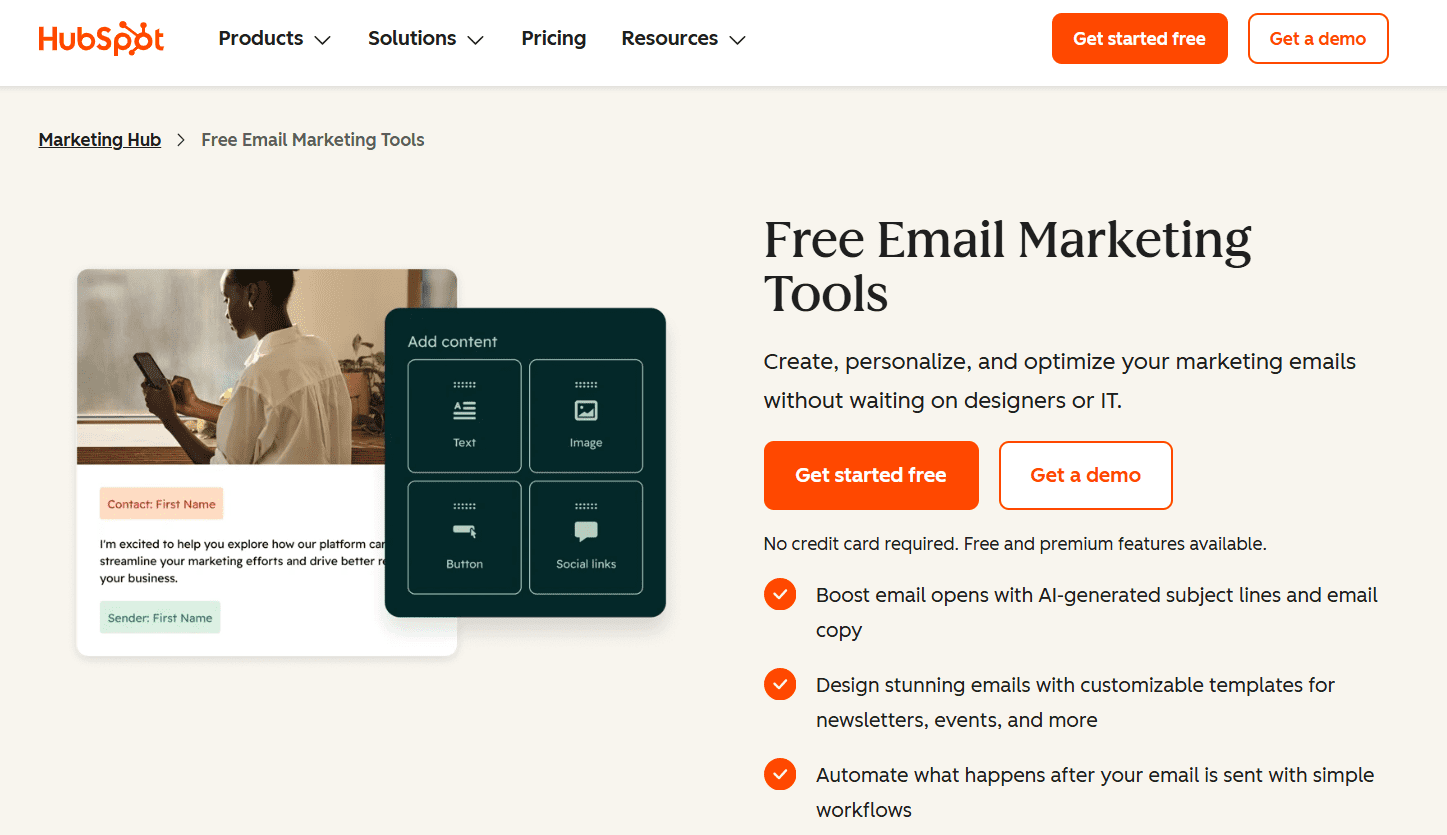
As a gold standard for two decades, HubSpot is perfect for B2Bs that need a full-stack ecosystem. The newsletter functionality it offers is quite deeply embedded within its world-class CRM, and it’s a great choice for sales-driven organizations.
With this option, marketing teams are even able to track a prospect’s journey from an initial newsletter click to a closed-won opportunity, which means complete and utter transparency in marketing attribution.
👉Best For: Large B2B organizations that need tight CRM integration and full-funnel marketing attribution.

-
2
ActiveCampaign
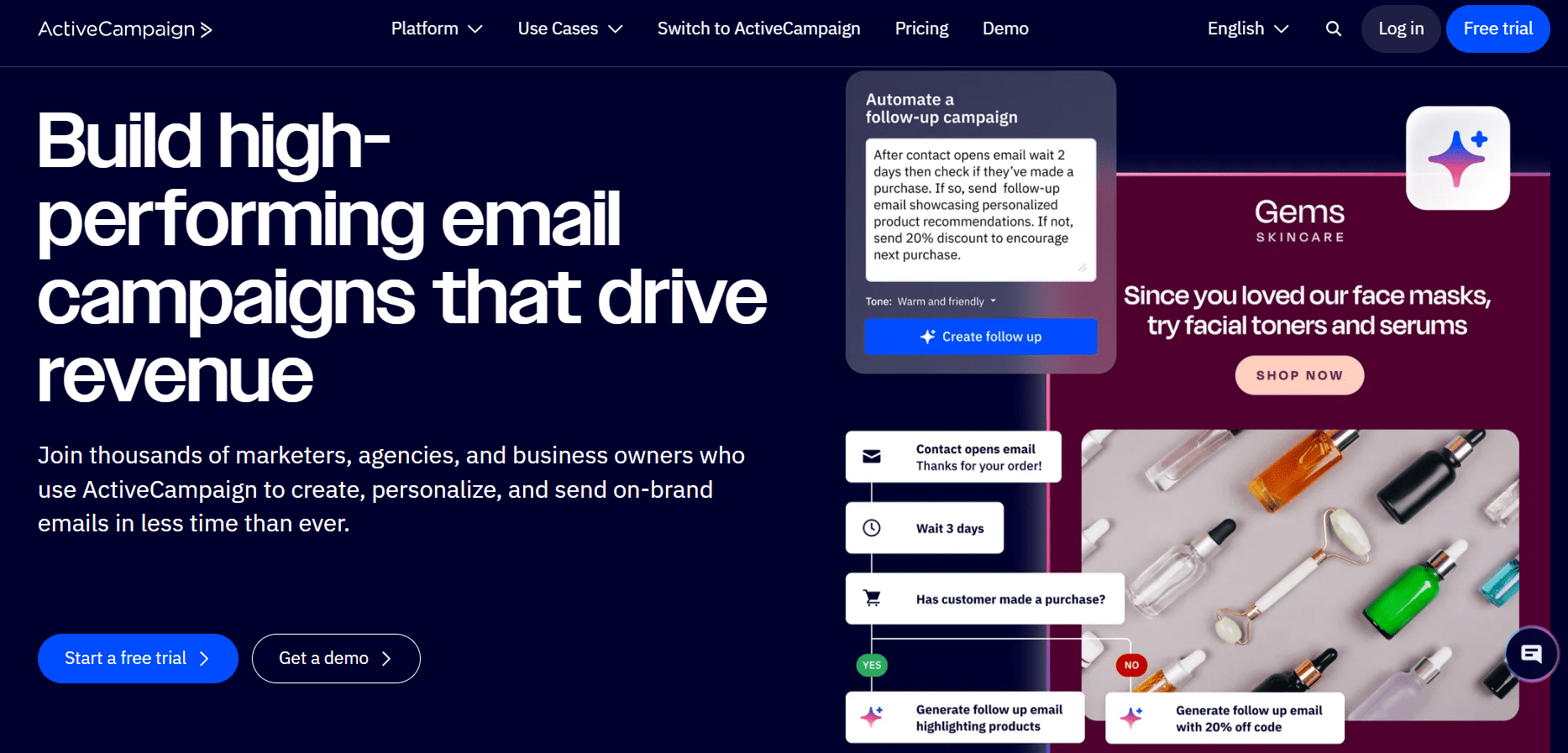
If your B2B needs an “if/then” logic or a platform bordering on software engineering, then ActiveCampaign is the best option. The automation depth is virtually unparalleled in the mid-market space, ideal for complex B2B nurture cycles and multi-stage lifecycle marketing, and allowing for high-precision targeting based on site-tracking and granular user behavior.
👉Best For: Groups who are looking for advanced, high-precision automation and complex behavioral triggers.

-
3
EngageLab
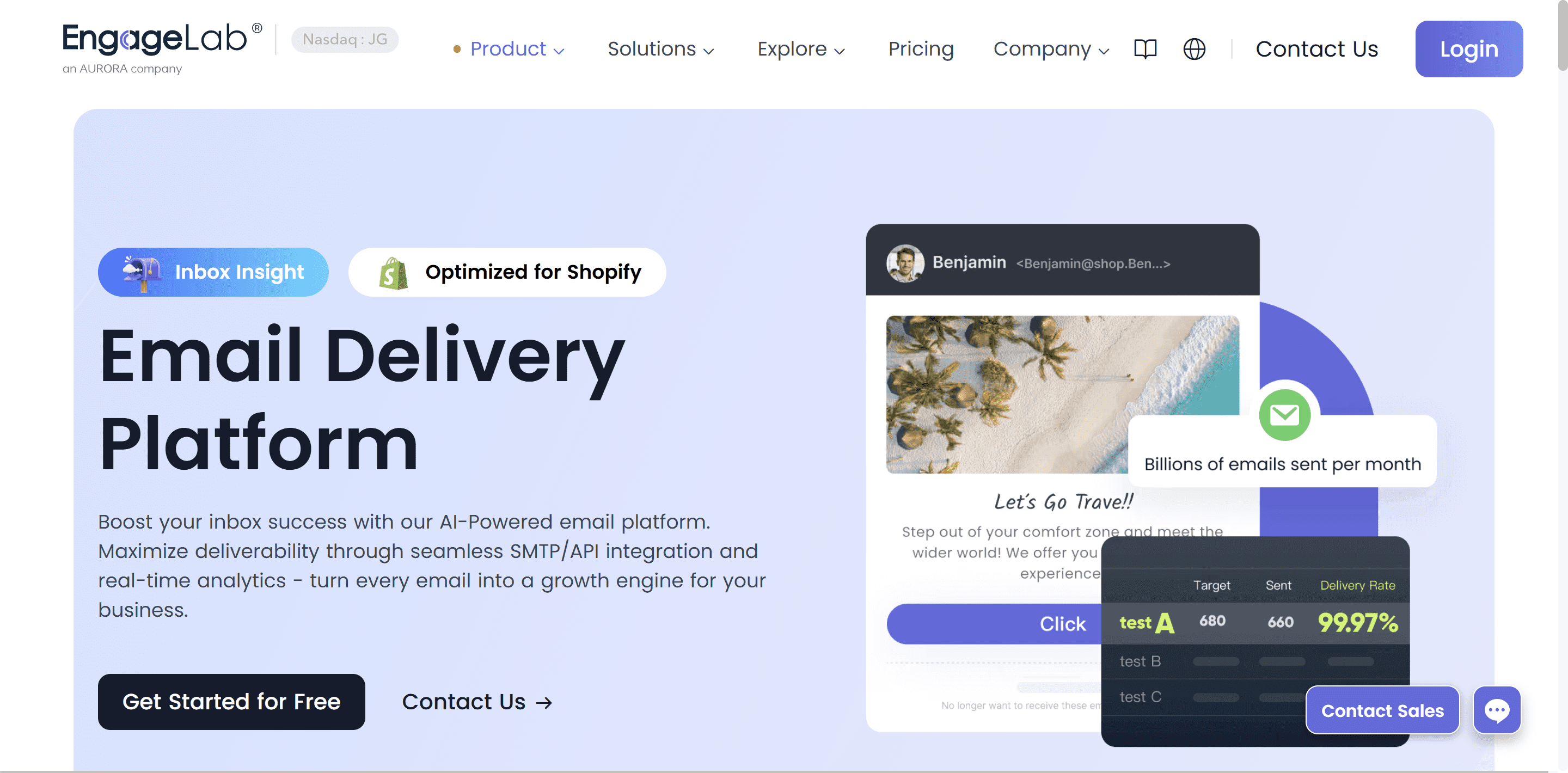
EngageLab is another brilliant option, emerging as a high-performance, B2B-centric solution specifically for teams prioritizing automated email campaigns and enterprise-grade deliverability.
Excelling in high-volume subscriber management and offering a streamlined workflow builder, your messaging can scale alongside your lead generation.
It’s practically perfect for businesses that need high-tier inbox placement and sophisticated technical support without the bloat of a legacy CRM.
👉Best For: High-growth enterprises that prioritize enterprise-grade inbox placement and scalable, automated workflows.

-
4
Mailchimp
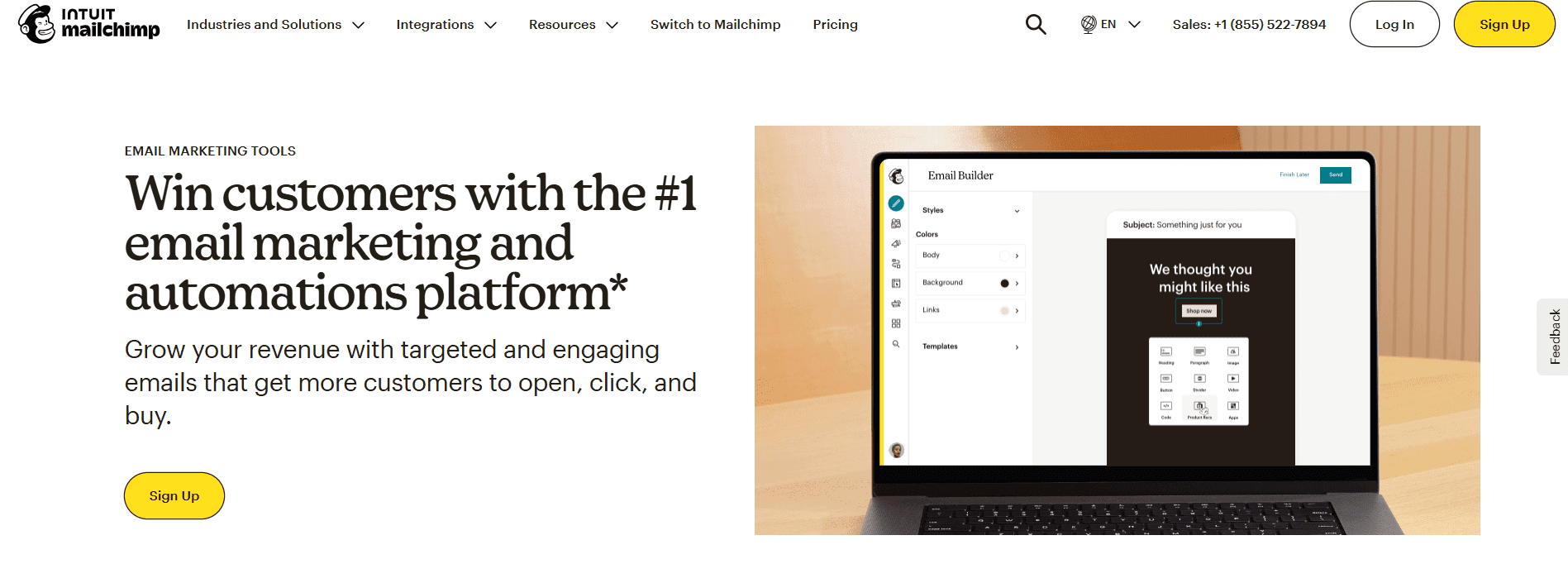
Debuting as a beginner’s toolkit, Mailchimp evolved into a platform best for SMEs who want to blend user-friendly design interfaces and AI-driven optimization features. It’s a top contender for businesses that want to balance creative flexibility and solid predictive analytics.
👉Best For: SMEs (Small and Medium Businesses) looking for a balance of intuitive design and AI-powered optimization.

-
5
Brevo (formerly Sendinblue)

Another option is Brevo , a powerhouse for teams who want to combine marketing newsletters with transactional infrastructure, like app-triggered notifications. The unique pricing model (built on email volume rather than list size) is pretty cost-effective, too, and great for B2Bs managing huge databases with variable sending frequencies.
👉Best For: Companies managing large databases that need to combine marketing and transactional email infrastructure cost-effectively

-
6
ConvertKit (Kit)
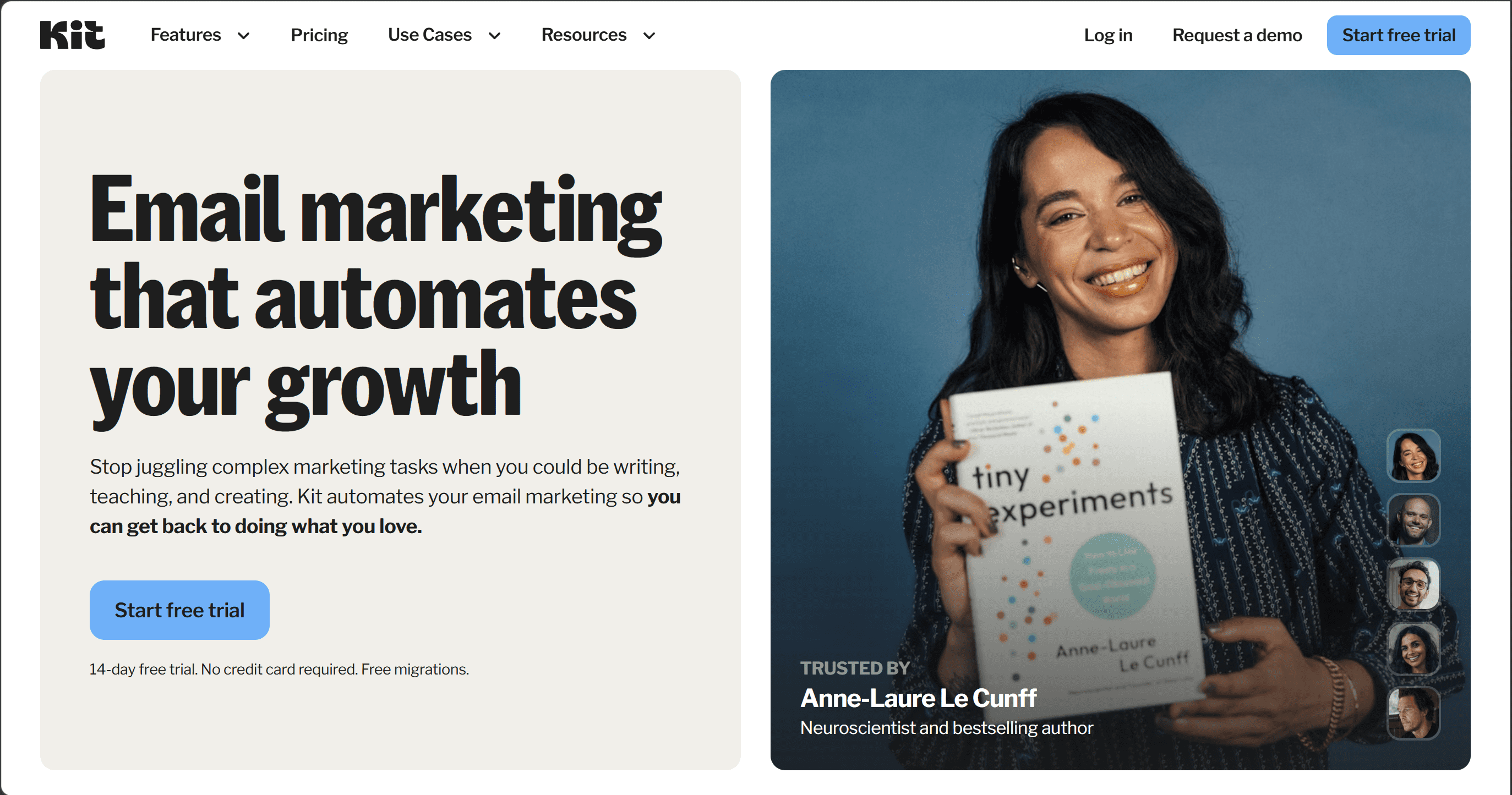
Then there is ConvertKit , tailored specifically for the "professional creator" model. This option is getting increasingly adopted by B2B consultancy firms and thought leaders because its philosophy prioritizes plain-text, high-authority content, a proven strategy for bypassing "Promotions" tabs and landing directly in the primary inbox.
👉Best For: Professional consultants and thought leaders focused on high-authority, text-based content and primary inbox delivery.

-
7
MailerLite
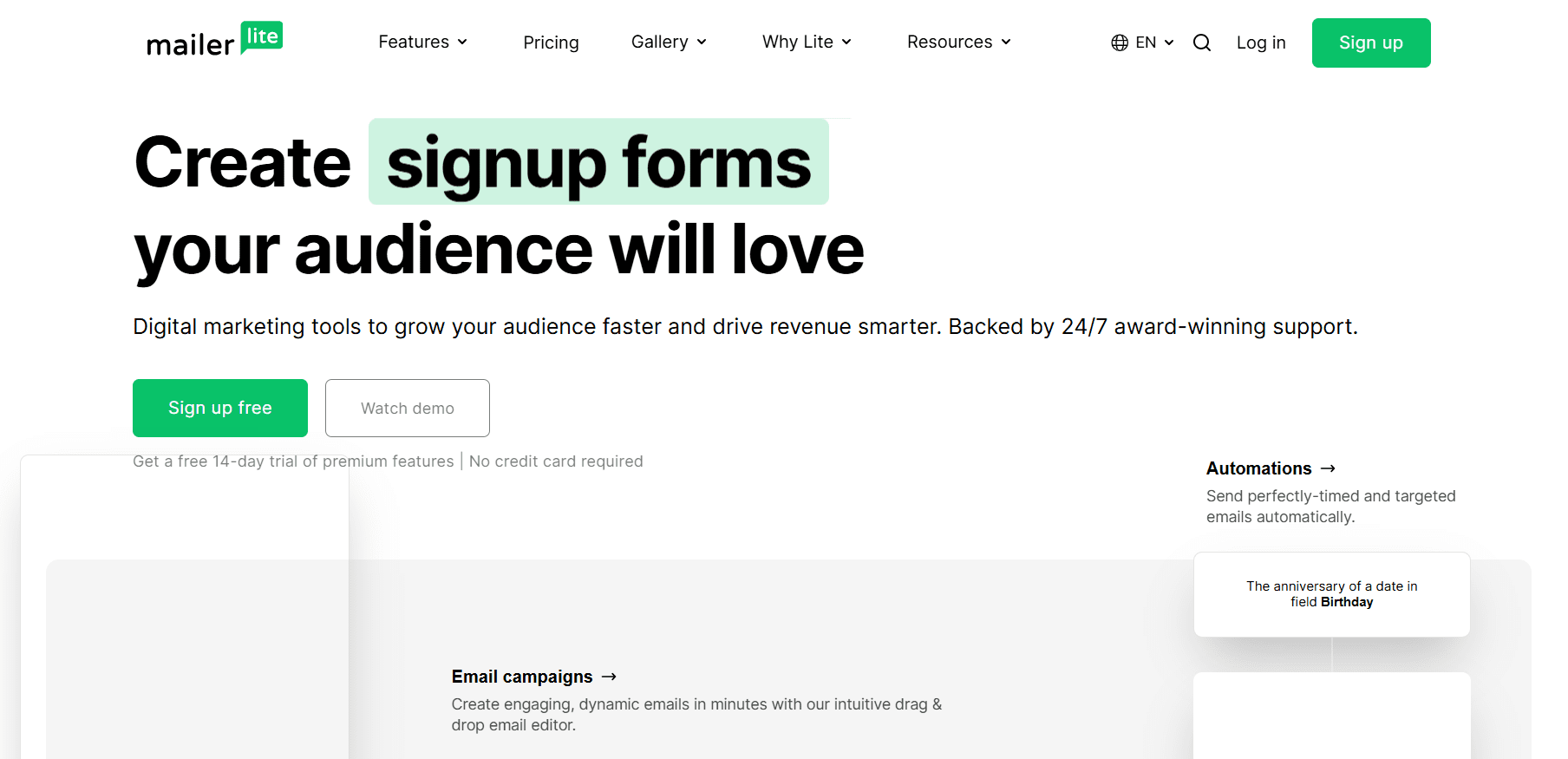
MailerLite is a great option for B2Bs as well, providing a balance of performance and fiscal efficiency. For startups, it’s an amazing entry point, too, with sufficiently advanced features like landing page builders and multi-step automation, without the prohibitive cost of enterprise-level software.
👉Best For: Startups and lean teams seeking an affordable, feature-rich entry point for automation and lead generation.

-
8
GetResponse
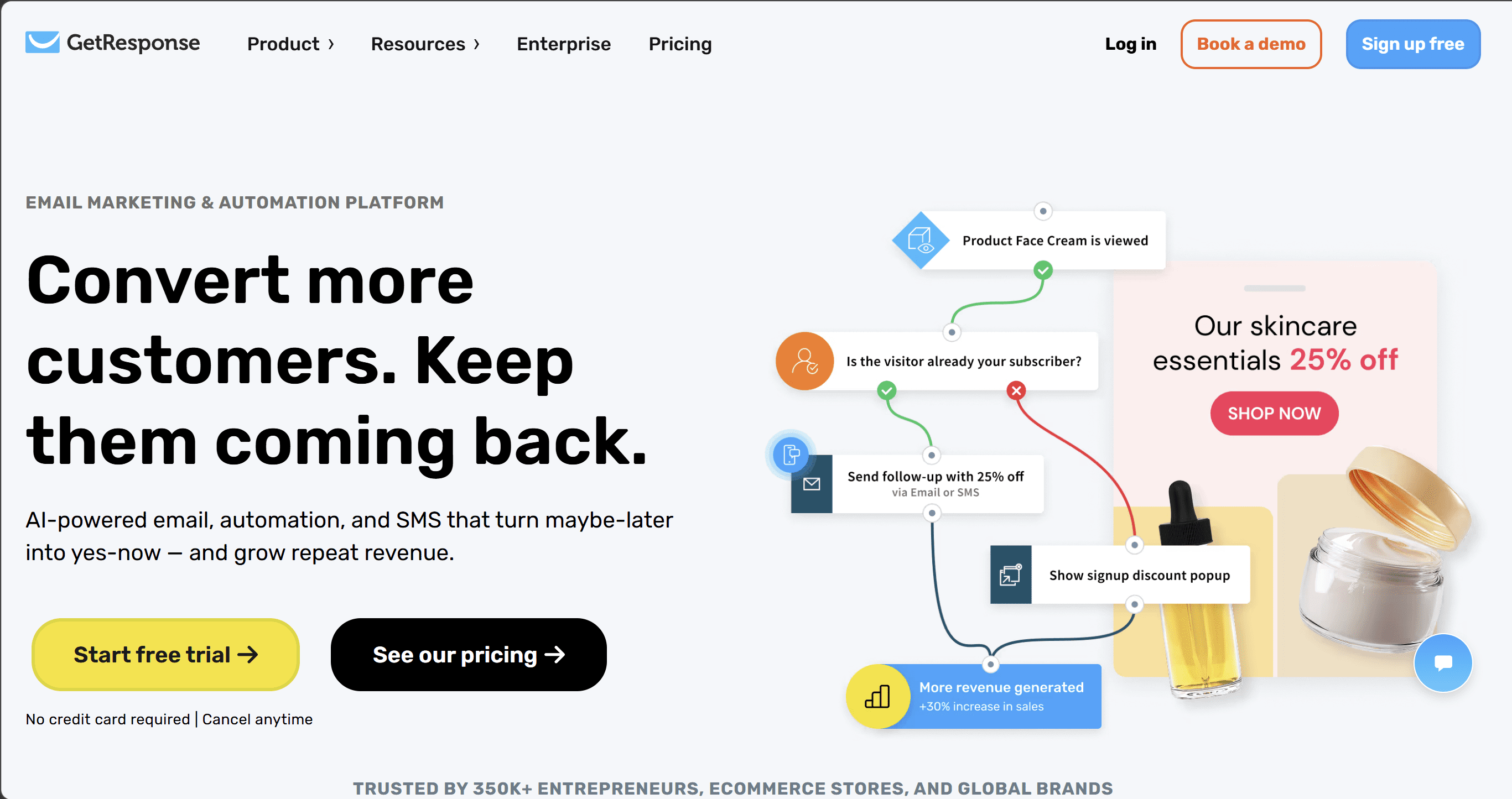
Number 8 is GetResponse , and it’s a strategic fit for B2B teams who use webinars as their primary lead magnet. With newsletter delivery integrated into the native webinar hosting platform, GetResponse helps convert attendees into long-term subscribers.
👉Best For: B2Bs that use webinars as their main source of lead generation and subscriber conversion channel.

-
9
Constant Contact
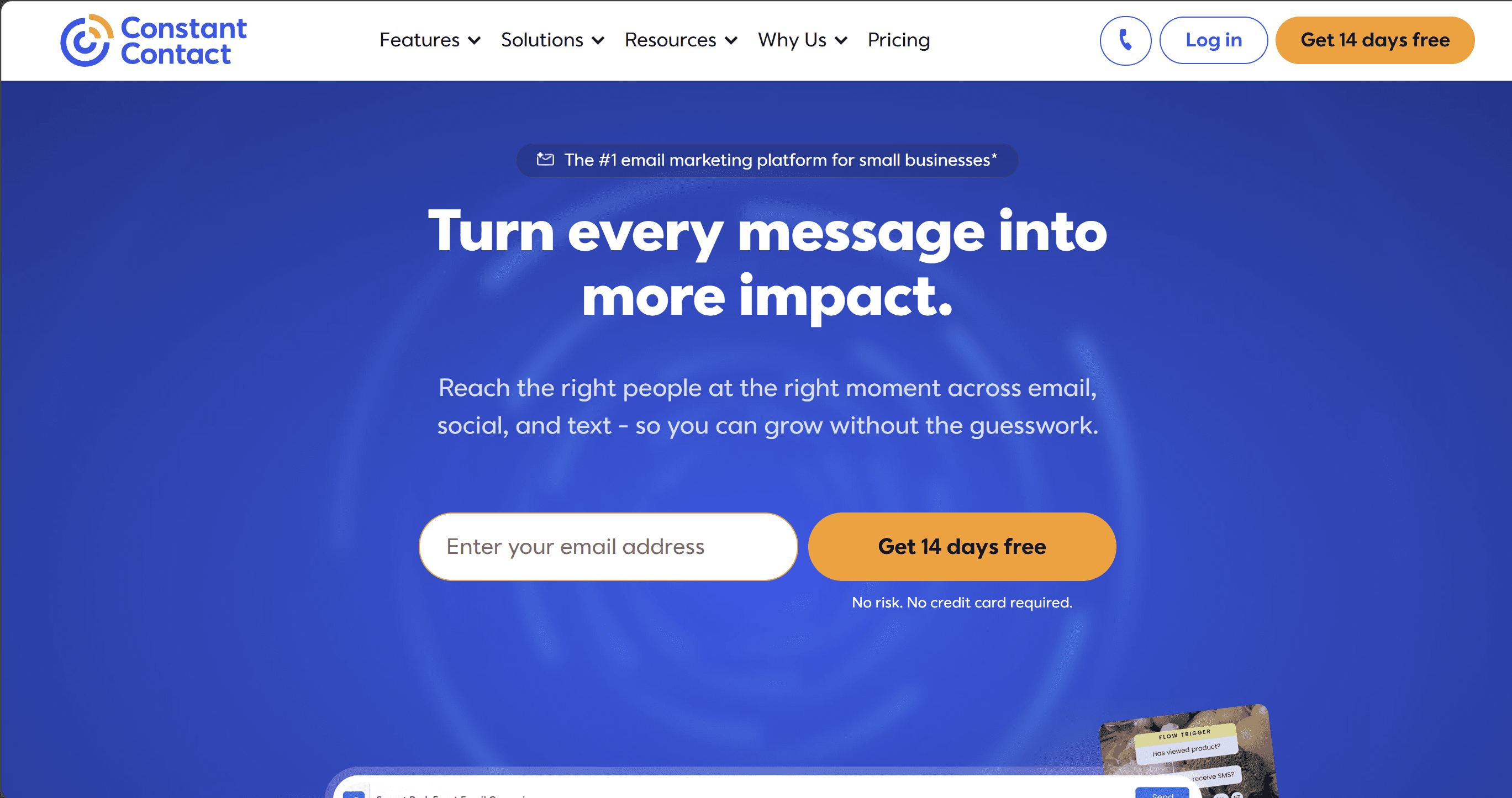
Constant Contact is a legacy leader in the space and remains a reliable choice for traditional businesses, since it focuses on simplified contact management and the “set it and forget it” templates. It’s perfect for teams that have few resources but still need consistent outreach.
👉Best For: Any traditional business that has limited resources and is looking for a reliable “set it and forget it” outreach.

-
10
Substack
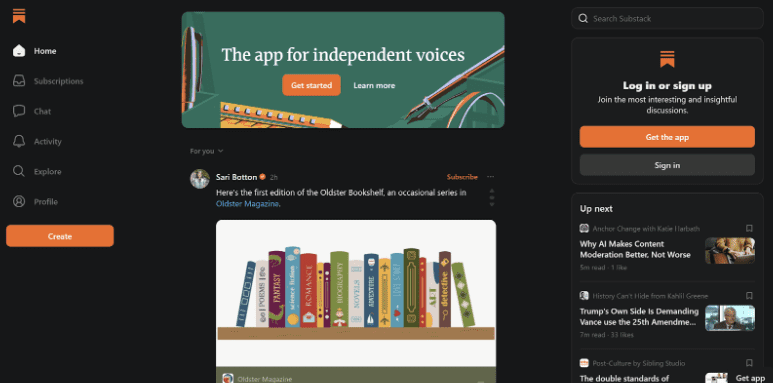
Finally, there is Substack , and while it remains primarily a publishing platform, it’s the premier choice for editorial B2B brands that want to monetize to create gated content. There aren’t any deep CRM integrations as found in other tools, but it is certainly unmatched in building a dedicated, paid community around niche expertise.
👉Best For: Editorial B2Bs and niche experts who want to focus on community building and paid content monetization.

How to Successfully Implement Email Newsletter Campaigns
Execution is the boundary between a high-yield asset and a sunk cost. Without strict operational procedures, even the best and most advanced email newsletter software won't work.
So, to make sure YOUR email works and brings in real money instead of just vanity stats, here's the plan you should take to get started:
Step 1: Set clear B2B goals that are strategic

To begin, you need to figure out what success means for your B2B and your specific business model. In professional contexts, objectives generally converge into three strategic areas:
●Lead Nurturing
●Customer Retention & Expansion
●Authority Building
Step 2: Architecture of a High-Integrity List
The quality of your data dictates the ceiling of your ROI. Therefore, you must adhere to a permission-based growth model that relies on never purchasing third-party lists, as they lead to immediate domain reputation damage.
Instead, use behavioral labeling from the time of signup and a twofold opt-in process. B2B programs that operate with EngageLab and do well use event-based triggers like tagging leads who download a specific technical whitepaper to send hyper-relevant, automated follow-ups that respect the user's present intent.
Step 3: The "Value-First" Content Philosophy
B2B decision makers have to adopt the 80/20 Rule in 2026: 80% of your newsletter content should be purely educational, while only 20% should focus on product promotion. EngageLab’s intuitive campaign builder makes it easy to optimize this balance, and you can drag-and-drop educational blocks as well as targeted CTAs without ruining the reader experience.
Step 4: Deploy Multi-Stage Automation Workflows
Step four is to stop sending out batch-and-blast emails and use your platform's automation engine to create multi-stage sequences that start depending on how your subscribers act. The best example? The automatic welcome series makes $2.65 for each person who gets it, and the top 10% of people who get it place an order 10.53% of the time (Klaviyo, 2025).
Step 5: Advanced Deliverability Optimization
Of course, a newsletter that doesn't get to the main inbox is probably already in the trash. It doesn't give you any return on investment. So, in addition to making interesting content, you need to make sure that your SPF, DKIM, and DMARC records are set up appropriately.
In fact, the industry ideal is to keep the spam complaint rate below 0.1%. EngageLab helps you do this by giving you built-in deliverability monitoring that lets you know as soon as your sender reputation is in danger, so you can take action right away.
Step 6: Systematic Measurement and Iteration
Finally, to achieve elite-level performance, your analysis has to go a lot deeper than open rates. You have to monitor Conversion Attribution and Revenue Per Recipient (RPR) to understand the financial impact of each campaign.
If a segment shows declining engagement, do some A/B testing for subject lines and send times. ROI-at-a-glance reporting in the EngageLab analytics dashboard helps you do that in seconds, letting you create incredible strategies and iterate based on real-time data rather than guesswork.
Conclusion
Choosing the right email newsletter platform comes down to three fundamentals. Deliverability infrastructure is non-negotiable — without proper SPF, DKIM, and DMARC configuration, even the most compelling content never reaches the primary inbox.
Behavioral segmentation is what separates a high-ROI program from a generic blast operation; platforms that let you target by real-time actions and job-level demographics consistently outperform those that don't.
Multi-stage automation is the engine behind sustainable B2B growth, removing manual overhead and ensuring your message lands at the exact moment of highest intent.
The gap between a generic tool and a purpose-built platform isn't cosmetic. It's measured in pipeline velocity, sender reputation, and long-term subscriber trust. Whether you're a startup building your first list or an enterprise scaling to high-volume sends, the right platform makes that difference compoundable over time.
Ready to turn your subscribers into a predictable revenue stream?