Jacob Morrow
Updated: 2026-01-08
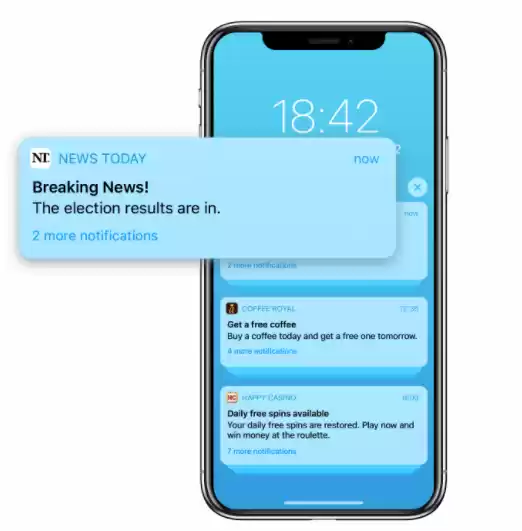
Receiving push notification news alerts is a routine for many people, just like drinking their morning coffee. These breaking news alerts are great to get familiar with all the latest happenings around you within seconds. Once your phone buzzes and you receive a headline, you can decide whether to tap it to get more information or simply swipe away.
However, most newsrooms are facing the difficulty of push notification news opt-in rates declining as users are getting push notifications from a variety of apps and often disabling permissions for news-related apps. As a result, many companies and news organizations have lost their direct lines to audiences.
Despite the challenges, the core features and benefits of push notification news are still the same. They allow businesses to reach their target audience directly, which is difficult with other channels like emails or social media.
So, let's explore the push notification news challenges in detail and see what you can do to overcome these issues.
Common Push Notification News Challenges: Is Your Strategy Falling Short?
Many publishers are still following the old strategy in which they created one generic message and blasted it to the entire target audience. As a result, most companies are facing similar issues:
- Immediate Opt-in Permissions: Some apps make the mistake of asking users to opt in for push notifications immediately. Research shows that users are likely not to opt in without experiencing the app's value.
- Too Many Notifications: Users nowadays often have a huge pile of push notifications to go through. If all the push notifications look the same, or if the user is getting similar news notifications from multiple publishers, it can lead lower engagement rate.
- Permission Fatigue: While there are many benefits of push notifications, statistics indicate that 40% of app users don't like push notifications and find them to be annoying. As a result, generic push notification news alerts can annoy users and cause them to disable notifications or even delete the app.
- News Coverage: The quality of news coverage of publishers also has a direct impact on how well their push notifications are performing. For example, a user might subscribe only to get local news, but if they keep getting national political coverage or international news, they might get annoyed.

Source:xtremepush
Overall, all of these issues combine to form the larger issue of low opt-in leads.
What Modern Push Notification News Requires?
Understanding the issues with the outdated push notification strategy is only one part. If you are interested in maximizing opt-in and engagement of your push notification news alerts, you should integrate the following 4 things in your strategy:
1. Strategic Permission
Don't ask the user to opt-in to alerts immediately after app installation. Instead, give ample time to users to get familiar with the app and only ask for permission after they show some interest. This is likely to increase the acceptance rate significantly.
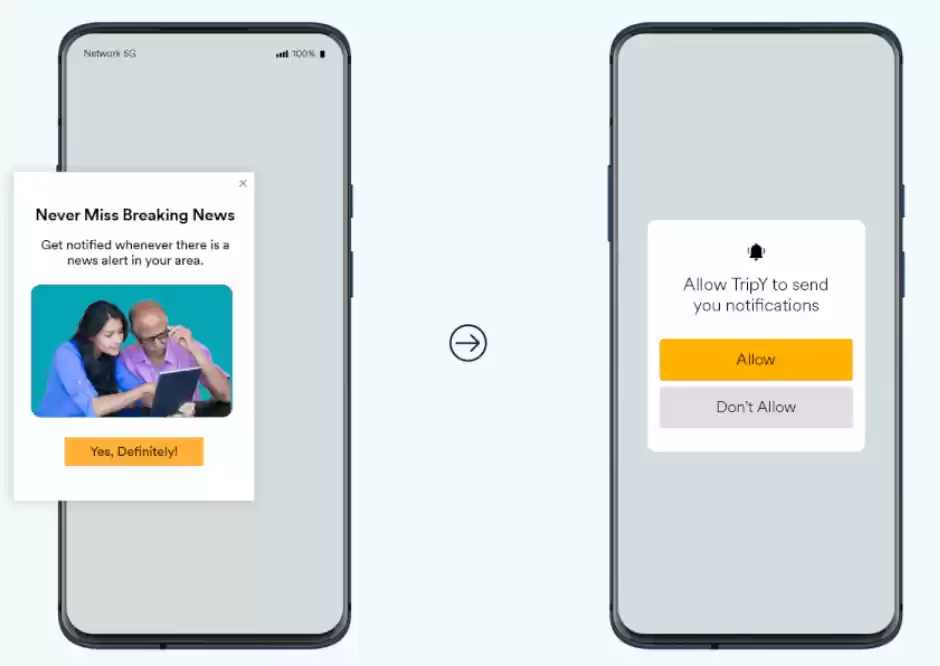
Source:moengage
2. Detailed Segmentation
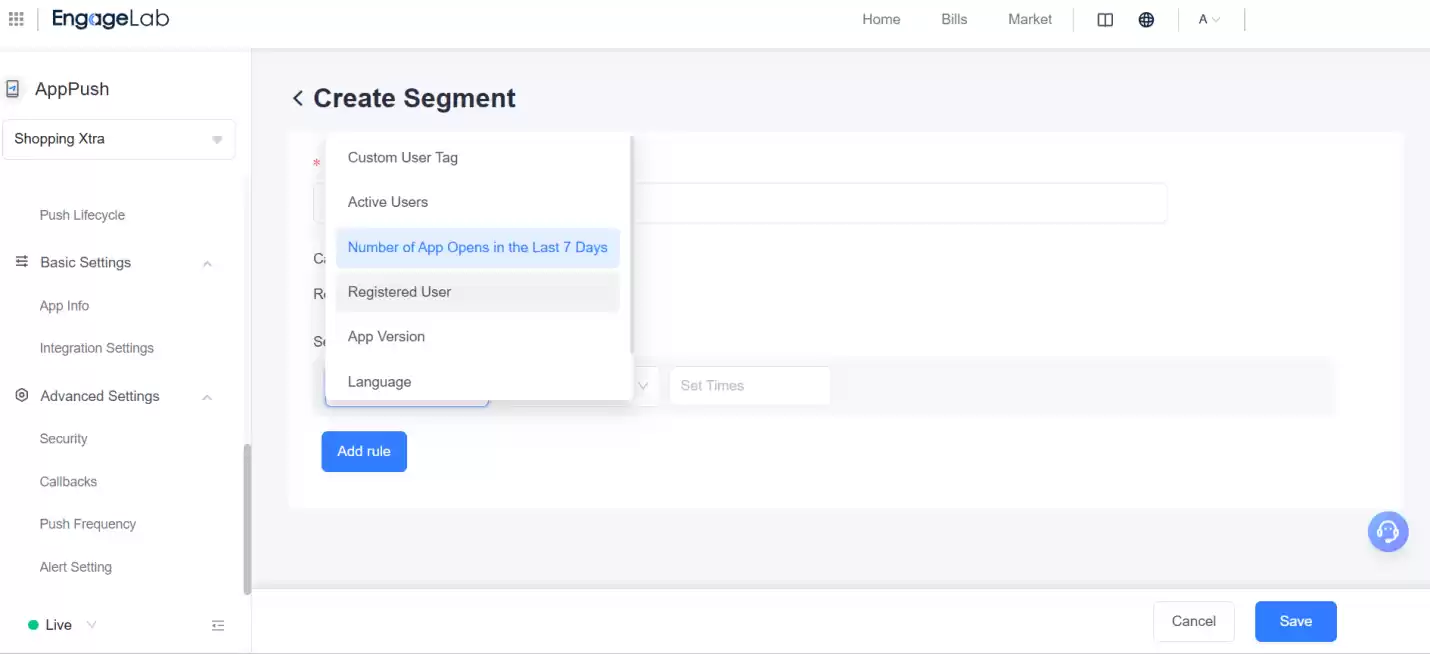
Modern segmentation is much more than just demographics. You have to incorporate granular segmentation into your strategy by considering behavioral data. Some of the key factors you can consider are the type of sections a reader visits often, which topics get more clicks, the most active times of users, etc.
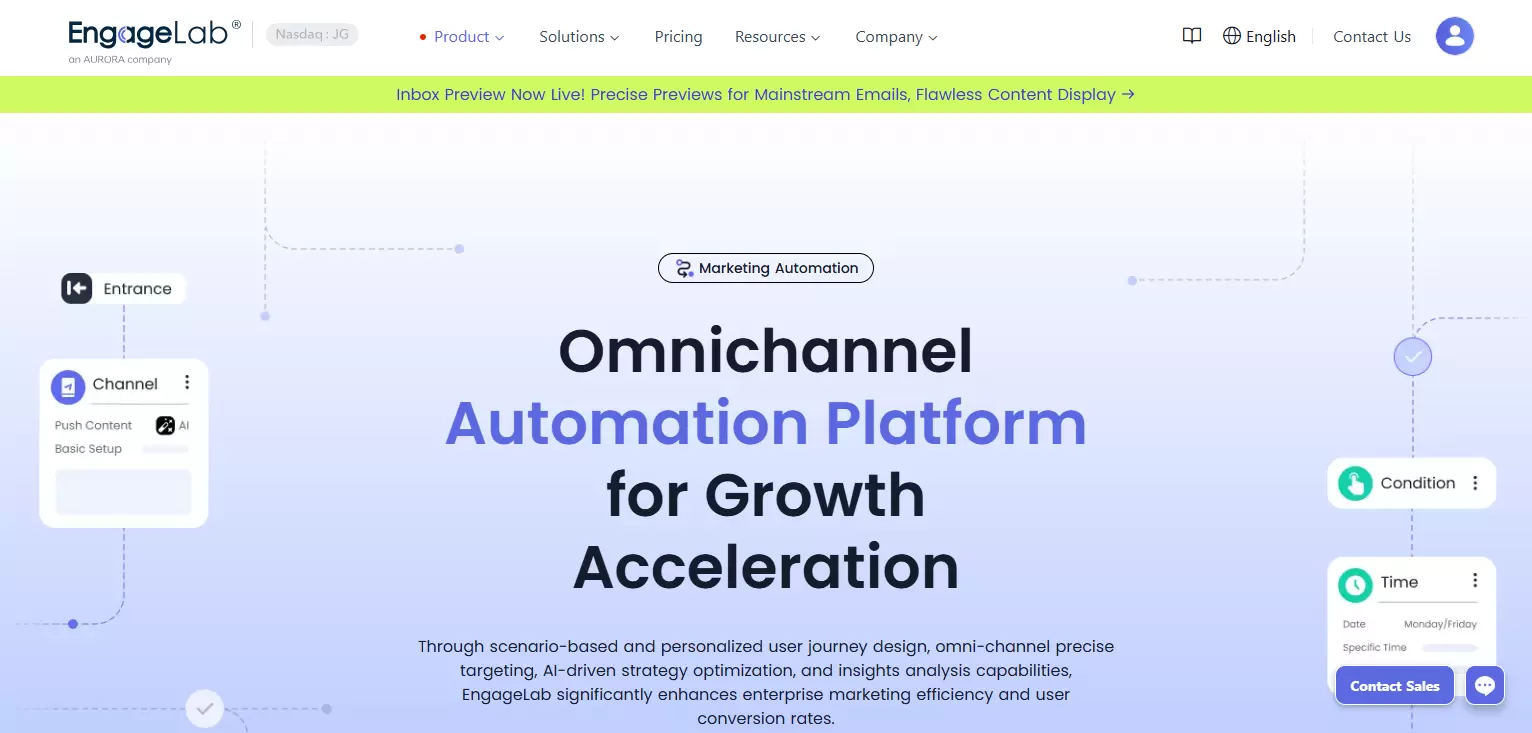
3. Automated Workflows
Automation is useful to reduce the manual editorial burden and ensure maximum relevance. Handling each push notification decision manually will slow down the newsroom operations and also increase the risk of mistakes. Automation, on the other hand, supports your operations by sending the breaking news alerts immediately.
4. Continuous Measurement
Monitoring and optimization of your push notification campaigns is important to get the best results. You should monitor the open and click rates, especially, to see if your news alerts are engaging the users.
How EngageLab Builds Smarter Push Notification News?
Implementation of the four core principles discussed in the previous section becomes quicker, easier, and more efficient with the help of a reliable tool like EngageLab. It has the complete infrastructure that any company and newsroom can use to implement advanced push notification strategies without making the processes too complex.
Solution A: Increase Push Notification Opt-ins
Getting the readers to accept push notifications needs careful timing and precise communication. EngageLab can help you increase push notification opt-in in two different ways:
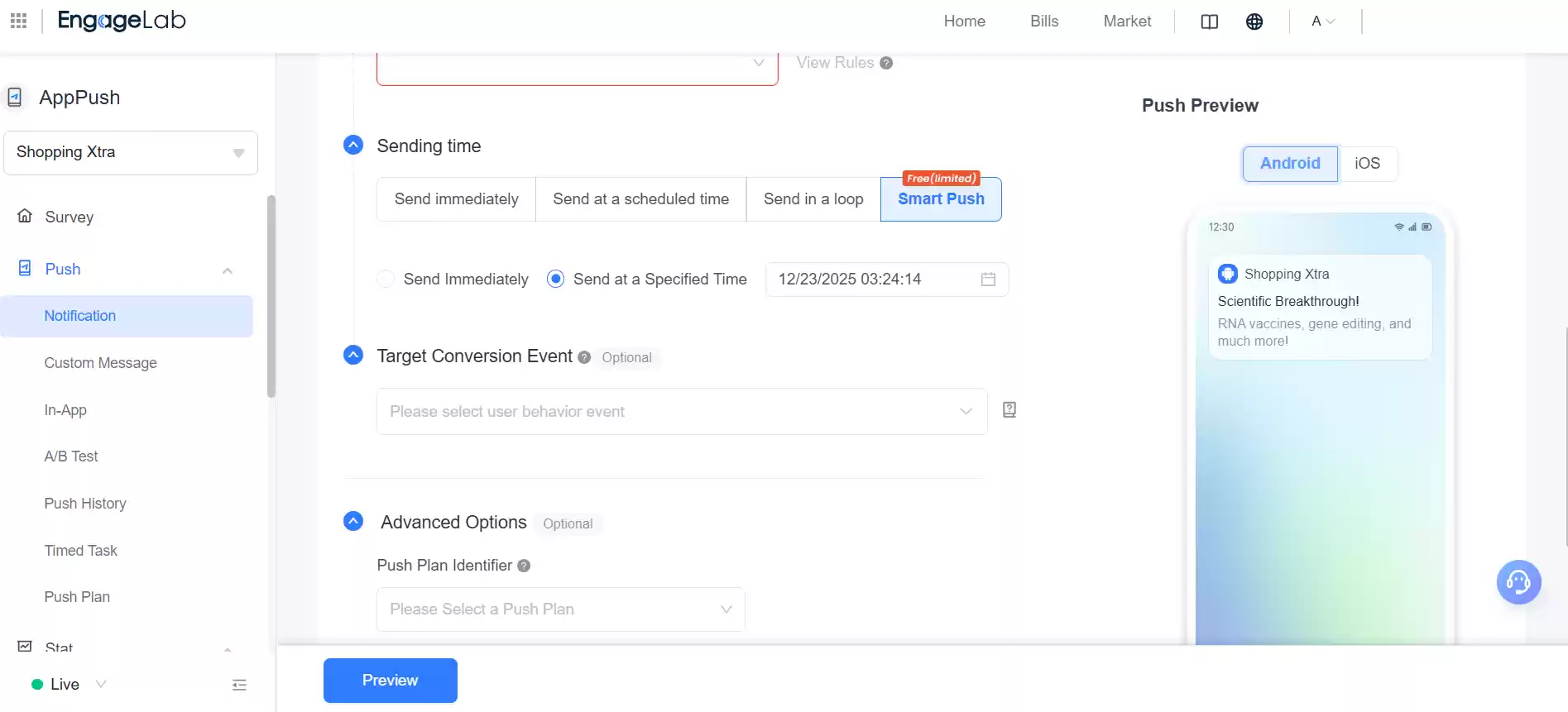
- Delayed Notifications: You can schedule push notifications in EngageLab to be sent with a specific interval or delay them after the user has stayed on a specific screen for some time.
- User Segmentation: EngageLab has 10+ user segmentation and grouping rules for audience targeting, such as registration IDs, device types, and behavioral segments.
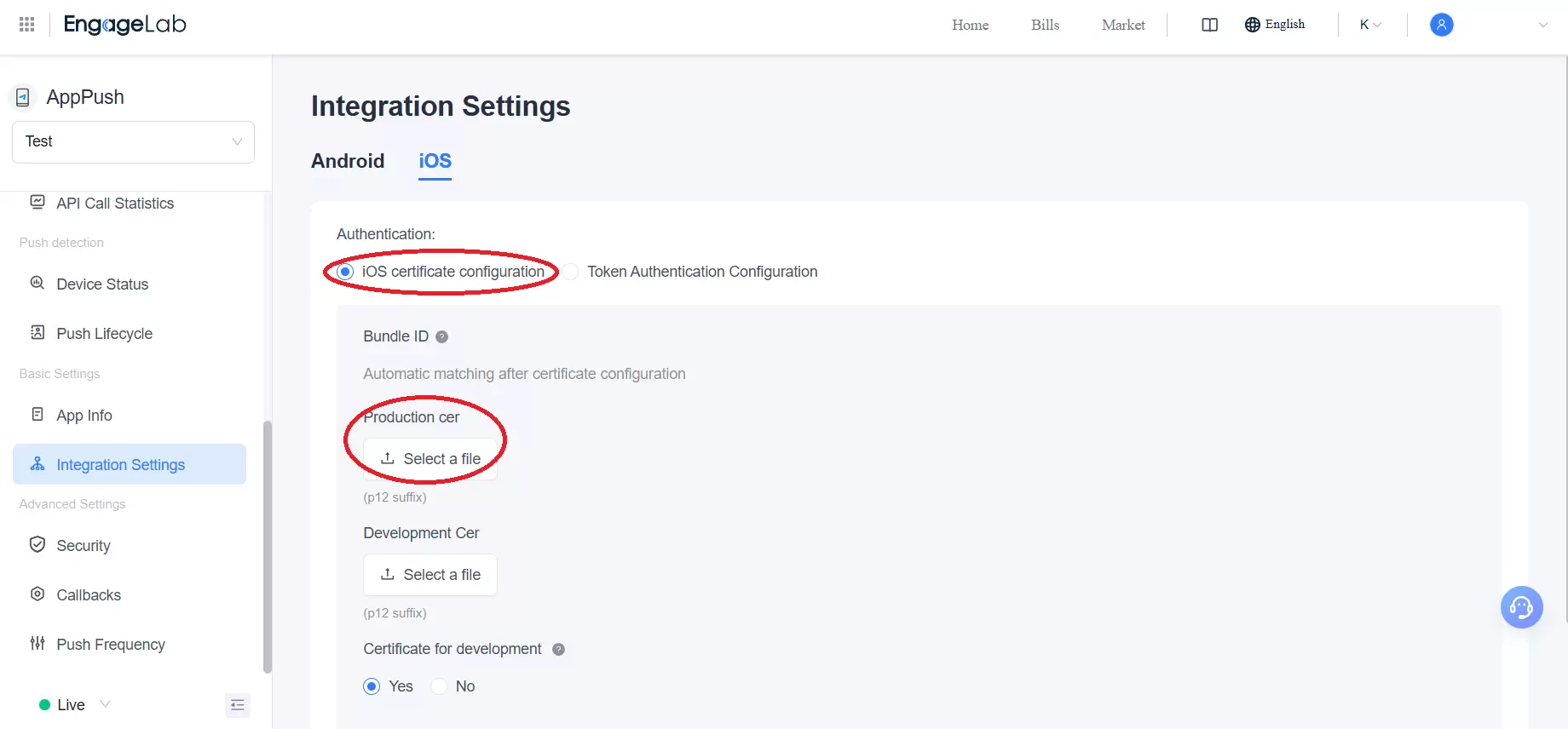
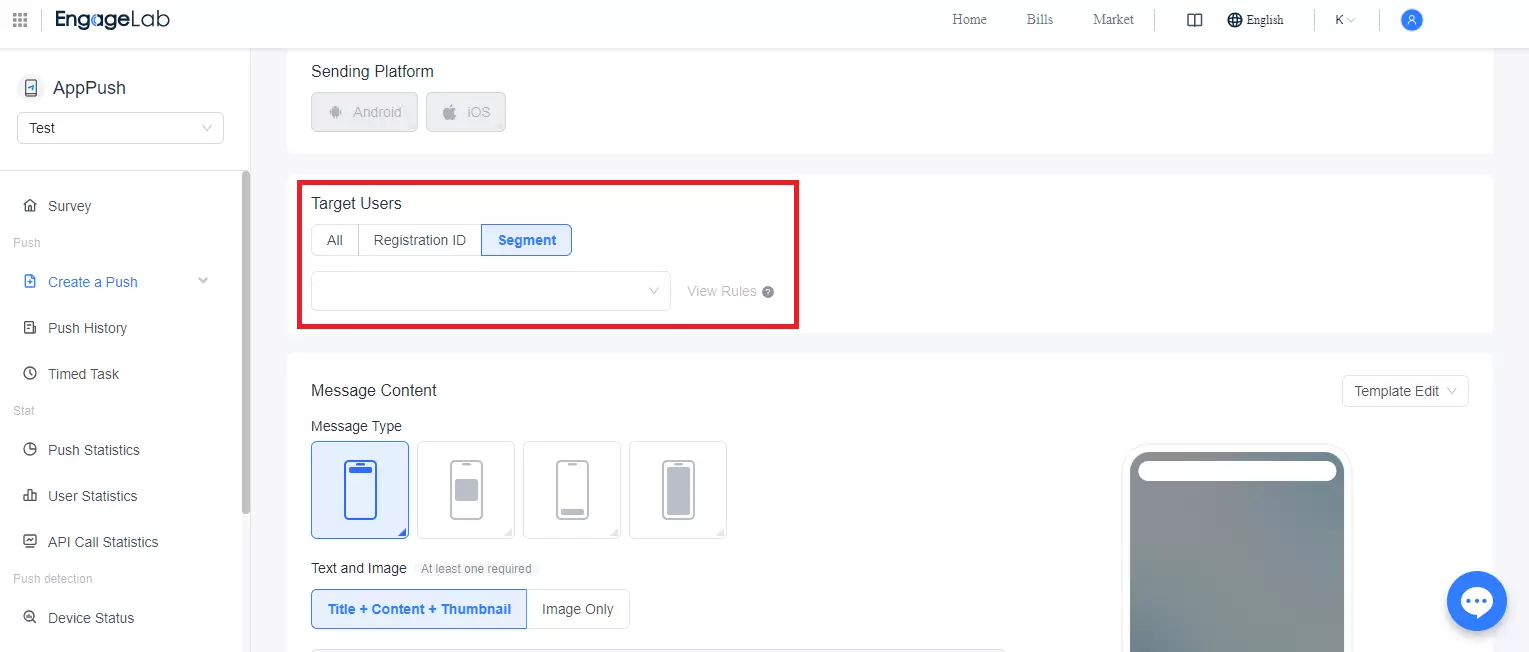
Such detailed segmentation, along with sending the push notification at the right time, can help you connect with your audience in a better and more engaging manner.
Solution B: Streamline Push Notification Workflows
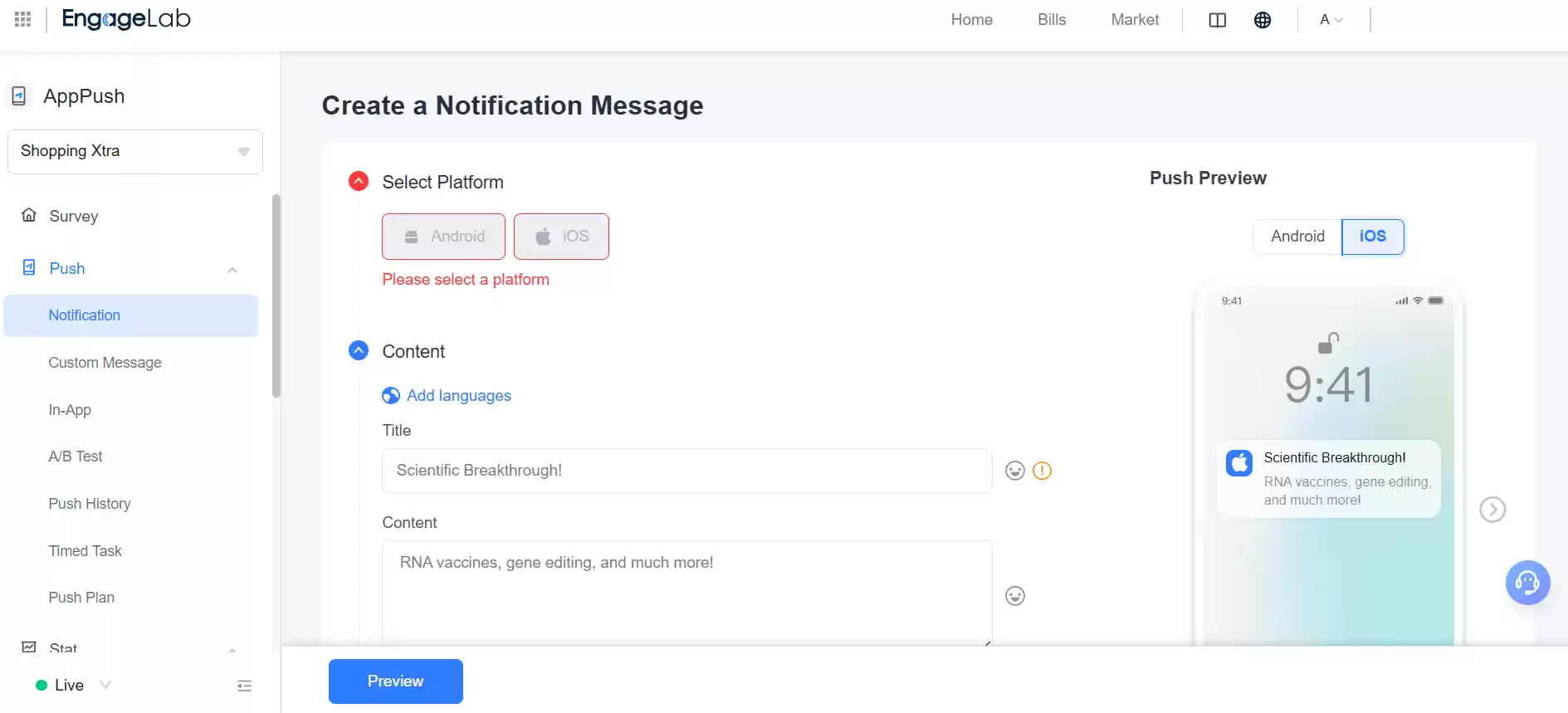
Newsrooms and publishers are all about quick operations. They are unlikely to have the time to deal with multiple tools. This is where EngageLab shines with integrated push notification, news alert creation tools, and smart scheduling.
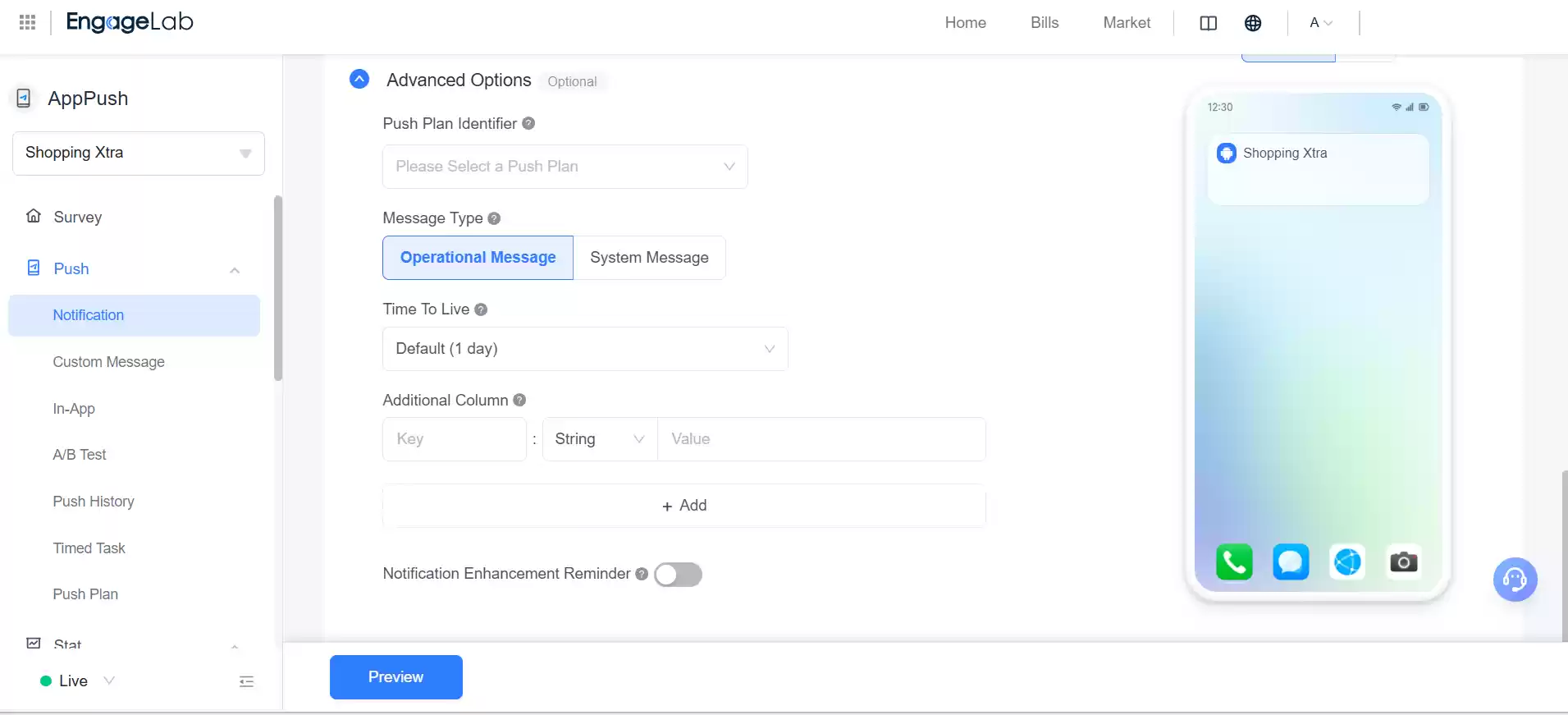
- In-Editor Push Tools: EngageLab has consolidated the notification creation, preview, and targeting features in a single interface. Publishers can write the headline and notification content, along with media files, and preview them on different screens.
- Smart Push (Scheduling and Automation): You can use the Smart Push feature to analyze each user's activity patterns and send them push notifications as per the optimal delivery window.
Solution C: Deliver More Relevant Push Notification News
Sending relevant push notification news alerts is also of utmost importance to win over your audience and increase engagement. EngageLab has three core features to help you deliver more relevant push notification news:
- Behavioral Triggers: Use the segments created on the basis of behavioral data to automate responses to reader actions. For example, you can automate welcoming new subscribers with onboarding messages. Similarly, you can alert loyal followers when their favorite columnist publishes new work.
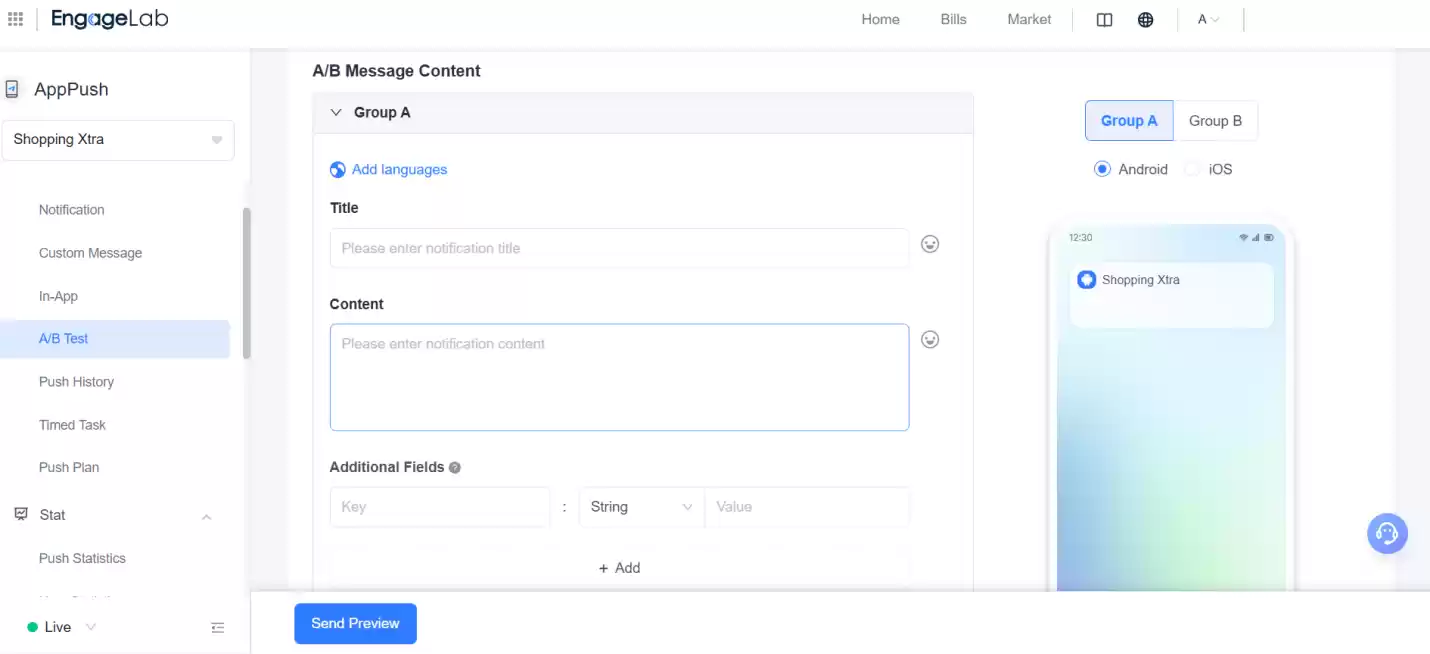
- A/B Testing: You can make data-driven decisions by A/B testing your push notifications. You can easily create two versions of a notification with different headlines, images, or timing. Get the best results by splitting your test audience evenly and measuring results to apply your learnings to future campaigns.
- Cross-Channel Engagement: You can connect your push notification with a larger engagement ecosystem and reach your users via different channels like web push notifications, email, SMS, and WhatsApp from the same dashboard.
Solution D: Measure and Refine Your Push Strategy
Measuring is important to refine and improve your push strategy. EngageLab offers comprehensive analytics for this purpose:
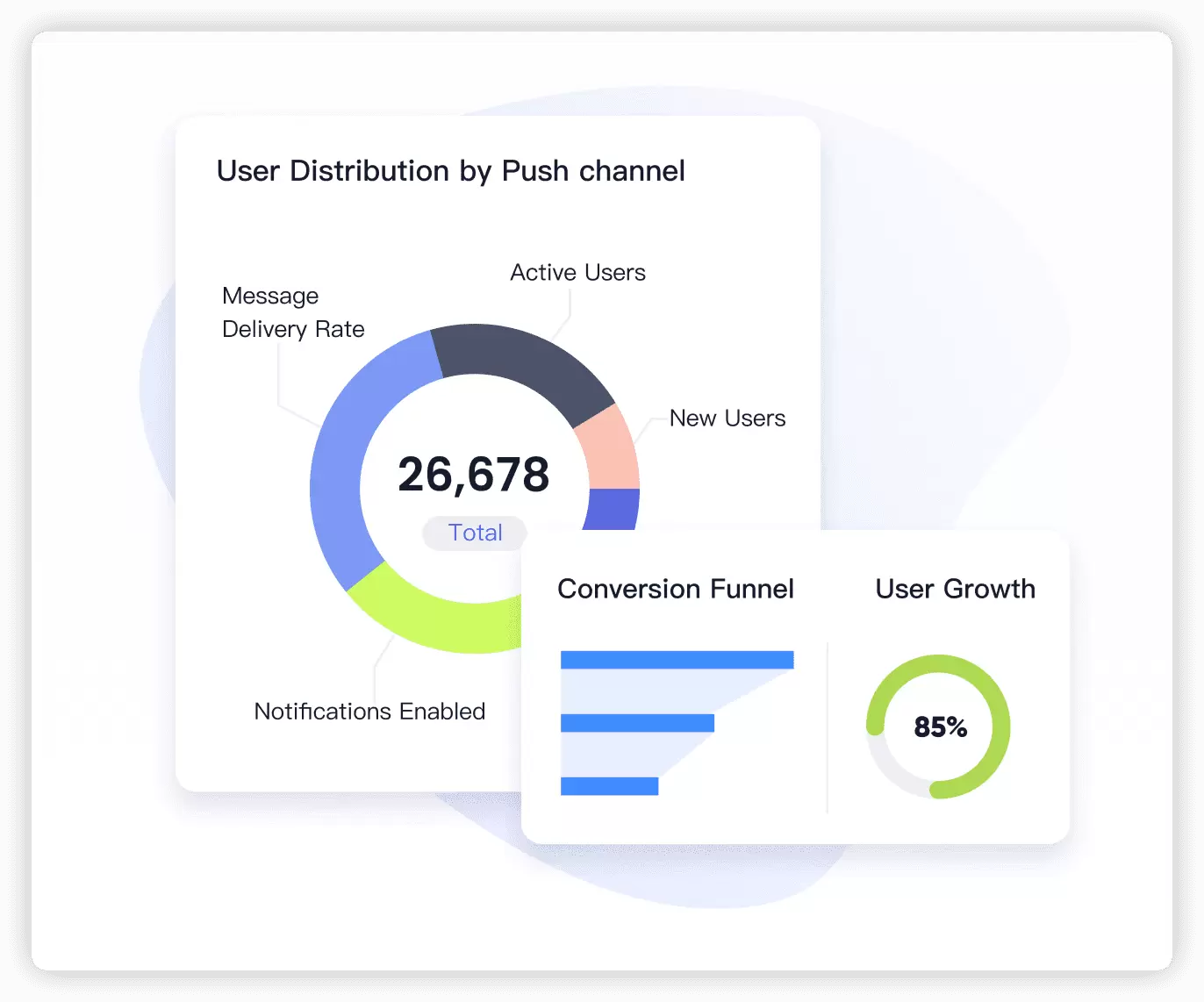
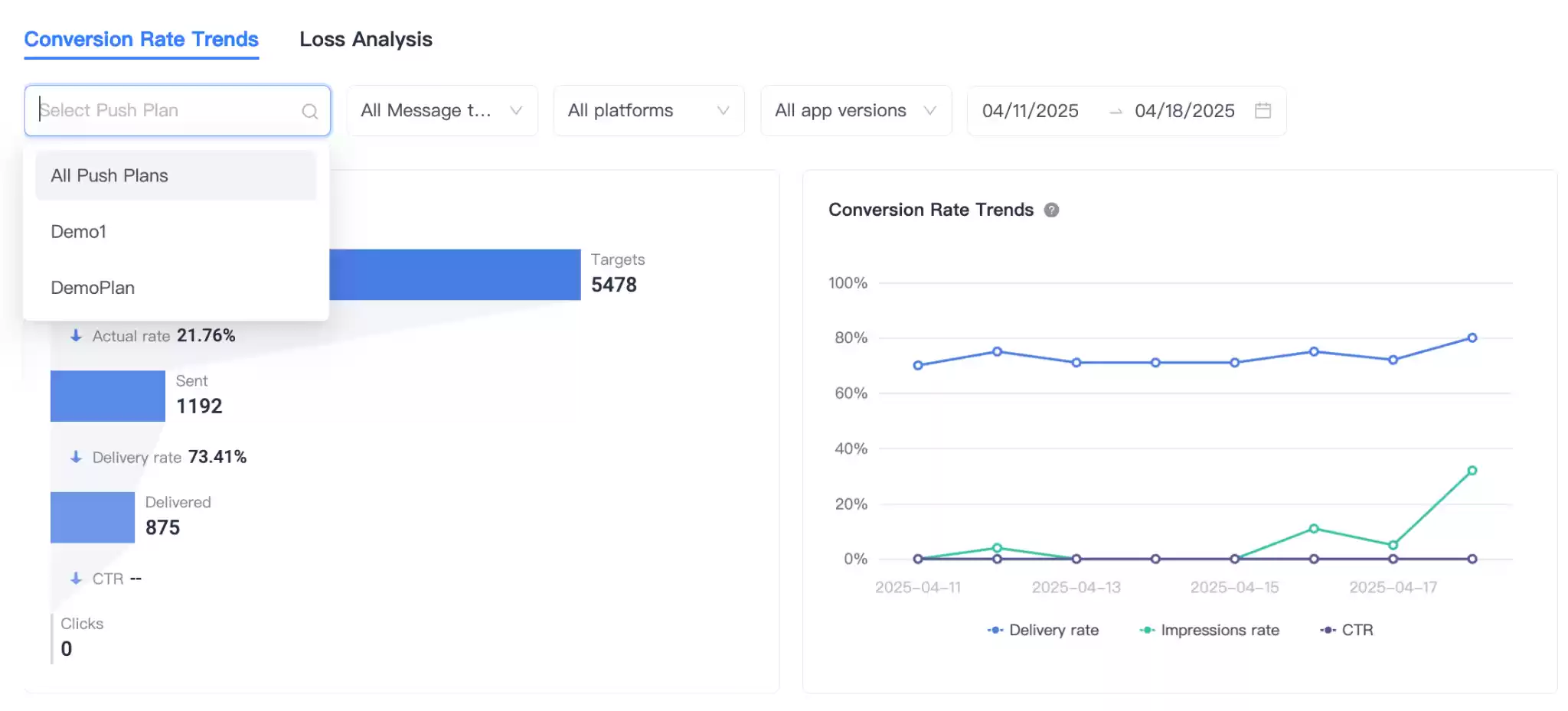
- News-Focused Dashboards : You can track the complete push notification news lifecycle, including delivery rate, click-through rate, notification enablement and disablement, and several other important metrics. Funnel analysis helps you know where the messages got lost and where you can make improvements.
- Send-Time Optimization: Historical data helps you improve future performance as EngageLab can identify the patterns in audience engagement levels and find the best time to send them notifications.
- Fatigue Controls: You can set a frequency cap by day, week, or category to prevent over-messaging. It will automatically suppress notifications for users who have engaged with your content.
Push Notification News That Performs: Results from Real Newsrooms
While there are many different benchmarks and studies available on the internet, the average industry benchmark of push notifications opt-in for news apps on iOS is 0.83%, and Android is 1.69%.
On the other hand, publishers that implement smart push notification strategies like behavioral segmentation, optimized delivery timing, and strategic permission prompts can get 4x higher engagement, while adding rich media can increase click rates by 25%. All of these features are available in EngageLab.
So, the actual difference in numbers itself is a testament to how beneficial EngageLab is to create, send, and analyze push notification news alerts.
Let's look at two real-world examples as well.
Case Study: European News Aggregator Success

Source:braze
Upday , which is one of Europe's most popular independent free news apps with over 25 million monthly users, ran a four-month push notification campaign. They targeted churned users who had not used the app in 30 days with proper segmentation.
This targeted push notification strategy encouraged readers to catch up on the latest news. As a result, the publisher reactivated 528,000 lapsed users, and the overall engagement among targeted users increased by 4.9%.
Case Study: The Boston Globe
The Boston Globe was able to boost its open rate by three times and grow its audience significantly by making changes to its opt-in policy. They implemented preference centers in their app through which readers had the option of choosing notification categories they wanted to receive.
Hence, this shift from the all-or-nothing opt-in model allowed subscribers to only choose categories of their interest, such as sports or entertainment.
Conclusion
Analyzing the modern push notification strategies and successful examples shows that the gap between struggling publishers and thriving ones often comes down to execution details. All publishers are sending push notifications and covering breaking news. But publishers with smart engagement strategies and the right tools are thriving in the industry.
The best way to navigate this space is to rely on platforms like EngageLab that specifically have the tools and the infrastructure to make your push notifications and news alerts successful. It supports intelligent delivery across every major platform, behavioral targeting, user segmentation, and automation to free editorial teams from repetitive tasks, and detailed analytics to turn data into strategic insights.
Hence, news organizations should treat push notifications as a sophisticated and powerful engagement channel, and not just a simple broadcasting tool. Ultimately, the readers who opt in are telling publishers they want to hear from them, but the question is whether you are sending messages worth receiving.
Ready to transform your push notification strategy? Start with a free trial of EngageLab and ensure intelligent push notification news delivery to boost engagement.

![Fintech Push Notifications: Best Practices, Workflows & Use Cases [2026]](https://img.engagelab.net/en/article/fintech-push-notifications-best-practices-use-cases.webp)
![Firebase Cloud Messaging Alternatives: 7 Platforms Compared for Multi-Channel Scale [2026]](https://img.engagelab.net/en/article/fcm-alternatives-cover.webp)