Jacob Morrow
Updated: 2026-07-28
SMS OTP (Short Message Service One-Time Password) remains one of the most widely used phone verification methods because it works on almost any mobile device without requiring an additional app. Businesses rely on it for login verification, account recovery, transaction approval, and user onboarding. However, SMS OTP also comes with security trade-offs and implementation challenges. This guide explains how SMS OTP works, where it fits, its limitations, and how to build a secure verification workflow.
This guide explains how SMS OTP verification works, where it is useful, its security limitations, and how to implement an SMS OTP service for a website or mobile app.
What Is SMS OTP (One-Time Password)?
An SMS OTP is a temporary numeric or alphanumeric code delivered to a phone number through SMS. The code is valid for one verification attempt or transaction and expires after a short, risk-appropriate period. Unlike a static password, a correctly implemented OTP cannot be reused after successful verification.

How Does SMS OTP Verification Work?
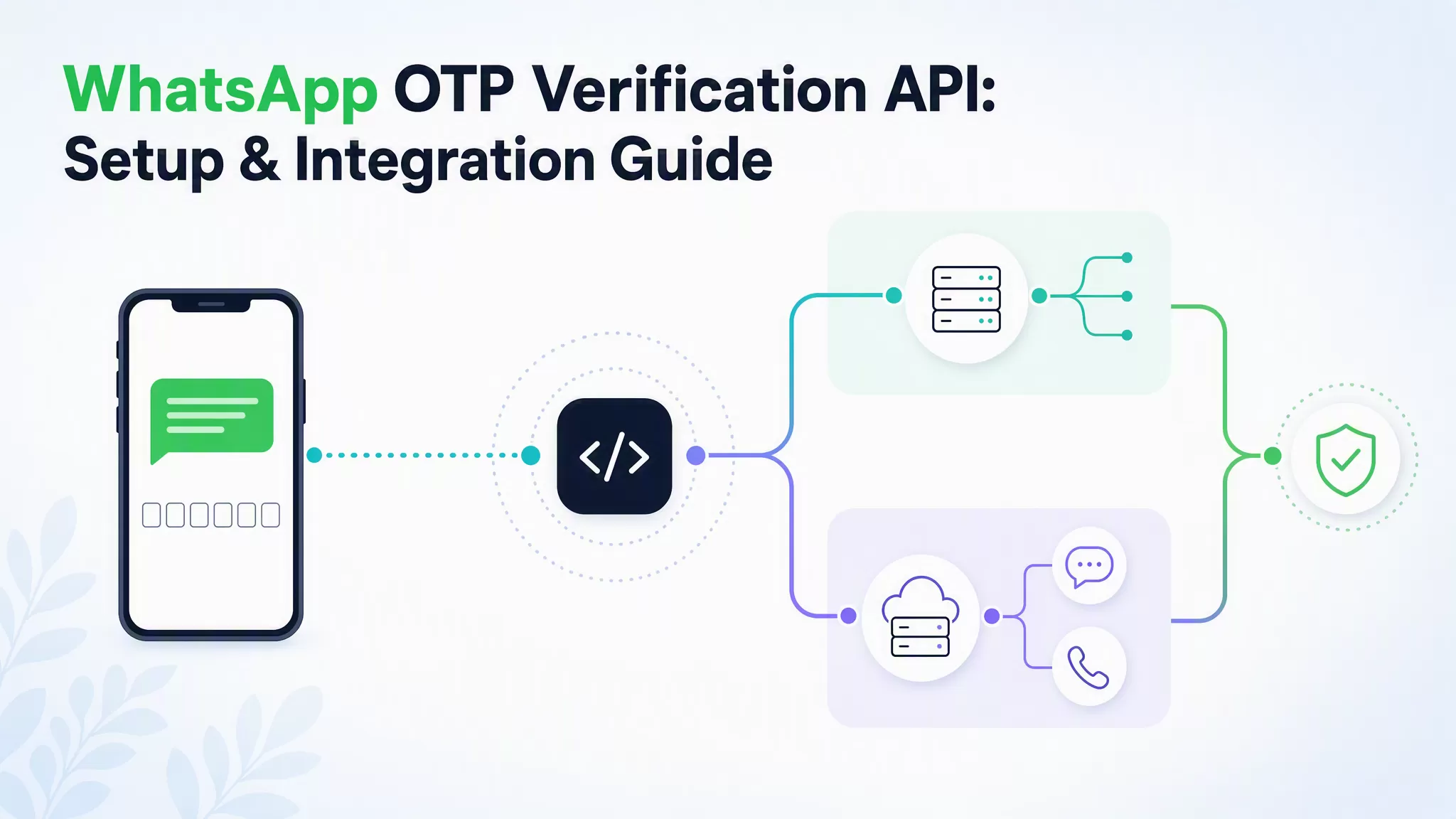
A complete SMS OTP verification flow usually follows these steps:
- 1. A user action triggers verification. A login, registration, password reset, payment, or account change starts the process.
- 2. The server generates and binds the OTP. It creates an unpredictable code and associates it with the correct user, session, phone number, and action.
- 3. An SMS provider delivers the message. The application submits the OTP request to an SMS API or gateway, which routes the message through carriers to the registered mobile number.
- 4. The user enters the code. The website or app accepts manual entry or supported one-time-code autofill.
- 5. The server verifies the request. It checks the code, expiration time, intended action, and allowed number of attempts before approving or rejecting the request.
- 6. The code becomes invalid. A successful OTP is consumed immediately. Expired or replaced codes must also be rejected, and the result should be recorded for monitoring and fraud analysis.
When SMS OTP follows a password, it can act as a possession factor in two-factor authentication (2FA). When it replaces a password, it is a passwordless verification method, but it is not phishing-resistant.
SMS OTP vs. Other Authentication Methods
SMS OTP offers broad reach and low setup friction, but it is not the right method for every risk level. Use this comparison to decide where it fits.
| Method | Main advantage | Main limitation | Suitable use |
|---|---|---|---|
| SMS OTP | No separate app; broad mobile reach | Depends on carrier delivery and is exposed to SIM-swap and phishing risk | Phone verification and moderate-risk authentication |
| Email OTP | Low cost and familiar | Depends on email-account security and delivery | Low-risk verification and account recovery |
| Authenticator app (TOTP) | Works offline and avoids SMS delivery risk | Requires enrollment and an authenticator app | Ongoing account 2FA |
| Voice OTP | Useful as an accessibility or delivery fallback | Higher friction and still relies on the phone network | Fallback when SMS is unavailable |
| Passkey or security key | Phishing-resistant authentication | Requires device and account support | High-risk accounts and sensitive access |
Common SMS OTP Use Cases
1 Login Authentication
Send an OTP after a correct password or when a login appears unusual. This adds a possession check, although high-risk accounts should use a phishing-resistant factor where possible.
2 Transaction Verification
SMS OTP is widely used for phone verification during user registration. Financial and e-commerce services can use an OTP as a step-up check before a payment, transfer, or other sensitive action. The request should bind the code to the specific transaction so it cannot authorize a different action.
3 Password Reset Requests
An SMS OTP can confirm access to a registered phone before a password reset. Because phone numbers can be reassigned or taken over, recovery flows should also evaluate device, session, and account-risk signals.
4 Sensitive Data Access
Businesses can require step-up verification before users view or change sensitive information. For administrative, financial, healthcare, or other high-impact access, SMS OTP should not be the only available security control.
Benefits and Limitations of SMS OTP
Benefits for Users and Businesses
- Low user friction: Most users can receive a text message without installing an app.
- Broad reach: SMS works on smartphones and basic mobile phones.
- Fast deployment: Businesses can integrate a managed SMS OTP API instead of building carrier connections.
- Single-use verification: A consumed or expired code cannot be reused when implemented correctly.
- Flexible use cases: The same workflow can support onboarding, login, recovery, and transaction confirmation.
Important Limitations
SMS OTP is more convenient than many alternatives , but convenience is not the same as phishing resistance. Delivery can be delayed or fail, phone numbers can be recycled, and attackers may steal codes through phishing, malware, SIM swapping, or telecom-network attacks.
Use SMS OTP where its reach and usability match the risk. Offer a stronger method such as an authenticator app, passkey, or security key for privileged users and high-value actions.

SMS OTP Security Risks and Best Practices
1 Common SMS OTP Risks
SIM swapping and number-porting fraud can redirect a victim’s phone number to an attacker-controlled SIM. Other risks include phishing or social engineering, malware that reads messages, telecom-routing interception, recycled phone numbers, OTP guessing, replay attempts, and automated request abuse.

Standard SMS is not end-to-end encrypted by the application sending the code. Businesses cannot remove every telecom-network risk, so the verification service must reduce exposure with short validity, single-use enforcement, rate limits, risk checks, and stronger step-up methods. See the MDN OTP security guidance for a technical overview of SMS interception, SIM swapping, phishing, and phone-number recycling risks.
2 SMS OTP Implementation Checklist
- Generate codes with a cryptographically secure random source.
- Bind each OTP to the user, destination, session, and intended action.
- Use a short, risk-appropriate time-to-live and invalidate the code after one successful use.
- Invalidate older codes when a user requests a replacement.
- Limit verification attempts and apply resend cooldowns.
- Rate-limit requests by account, phone number, device, IP address, and geography.
- Do not log the plaintext code or expose it in analytics and support tools.
- Keep messages concise, name the service, state the purpose, and tell users never to share the code.
- Monitor delivery latency, failures, unusual request spikes, and conversion rates.
- Use risk-based step-up authentication or phishing-resistant methods for sensitive actions.
For web forms, support numeric keyboards and
autocomplete="one-time-code" where appropriate. Domain-bound SMS
formats and supported autofill APIs can reduce entry friction, but they do not
eliminate the underlying security limitations of SMS. Google’s
SMS OTP form best practices
explain the relevant input and message-format options.
How to Set Up SMS OTP for Your Business
1 Choose the Right SMS OTP Service Provider
Start with the countries, carriers, risk level, and verification volume your application must support. Then compare otp providers using criteria that affect real-world delivery and account security.
| Selection criterion | What to evaluate |
|---|---|
| Regional reach | Supported countries, carriers, sender types, registration requirements, and local restrictions |
| Delivery performance | Routing quality, delivery receipts, latency reporting, retry behavior, and status transparency |
| Security controls | Code generation and verification, expiration, attempt limits, rate limiting, fraud detection, and audit logs |
| Developer experience | API and SDK quality, sandbox tools, documentation, webhooks, error handling, and support |
| Resilience | Monitoring, failover routes, regional redundancy, and policy-based fallback channels |
| Compliance and data | Consent support, message templates, data handling, retention, and evidence relevant to your markets |

EngageLab is one option for businesses that need to manage OTP generation, verification, and multi-channel delivery from a single platform while improving delivery reliability across different regions.
Key SMS OTP Capabilities in EngageLab:
- Seamless Integration: Integrate OTP generation, verification, and delivery into existing applications through APIs.
- Multi-Channel Support: Deliver OTPs through SMS, WhatsApp, or email with configurable fallback policies.
- Flexible OTP Configuration: Configure OTP length, expiration time, verification rules, and multilingual templates.
- Comprehensive Analytics: Monitor delivery, verification success, latency, and conversion through visual reports.
- Direct Multi-Channel Fallback: Automatically switch to WhatsApp, voice or email when SMS delivery is unavailable.
- Regional Delivery Support: Adapt sender settings, templates, and delivery strategies for different countries and regions.
These capabilities help businesses build an OTP workflow that balances security, delivery reliability, and user experience across different markets.
Contact Sales2 Integrate the SMS OTP Workflow
Step 1: API Integration

Integrate the provider’s API with your authentication service. Keep business rules and authorization decisions on the server, validate API responses, handle timeouts safely, and never expose credentials in client-side code.
Step 2: Define OTP Parameters and Message Templates

Set code format, validity, verification-attempt limits, resend cooldown, and replacement behavior based on the action’s risk. Do not assume that one expiration period is appropriate for every workflow.
Create a concise template that names the service and purpose. For example: “Your EngageLab verification code is 123456. It expires in 5 minutes. Do not share this code.” Avoid links or requests for personal information unless the flow specifically requires and securely supports them.
Step 3: Plan Delivery and Fallback

Decide which sender type and route each country requires. If you offer email, WhatsApp, or voice as a fallback, apply a clear policy instead of immediately sending the same code through every channel. Verify user consent and channel ownership, and prevent repeated requests from becoming an abuse vector.
Step 4: Test Security, Delivery, and User Experience

Test valid, invalid, expired, replayed, and replaced codes. Check delivery across priority countries and carriers, verify masked-number displays and error messages, and confirm that resend and attempt limits work. Test manual entry, supported autofill, accessibility, and recovery when a user loses access to the phone number.
Step 5: Monitor and Improve

Monitor API errors, send-to-delivery latency, delivery rate, verification success, expiration, resend frequency, and suspicious request patterns by region and carrier. Alert on sudden changes, investigate routing problems, and review whether high-risk users should move to a stronger authentication method.
FAQs About SMS OTP
1 Why am I not receiving OTP messages?
Common causes include an incorrect country code or phone number, weak coverage, carrier filtering, sender-registration problems, a full inbox, roaming restrictions, or provider delay. Confirm the masked destination, wait for the resend cooldown, and offer a controlled fallback or support path. Businesses should inspect delivery receipts and carrier-specific failure codes.
2 How long is an OTP valid?
There is no universal validity period. The business should set a short, risk-appropriate expiration time. A login code may last several minutes, while a more sensitive action may require a shorter window. The code must also become invalid after successful use or when a replacement is issued.
3 Is SMS OTP safe?
SMS OTP can add protection compared with a password alone and is useful for phone verification, but it is vulnerable to phishing, SIM swapping, interception, malware, and recycled numbers. Use short validity, single-use enforcement, rate limits, risk checks, and stronger authentication for sensitive or privileged access.
4 What should I do if I receive an OTP I did not request?
Do not share the code, click unexpected links, or approve the action. Open the service through its official app or website, review recent account activity, change a compromised password, and contact official support if requests continue. For businesses, repeated unrequested OTPs can indicate credential stuffing or SMS pumping and should trigger rate limits and fraud review.
Conclusion
SMS OTP is a practical verification method when broad reach and low user friction matter. Its value depends on secure code handling, reliable regional delivery, clear user experience, monitoring, and an honest assessment of the action’s risk.
If SMS OTP fits your requirements, evaluate providers with the checklist above and test the full workflow before launch. You can use EngageLab to explore an OTP workflow with configurable delivery channels, templates, and reporting.
Test Your SMS OTP Workflow