Jacob Morrow
Updated: 2026-07-06
A stolen password alone cannot complete a bank transfer. Without OTP verification, it often can. Banks and fintech platforms use one-time passwords (OTPs) as the primary authentication control at every high-risk touchpoint: login sessions, fund transfers, card payments, and account modifications.
This guide covers what OTP means in banking , the five transaction types where it applies, which delivery channels banks rely on, and what to evaluate when selecting an OTP platform for compliance-sensitive environments.
What is OTP in Banking?
 Definition
A one-time password (OTP) adds an extra layer of security to online transactions. It is an automatically generated, unique 4-6 digit code that acts as a PIN to verify banking transactions and login sessions.
As the name suggests, an OTP is valid only once, covering a single transaction or login session. OTPs provide stronger security than static user-created passwords because each code expires immediately after use or after a short time window (typically 30 seconds to 5 minutes).
Importance of OTP in Banking
OTPs are a core security control in financial institutions. The following are their key benefits:
- Enhance security: User-created passwords are vulnerable to credential stuffing, phishing, and reuse attacks. OTPs ensure that even a leaked password cannot grant unauthorized access to an account or authorize a financial transaction.
- Quick verification: An OTP is generated and sent to the user within seconds, especially when the bank uses a reliable OTP delivery service . Real-time verification keeps transactions moving without introducing friction that leads to drop-off.
- Easy to use: Generating, sending, and entering an OTP requires no technical knowledge from the end user. Banks can implement OTP security measures at any touchpoint, and users receive clear prompts for entering the code.
- Minimise fraud: Unauthorized transactions, account takeovers, and identity theft all require completing an action the account holder controls. Adding OTP as an authentication layer eliminates most remote fraud attempts even when credentials have been compromised.
Applications of OTP in Online Banking
Here are the five most common touchpoints where banks and financial platforms apply OTP verification, with real-world examples:
1. Login Verification
Most banks worldwide now require two-factor authentication (2FA) or multi-factor authentication (MFA) to confirm that the authorized account holder is signing in. This second factor is typically OTP-based: the user receives a one-time password via SMS, email, or WhatsApp after entering their credentials. Even if a third party obtains the password, they cannot complete the login without the OTP delivered to the registered device.
Example
An SMS OTP sent by Skrill, a popular digital wallet for money transfers, to verify account login:

2. Fund Transfers
Banks and money transfer platforms require OTP confirmation before any outbound fund transfer completes. Google Pay, Venmo, and most retail banking apps use this pattern. The OTP step runs after the user enters the transfer details but before the transaction is authorized, meaning a compromised account cannot be drained without access to the registered device.
Example
An OTP sent by Binance, a cryptocurrency exchange, to authorize a financial transaction:

3. Online Payments
Card-not-present transactions are a leading fraud vector in digital commerce. Banks address this by requiring OTP verification for debit and credit card payments, particularly for first-time merchants or transactions above a threshold amount. Many banking apps let users whitelist trusted platforms (such as Amazon) to reduce friction for repeat purchases while maintaining OTP for all other merchants.
Example

Source: https://developer.visa.com/
4. Account Information Modification
Changing an account's registered mobile number, email address, or linked ID is a high-value target for account takeover. Banks require OTP verification for any such modification so that only the verified account holder can make sensitive changes, regardless of whether an attacker has obtained the account password.
5. Cardless Withdrawals
Cardless ATM withdrawals let customers request cash via a mobile app and collect it by entering an OTP at the ATM, with no physical card required. This both reduces card skimming risk and enables withdrawals even when a card is lost or forgotten.
Example

Source: https://av.sc.com/
OTP Delivery Methods
SMS and email dominate OTP delivery by volume, but banks and fintech platforms have several channels to choose from, each with different trade-offs in latency, deliverability, cost, and fraud resistance.
1. SMS OTP
SMS OTP delivers a unique one-time password to the user's mobile phone via Short Message Service. It remains the most widely deployed OTP channel due to near-universal handset coverage, no internet requirement, and sub-10-second delivery for most carriers.
SMS OTP is not limited to banking. E-commerce platforms, ride-hailing apps, healthcare portals, and enterprise SaaS products all use SMS OTP to add a second authentication factor for high-risk actions.
An SMS OTP sent by a bank to authorize a transaction:

2. Email OTP
Email is a common fallback or primary OTP channel for platforms where users are more likely to have reliable email access than a verified mobile number. The authentication flow is identical to SMS:
- The user initiates a login or transaction.
- A 4-6 digit OTP is sent to the registered email address.
- The user enters the OTP; the server verifies and grants access.
Authentication completes if the code matches and is still within its validity window.
An OTP delivered via email:

3. Bank App OTP Generation
Banking apps can generate OTPs internally using soft token authentication (also called app-based OTP or TOTP). The app generates the code locally without an SMS or email round-trip, removing carrier-dependent latency and eliminating SIM-swap as an attack vector.
App-based OTP generation suits institutions that maintain their own mobile app: retail banks verifying high-value transactions, corporate treasury platforms, and crypto or stock trading apps that require constant re-authentication for security-sensitive operations.
4. Hardware Tokens
A hardware token is a dedicated physical device (smart card or key fob) that generates time-based OTPs at fixed intervals. It is entirely offline, making it immune to phishing, SIM swap, and network-based interception. Hardware tokens are not widespread in retail banking but are standard in high-security enterprise and government finance environments.
The authentication flow is straightforward:
- The client receives a hardware device (smart card or key fob) from the institution.
- The device generates a new time-sensitive OTP every 30 to 60 seconds.
- The client enters the current OTP to authenticate each transaction or login.

Source: https://calnet.berkeley.edu/
Hardware OTP tokens are most appropriate for:
- Corporates and banks managing transactions in the millions of dollars
- Government agencies with strict access control mandates
- Defense and intelligence organizations handling classified financial records
- High-net-worth individuals and enterprises requiring maximum account security
How to Use OTP Securely?
Implementation quality determines whether OTP actually reduces fraud or simply adds friction. These are the controls that matter:
- Choose a secure OTP delivery method: The channel must match the threat model. SMS is convenient but vulnerable to SIM swap; app-based TOTP eliminates that vector; hardware tokens add physical possession as a factor for the highest-risk environments.
- Adopt multi-factor authentication: OTP works best as one layer in a broader MFA stack. Combine it with a primary credential (password or biometric) so that compromising a single factor is not sufficient for unauthorized access.

- Safe generation and storage: OTP codes must be generated using cryptographically secure randomness and stored with hashing, never in plaintext. The verification endpoint should enforce rate limiting and lockout after repeated failed attempts.
- Add clear user guidelines: Banks serve a wide range of digital literacy levels. Proactive education reduces social engineering success rates significantly: tell users to never share their OTP with anyone, including bank staff.
- Use a reliable OTP infrastructure: Delivery latency and failure rates directly affect authentication completion rates. Organizations should evaluate providers on SLA, fallback routing (SMS to voice, for example), and regional carrier coverage for their target markets.
What to Look for in an OTP Delivery Platform
Setting up OTP authentication in-house requires managing carrier integrations, template compliance, fallback routing, and delivery analytics: significant operational overhead for most development teams. A dedicated platform like EngageLab handles this infrastructure so engineering effort stays focused on the product.
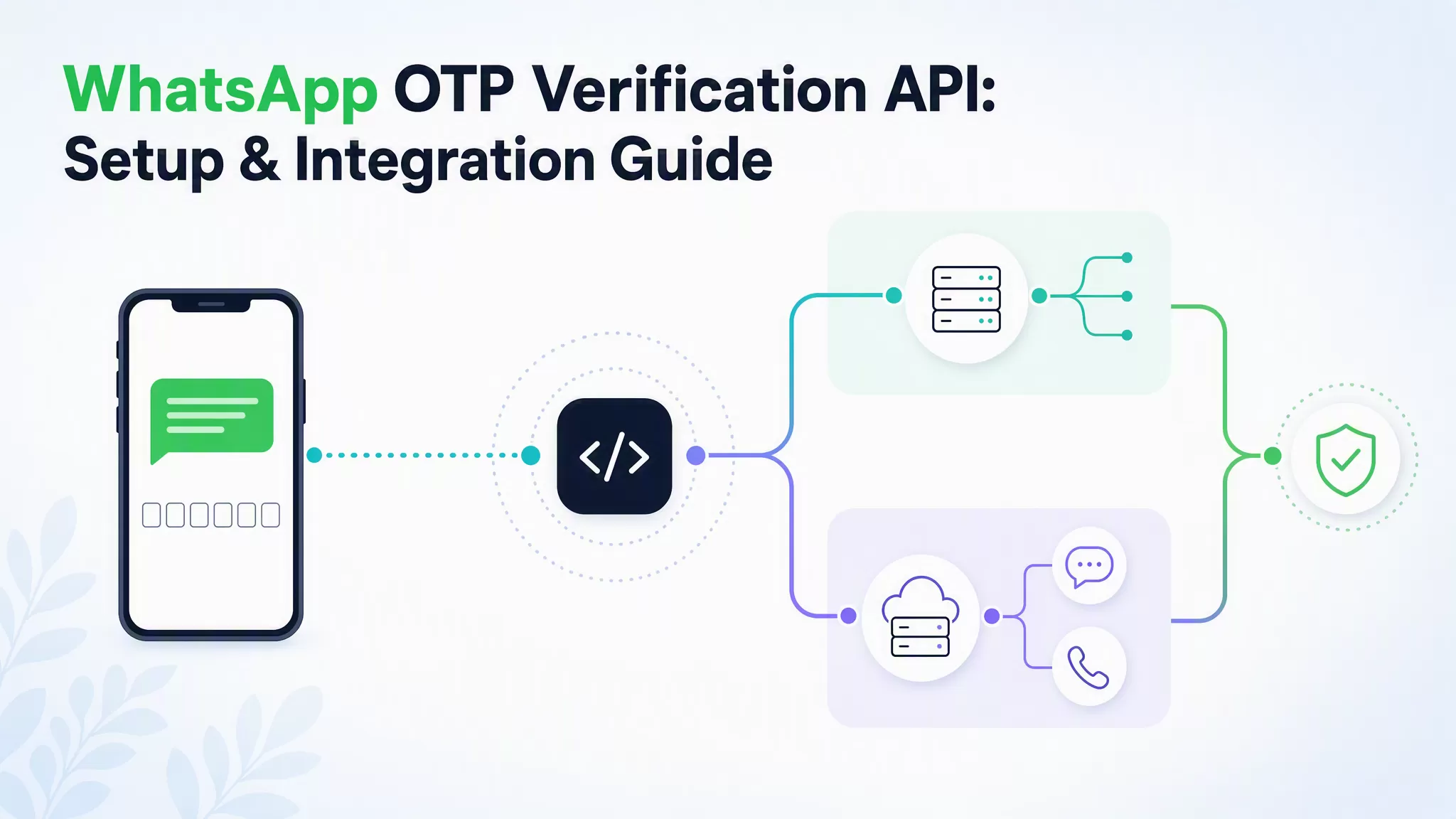
The OTP service of EngageLab covers the full authentication loop: generating unique one-time passwords, distributing them across SMS, email, voice, and WhatsApp through a single REST API, and verifying the codes server-side with configurable expiry and retry policies.

For financial institutions operating across Southeast Asia and other developing markets, delivery reliability and fallback routing are the critical variables. EngageLab's infrastructure routes OTPs through regional carrier partnerships and switches to voice delivery automatically when SMS fails, keeping verification rates high even in markets with patchy SMS reliability.
How to Set Up OTP Authentication with EngageLab
This walkthrough covers the production setup path for an OTP template and delivery strategy. The sequence applies to any banking or fintech touchpoint: account login, fund transfers, card payments, account modifications, or ATM withdrawals.
1 Sign Up and Open OTP
Create an EngageLab account and go to the OTP product. The Quickstart guide maps the full setup sequence: template creation, channel configuration, approval, and API integration. Banking teams typically run the full flow in a staging environment first and verify delivery rate and latency against internal SLA targets before routing production traffic.

2 Create an OTP Template
Go to OTP > Template Management and click Create Template . Fill in the Template Name , Template ID ,
Signature , and Sending Strategy . Choose the primary channel. SMS is the default for most banking transaction verification flows. Keep the template name
descriptive enough to audit later; a name like login_otp_sms is more useful than template_1
.

- Template check: Confirm Template Name , Template ID , Signature , and Sending Strategy are all filled before continuing to channel
settings.
3 Configure Delivery Channels and Fallback
In Phone number channel settings, set SMS Primary send as the default route. For customers in markets where SMS delivery is inconsistent (common in Southeast Asia), add WhatsApp Failover send or Voice Failover send so users still receive their OTP if the first delivery attempt fails. Define retry limits and per-country rules here, not in application code.

- Channel rule: Start with SMS Primary send . Add WhatsApp Failover send or Voice Failover send for markets where SMS delivery rates are below your SLA
threshold.
4 Submit for Review and Go Live
Click Create and Submit Audit . Return to Template Management before routing any production traffic. Confirm the template status shows Audit Passed , then store the approved Template ID in your backend configuration. Do not run banking transaction OTP flows against an unapproved template: the message copy, delivery channel settings, and compliance status are all tied to the reviewed version.

- Go-live check: Template status must show Audit Passed before connecting the approved Template ID to production API calls.
5 Monitor OTP Delivery Performance
Open Message Analysis to verify the flow is healthy. Track sent , delivered , and read volume for each banking touchpoint. Watch delivery rate by channel and country so a carrier routing issue or a misconfigured fallback surfaces in the dashboard before it starts failing users at login or transaction confirmation.

- Monitoring check: Confirm sent, delivered, and read rates match expected ranges. Investigate any country or channel where delivery rate drops below your SLA before scaling traffic.
FAQs
-
1
What if I don't receive an OTP?
Use the 'Resend OTP' option available on most platforms to trigger a new code. If the problem persists, check that the registered mobile number or email address on the account is correct, then contact the bank's customer support to investigate delivery issues on their end. -
2
How long is an OTP valid?
Validity windows vary by institution and transaction type. Most banking OTPs expire within 30 seconds to 5 minutes. High-value transactions typically use shorter windows (30-60 seconds) to limit the exposure window if an OTP is intercepted. -
3
Can OTP be reused?
No. An OTP expires immediately after it is used for the first time or once its validity window closes, whichever comes first. Any subsequent authentication attempt requires a newly generated code.
Summary
OTP verification is now standard across every transaction type that carries fraud risk in banking: login sessions, fund transfers, card payments, account modifications, and cardless ATM withdrawals. The delivery channel (SMS, email, app-based TOTP, or hardware token) depends on the threat model, user base, and the latency requirements of each touchpoint.
For teams building or scaling OTP authentication, the key decisions are channel selection, fallback routing for failed deliveries, expiry policy, and provider reliability in target markets. Getting these right keeps fraud rates low without adding enough friction to hurt completion rates.