


Jacob Morrow
Updated: 2026-06-18
If an app alert is missing from the Lock Screen, the fix is usually simple: turn notifications back on for that app, check Focus, and make sure alerts are allowed on the screens where you expect to see them. This guide explains how to enable push notifications on iPhone and what businesses should check when users say their app messages are not arriving.
Quick answer
To enable push notifications on iPhone, open Settings , tap Notifications , choose the app, turn on Allow Notifications , then select Lock Screen , Notification Center , and Banners . If notifications still do not appear, check Focus , Do Not Disturb , Scheduled Summary , notification sounds, network connection, and whether the app or iOS needs an update.
According to Apple Support (2026) , iPhone users can manage notification display, alert styles, summaries, sounds, badges, and app-specific settings from the Notifications area. For businesses, that means a missing push is not always an AppPush delivery issue. It may be a user permission, device mode, or presentation setting.

Why iPhone Push Notifications Do Not Show Up
When iPhone push notifications stop appearing, start with the user-side settings before changing backend delivery logic. The most common causes fall into three groups: the app is not allowed to notify, the device is filtering notifications, or the app delivery setup is failing before the notification reaches the device.
| Cause | What to Check | Quick Fix |
|---|---|---|
| App notifications are off | The app is disabled under Settings > Notifications. | Turn on Allow Notifications and choose the alert locations. |
| Focus or Do Not Disturb is active | Focus may silence people, apps, or time-sensitive alerts. | Adjust Focus permissions or turn Focus off during testing. |
| Scheduled Summary delays alerts | Non-urgent app notifications may be bundled into a later summary. | Remove the app from Scheduled Summary if real-time alerts matter. |
| Sound, badge, or banner style is disabled | The notification exists but does not appear where the user expects. | Enable Lock Screen, Notification Center, Banners, Sounds, and Badges as needed. |
| Network, app, or iOS issue | The device is offline, the app is outdated, or iOS needs an update. | Reconnect the network, update the app, restart the device, and update iOS. |
| Business-side delivery setup fails | APNs token, certificate/key, targeting, or delivery logs show failures. | Validate APNs credentials, device tokens, segmentation, and provider logs. |
For user instructions, the first four rows usually solve the problem. For product and growth teams, the last row is where a push platform such as EngageLab AppPush becomes useful because it gives the team delivery records, audience targeting, and campaign analytics instead of guesswork.
How to Enable Push Notifications on iPhone: Step-by-Step Guide
Use this workflow when a user says "I am not getting notifications" or when your support team needs a repeatable troubleshooting script.
Step 1. Open Settings and Notifications
On the iPhone, open Settings and tap Notifications . This is the main control center for how apps can show alerts on the Lock Screen, Notification Center, and as banners.

Step 2. Choose the App and Turn On Allow Notifications
Under Notification Style , choose the app that should send alerts. Turn on Allow Notifications . If this switch is off, the app cannot show push notifications even if the business-side push provider successfully sends them.

Step 3. Select Lock Screen, Notification Center, and Banners
After notifications are allowed, choose where alerts should appear. For most apps, enable Lock Screen , Notification Center , and Banners . Then decide whether banners should be temporary or persistent.
Also check Sounds and Badges . A user may think push is not working when the message is actually delivered silently without sound or a badge count.

Step 4. Check the Lock Screen and Notification Center
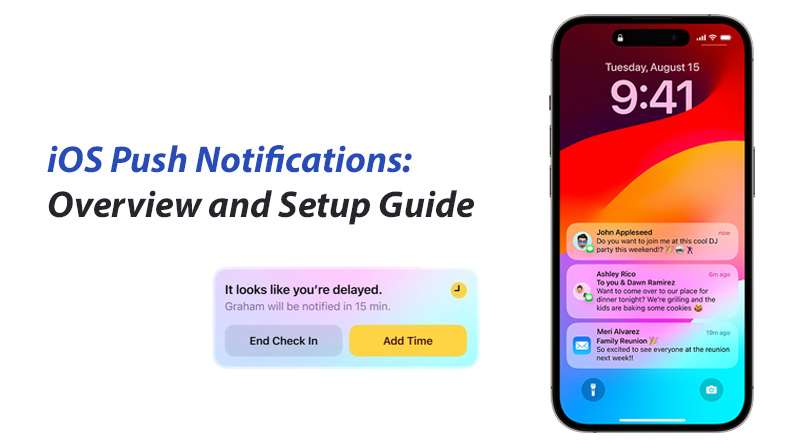
If a notification has already arrived, the user can manage it directly from the Lock Screen or Notification Center. Apple explains that users can swipe left on an alert, tap Options , and choose settings such as mute, view settings, or turn off notifications. From any screen, users can open Notification Center by swiping down from the top-left area of the screen on modern iPhones.

Step 5. Review Scheduled Summary
Apple's iPhone User Guide explains that Scheduled Summary can group selected app notifications and deliver them at chosen times. This is useful for reducing interruptions, but it can make time-sensitive app messages feel delayed.
To check it, go to Settings > Notifications > Scheduled Summary . If the app is included and the message should arrive immediately, remove that app from the summary or turn the feature off during testing.


Step 6. Check Focus and Do Not Disturb
Focus modes can silence app notifications even when Allow Notifications is on. In Settings > Focus , review active modes such as Do Not Disturb, Work, Sleep, or a custom Focus. If the app is business-critical, add it to the allowed apps list or turn off the Focus mode while testing.
Apple notes that Focus lets users allow or silence notifications by people and apps. For app marketers and product teams, this is a reminder that iPhone users control final presentation. Your push system can deliver the message, but the device can still decide whether to show it immediately.
Step 7. Send a Real Test Notification
After settings are updated, send a real notification from the app or provider console. Ask the user to confirm four things: the message appears, the sound plays if expected, the badge updates if enabled, and tapping the notification opens the correct app screen.
If the user settings look correct but the test still fails, move to the business-side checklist below.
Business Checklist Before You Blame iPhone Settings
For SaaS, ecommerce, finance, gaming, travel, and media apps, iPhone push issues are not always caused by a user's settings. The app may not have registered a valid device token, your APNs credential may be expired, or the campaign may target the wrong segment.
| Business-Side Check | Why It Matters | What to Do |
|---|---|---|
| APNs credentials | Apple Push Notification service rejects unauthenticated or expired credentials. | Review your APNs key or certificate and confirm the bundle ID matches the app. |
| Device token registration | Push providers need a valid token for the exact app install on that device. | Check token collection after install, login, logout, reinstall, and app upgrade events. |
| Permission prompt timing | Users often deny push when asked before they understand the value. | Ask after a meaningful action and explain what type of alerts they will receive. |
| Audience targeting | A user may be excluded by segment, language, region, or lifecycle filters. | Test with a small known device group before sending to a larger campaign. |
| Delivery and open logs | Without logs, support teams cannot tell whether the message failed or was hidden. | Use provider analytics to review sent, delivered, opened, failed, and clicked events. |
For a deeper infrastructure walkthrough, read our guide to Apple Push Notification Service . If you need the broader channel and permission strategy, our push notifications guide explains how push fits into the full customer journey.

How AppPush Helps Teams Manage App Push Delivery
Once an app has user permission, the business still needs reliable delivery infrastructure, campaign targeting, and performance visibility. EngageLab AppPush supports iOS and Android push campaigns, audience segmentation, message scheduling, and delivery analytics from one console.

- Audience targeting: send push messages by device, region, behavior, language, or lifecycle segment.
- Delivery analytics: monitor delivery, opens, clicks, and campaign performance so support and marketing teams can debug quickly.
- Cross-channel expansion: connect AppPush with SMS, email, WhatsApp, and marketing automation when a user journey needs more than one channel.
- Operational control: test campaigns, review device status, and reduce engineering dependency for routine push operations.

Need a cleaner way to test and scale app push?
- Send targeted iOS and Android push campaigns from one AppPush console.
- Review delivery, click, and conversion data instead of relying on user reports alone.
- Extend push moments into SMS, email, WhatsApp, or lifecycle journeys when needed.
iPhone Push Notifications FAQ
How do I turn on notifications for one app on iPhone?
Go to Settings > Notifications , choose the app, turn on Allow Notifications , then select where the alerts should appear. For real-time apps, enable Lock Screen, Notification Center, Banners, Sounds, and Badges as needed.
Why am I not getting push notifications on iPhone?
The most common reasons are disabled app notifications, Focus or Do Not Disturb, Scheduled Summary, silent sound settings, a weak network connection, an outdated app or iOS version, or a failed app-side push setup such as an invalid APNs token.
What is Scheduled Summary on iPhone?
Scheduled Summary bundles selected app notifications and delivers them at chosen times. It is helpful for reducing interruptions, but it can delay non-urgent notifications. Remove important apps from the summary if users need immediate alerts.
Can a business force iPhone users to enable notifications?
No. Users control iPhone notification permissions. Businesses can improve opt-in rates with better prompt timing, clearer value messaging, and reliable delivery once permission is granted, but the user can always disable notifications at the device or app level.
Bottom Line
For users, enabling push notifications on iPhone usually means turning on app permissions, choosing alert locations, and checking Focus or Scheduled Summary. For businesses, the job continues after permission is granted: validate APNs setup, device tokens, segments, and delivery analytics so your app messages actually reach the right users.
If push is part of your customer engagement strategy, connect the device-side guide with a reliable AppPush workflow. That combination keeps support answers clear for users and gives marketing, product, and engineering teams the data they need to improve delivery.

![Fintech Push Notifications: Best Practices, Workflows & Use Cases [2026]](https://img.engagelab.net/en/article/fintech-push-notifications-best-practices-use-cases.webp)

