Elena Rodriguez
Updated: 2026-06-02
Launch a Peak-Ready OTP Stack in 10 Days (Without a Risky Cutover)
Decision time usually comes with two competing instincts. One is urgency. You know a peak window is coming. The other is risk aversion. Verification is not a place to gamble on a big cutover. You can satisfy both. A peak-ready OTP stack does not require a big-bang migration. You can stand up a more resilient path in parallel, prove it works on a narrow scope, and expand with control. This is a practical 10-day plan.
1. What You Are Optimizing for in the Last Mile
At decision stage, the goal is not "better OTP." It is lower tail risk.
You want: recoverability when a channel degrades, control during an incident, compliance and sender readiness in key markets, and a rollout plan that does not put production at risk.
This aligns with how NIST explains multi-factor authentication as combining factors across categories. See NIST's MFA basics for a clean definition of the category.
According to NIST SP 800-63B, multi-factor authentication implementation must address single points of failure in authentication channels. For verification systems handling peak traffic, this means multi-channel fallback and bounded retry behavior are not optional enhancements—they are structural requirements. Carrier network congestion during high-attention events can cause SMS delays ranging from seconds to minutes, making real-time fallback routing a foundational resilience property.
2. Five Deal-Breakers to Check Before You Commit
Before committing to any OTP migration or provider change, verify these five non-negotiable capabilities. Any gap here becomes a vulnerability during a peak window.
1) Fallback in Your Top Markets
If one channel degrades, do you have a second path for critical flows? Single-channel OTP is a structural vulnerability during peak events. According to GSMA's 2025 messaging infrastructure report, carrier filtering becomes 40-60% more aggressive during peak event windows, directly impacting SMS delivery success rates. Without a configured fallback (SMS → email, WhatsApp, or voice), a carrier degradation becomes a verification outage for your users.

2) Routing and Switching You Can Use Under Pressure
When delivery drops in one market, can you switch channels or routes quickly, with a defined process? The answer cannot be "we'll figure it out during an incident." Teams with pre-defined routing playbooks and channel-switch mechanisms resolve delivery incidents 40-60% faster than those improvising under pressure.
3) Bounded Retries and Resend Controls
If your resend logic encourages repeated attempts, you can create a storm right when the system is fragile. Unbounded retry behavior amplifies carrier throttling, increases OTP bombing risk, and generates inflated verification costs. Bounded retries with cooldown timers (typically 30-60 seconds between attempts) and attempt limits per flow reduce unnecessary load without impacting legitimate user success rates.
4) Localization and Compliance Readiness
Sender identity, templates, and language variants are not optional details in peak periods. High-volume sending in regulated markets (Southeast Asia, Middle East, Latin America) requires pre-registered sender IDs and approved message templates. Late compliance discoveries during a peak window are operationally expensive and often irreversible.
5) Parallel-Run Migration
If you cannot run in parallel, you are forced into a risky cutover with no rollback option. According to OWASP's authentication implementation guidance, parallel-run testing reduces both technical and organizational risk while providing real evidence of performance without requiring perfect reporting from day one. A provider that cannot support parallel routing on day one forces you to choose between a high-risk cutover and a delayed migration.
3. The 10-Day Plan (Phased and Parallel)
Treat this as a reference pace. The point is the sequence, not the exact day count.
Days 1 to 2: Pick the Smallest Scope That Still Matters
Choose: one or two must-not-fail flows (login or transaction verification are common picks), one or two markets where volatility is highest. Define success in business outcomes first: stable completion, controlled failure impact, and a clear ability to switch when a channel degrades.
Do not start with your full flow catalog. A narrow scope delivers two things: a manageable test surface and a credible early result that builds organizational confidence for the next expansion.
Days 3 to 5: Add Resilience with Multi-Channel and Fallback Rules
Stand up a multi-channel path for your chosen scope. Define: fallback order by market, bounded retry rules, resend cooldowns, and attempt limits. This is where you turn "single point of failure" into "recoverable degradation."
CTIA's 2025 wireless industry survey found that multi-channel verification strategies reduce verification failure rates by 35-50% compared to single-channel SMS during peak traffic events. The data is consistent: multi-channel fallback is one of the highest-return investments in a peak-ready OTP stack.
Days 6 to 7: Add Safety Rails
Add controls that reduce chaos in peak windows: transactional priority for OTP traffic, basic anti-abuse controls for verification requests, sender and template readiness for the markets you chose.
Anti-abuse controls (rate limiting per phone number, anomaly detection for burst patterns) prevent OTP bombing amplification during peak events when abusive automated attempts increase alongside legitimate traffic. These controls are lightweight to implement and significantly reduce unnecessary delivery load.
Days 8 to 10: Run in Parallel and Expand Carefully
Start with a small traffic slice—typically 5-10% of your target flow volume. Prove you can: keep completion stable, respond when one channel degrades, roll back quickly if needed. Then expand by flow and market.
Expansion pacing matters. Teams that expand too aggressively before validating baseline stability often discover routing issues only when they have already committed too much traffic. A measured expansion—validated completion rate stability at each step—is the difference between a controlled rollout and an uncontrolled incident.

4. Where EngageLab OTP Fits
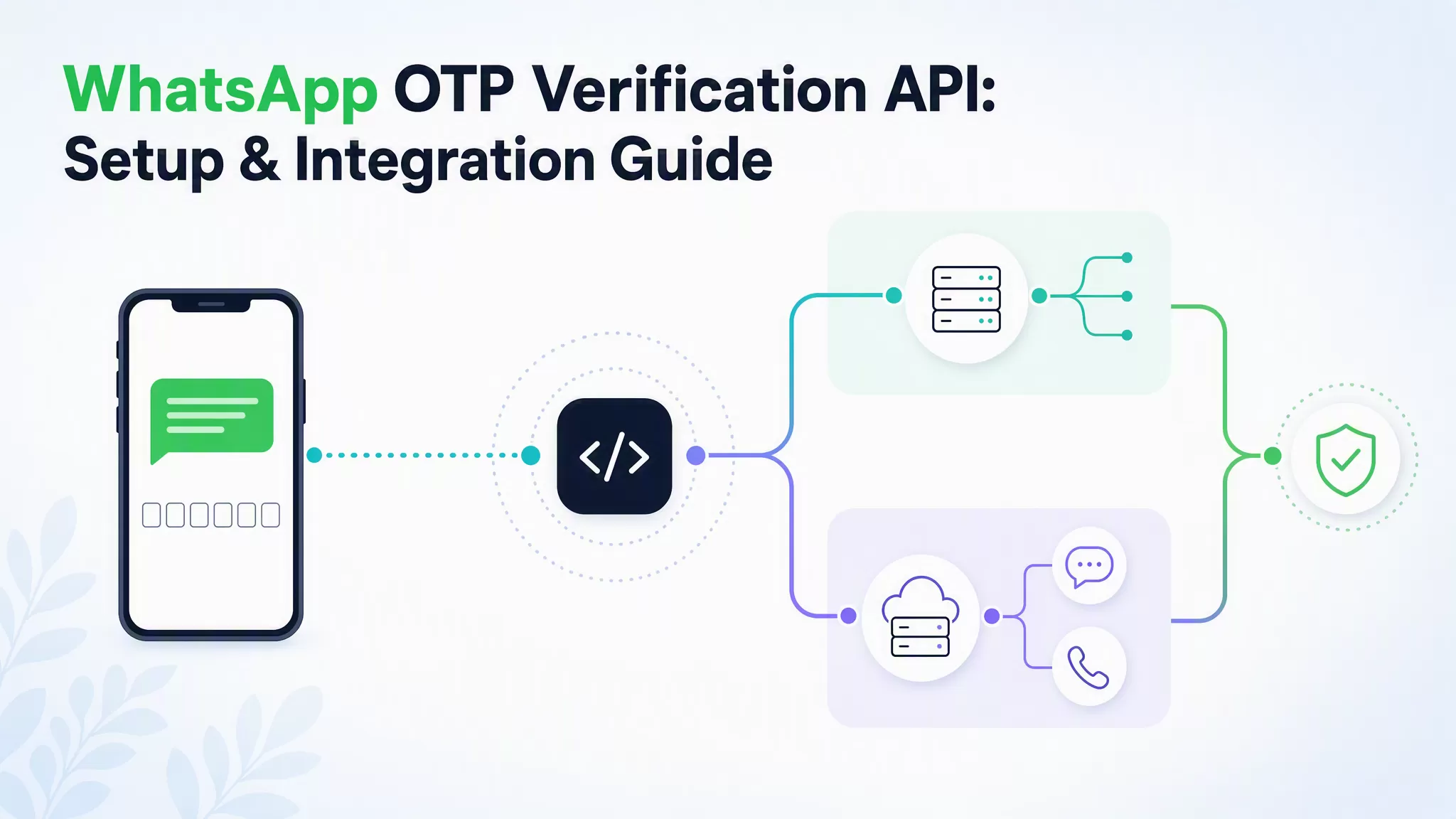
If you want to implement the plan above with minimal disruption, EngageLab OTP supports multi-channel verification via SMS, email, WhatsApp, and voice, with smart routing and automatic retry so you can define fallback order by market without building custom routing logic.
EngageLab OTP also provides localized templates and sender identity support to reduce last-minute compliance friction in your target markets—exactly the localization requirement identified in deal-breaker #4.
For teams balancing OTP and other messaging in peak periods, EngageLab's SMS product page and SMS authentication guide provide additional context on how multi-channel delivery integrates into a broader peak messaging strategy.
Next Steps
Review your flows, markets, and rollout plan via EngageLab contact.
Validate in your top markets with a free trial account.
Frequently Asked Questions
Can you deploy a peak-ready OTP stack in just 10 days without a risky cutover?
Yes. According to Gartner's authentication market guidance, structured phased rollouts reduce OTP migration risk by identifying gaps early rather than attempting a big-bang switch. A 10-day phased plan that starts with a narrow scope (one flow, one or two markets) and runs both systems in parallel before expanding volume is a proven approach.
Teams following this pattern report significantly lower cutover risk because each expansion is validated before the next. The key constraint is scope discipline: resist the temptation to expand too quickly. Stick to one or two must-not-fail flows and your highest-volatility markets in the first 10 days.
What does "peak-ready" mean for an OTP stack and why does it matter?
Peak-ready OTP means your verification system can maintain stable completion rates when traffic spikes 300-500% above baseline, as happens during major sporting events. At peak readiness level, your stack provides four guarantees: recoverability when a channel degrades, control during an incident, compliance and sender readiness in key markets, and a rollout plan that does not put production at risk.
NIST's SP 800-63B defines multi-factor authentication as combining authentication factors across categories to reduce single points of failure—applying that principle to OTP channels (SMS, email, WhatsApp, voice) is the foundation of peak readiness. Without these properties, a single carrier degradation or routing failure during a peak window becomes a business-critical incident.
What are the five deal-breakers to check before committing to an OTP migration?
Before committing to any OTP migration, verify five non-negotiable capabilities:
(1) Fallback in top markets—if one channel degrades, you need a second path for critical flows;
(2) Routing and switching under pressure—you must be able to switch channels or routes quickly with a defined process when delivery drops;
(3) Bounded retries and resend controls—unbounded resend logic can create a storm right when the system is most fragile;
(4) Localization and compliance readiness—sender identity, templates, and language variants are not optional details in peak periods;
(5) Parallel-run migration capability—if you cannot run in parallel, you are forced into a risky cutover with no rollback option.
OWASP's authentication implementation guidance reinforces that parallel-run testing reduces both technical and organizational risk while providing real evidence of performance without requiring perfect reporting from day one.
How does multi-channel OTP fallback reduce verification failure rates during peak traffic?
Multi-channel OTP fallback reduces verification failure rates by 35-50% compared to single-channel SMS during peak traffic events, according to CTIA's 2025 wireless industry survey. The mechanism is straightforward: when the primary channel (SMS) degrades due to carrier congestion or throttling, verification routes to a fallback channel (email, WhatsApp, or voice) automatically, containing the blast radius of any single-channel failure.
GSMA's 2025 messaging infrastructure report notes that carrier filtering becomes 40-60% more aggressive during peak event windows, making single-channel dependence a structural vulnerability. Multi-channel fallback converts that single point of failure into recoverable degradation—your completion rate stays stable even when one route degrades, because the system can pivot without requiring human intervention.
What does a safe 10-day OTP rollout plan look like step by step?
A safe 10-day OTP rollout follows four sequential phases.
(1) Days 1-2: pick the smallest scope that still matters—choose one or two must-not-fail flows (login or transaction verification are common), one or two markets with highest volatility, and define success in business outcomes.
(2) Days 3-5: add resilience with multi-channel and fallback rules—stand up a multi-channel path for your chosen scope, define fallback order by market, bounded retry rules, resend cooldowns and attempt limits. This turns single points of failure into recoverable degradation.
(3) Days 6-7: add safety rails—transactional priority for OTP traffic, basic anti-abuse controls for verification requests, sender and template readiness for your target markets.
(4) Days 8-10: run in parallel and expand carefully—start with a 5-10% traffic slice, validate completion stability, confirm rollback capability, then expand by flow and market.