Elena Rodriguez
Updated: 2026-06-01
Event-Ready OTP at Scale: What to Look for in a Provider
If your team is heading into a peak traffic window, you're probably past the point of asking whether OTP matters. The real question is what kind of verification stack stays stable when traffic surges, carriers get noisy, and abusive patterns rise.
This is a practical guide to evaluating OTP providers for peak events. It is designed to work even if you do not have perfect internal dashboards today.
1. The evaluation mindset: recoverability beats perfect numbers
It's tempting to compare providers using a single performance metric. In peak periods, that approach fails. What matters is recoverability.
When a market degrades or a channel stumbles, can you reroute, fall back, and keep completion stable without flooding users and support teams? That question leads to a better evaluation model.
2. The 4-capability model for peak-traffic OTP
Instead of shopping for "features," evaluate for four capabilities.
1) Delivery resilience
Peak reliability starts with avoiding single-channel dependence.
What to look for: multi-channel delivery options for your top markets, configurable fallback per market and flow, bounded retry behavior that does not amplify congestion.

2) Routing control
You do not need to know every routing detail, but you do need to control outcomes.
What to look for: performance-aware routing decisions by market, a clear mechanism for switching routes or channels during degradations, support processes that match your event window, not business hours.
3) Trust and compliance readiness
Peak periods expose compliance gaps because you are sending more volume, to more edge cases, under more scrutiny.
What to look for: Sender ID support where required, template workflows and localization, auditability in case you need to explain what happened.
4) Minimal operability
A great dashboard is helpful, but it is not the starting point.
Minimum requirements for an event window: visibility into failures by market and channel, even at a coarse level, delivery reports and failure reasons that can be reviewed after an incident, a runbook and escalation path that your team can follow under pressure.
Treat advanced analytics as a bonus. Do not let "pretty" replace "usable."
3. 10 vendor questions that prevent a bad decision
Use these questions to avoid getting sold a demo that looks good on a quiet Tuesday.
- Which channels are supported in my top markets, and what is the fallback path for each?
- Can fallback be configured per country and per flow (login vs transaction)?
- How do you switch routing or channels when delivery degrades?
- What is your retry behavior, and how do you prevent resend storms?
- How do you prioritize OTP traffic over non-critical messaging during peak campaigns?
- What Sender ID and template support do you provide for my key regions?
- What delivery reporting and failure reasons are available?
- What controls exist for OTP bombing and automated abuse?
- What does a phased migration look like, and can we run in parallel?
- How is pricing affected by retries and fallback channels during spikes?
According to Gartner's 2025 Market Guide for User Authentication, structured vendor evaluation frameworks that test real-world peak scenarios reduce implementation failure rates by identifying operational gaps before contract signing. Teams that skip this validation often discover critical gaps only when peak events expose them.

4. A no-drama rollout plan
Decision-stage evaluations often stall because teams think the choice implies a risky cutover. It doesn't have to.
A safer approach is phased and parallel:
- Start with one high-impact flow
- Start with one or two key markets
- Run in parallel before switching more volume
This reduces both technical and organizational risk. It also gives you real evidence without needing perfect reporting from day one.
According to OWASP's Authentication Cheat Sheet, parallel migration testing is a recommended practice for high-stakes authentication system changes, allowing teams to validate actual performance rather than relying on vendor-provided benchmarks.
5. How EngageLab OTP maps to the four capabilities
If you're comparing solutions, here's how EngageLab OTP aligns with the capability model:
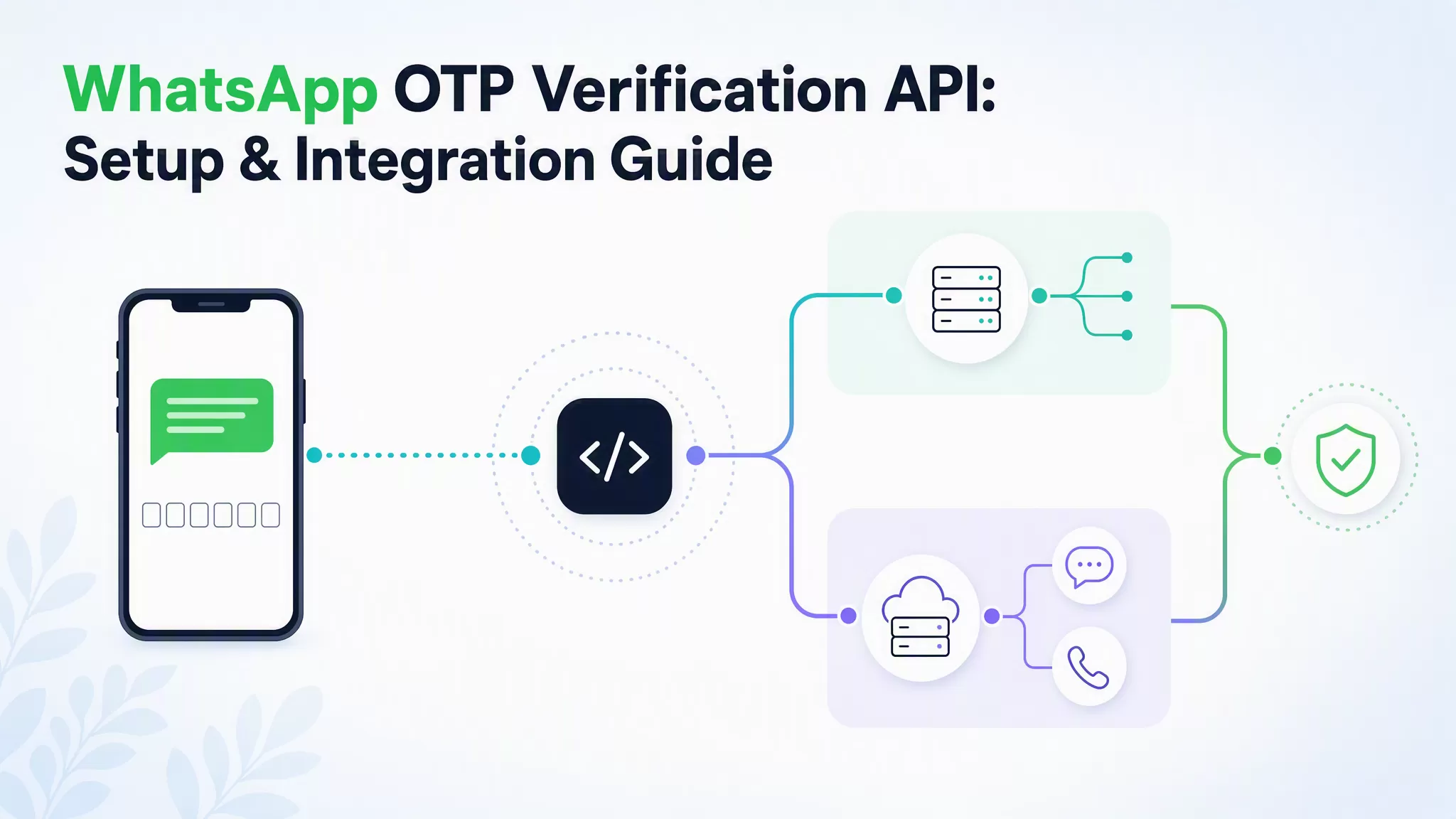
- Delivery resilience: multi-channel OTP via SMS, email, WhatsApp, and voice
- Routing control: smart routing with automatic retry and fallback
- Trust and compliance readiness: localized, multi-language templates with sender identity support
- Minimal operability: delivery and performance insights designed to help teams adjust during peak windows
For related context, EngageLab also covers SMS authentication patterns.
6. Frequently Asked Questions
What are the 4 key capabilities to evaluate in an OTP provider for peak events?
The 4 key capabilities are:
(1) Delivery resilience with multi-channel options and configurable fallback per market;
(2) Routing control with performance-aware routing and clear degradation mechanisms;
(3) Trust and compliance readiness with Sender ID support and auditability;
(4) Minimal operability with visibility into failures and documented runbooks.
Per NIST SP 800-63B, multi-channel resilience and bounded retries are foundational requirements for high-traffic verification systems.
How do I evaluate OTP provider recoverability during peak traffic?
Focus on one question: when a market degrades or a channel stumbles, can you reroute, fall back, and keep completion stable without flooding users and support teams? Per GSMA's 2025 messaging infrastructure report, teams with multi-channel fallback experience 35-50% fewer verification failures during peak events compared to single-channel providers.
Why is multi-channel OTP delivery critical for peak event verification?
Multi-channel OTP delivery is critical because carrier network capacity limitations during high-traffic periods cause SMS delays and failures. Per CTIA's 2025 wireless industry survey, multi-channel verification strategies reduce verification failure rates by 35-50% compared to single-channel SMS during peak events. Without fallback channels, single-channel dependence creates a single point of failure when peak congestion hits.
What controls should OTP providers have for abuse prevention?
Essential abuse controls include rate limiting per phone number and IP, anomaly detection tied to specific flows, and bounded retry policies with cooldown periods. Per OWASP's authentication guidelines, these controls prevent OTP bombing attacks that can increase fraudulent load by 200-400% during high-attention peak events.
What is a safe rollout plan for switching OTP providers before peak events?
Use phased and parallel migration: start with one high-impact flow, start with one or two key markets, and run both systems in parallel before switching more volume. This approach reduces technical and organizational risk while providing real evidence of actual performance before committing full traffic.
Conclusion: Next Steps
Ready to ensure your verification system is event-ready?
- Talk to sales: discuss markets, flows, and a phased rollout plan
- Start a free trial: validate key flows and markets with a free trial account
Start Free Trial Now